


Real-Life Experience of the Prognostic Significance of the Primary Tumor Location on the Timing of Colorectal Liver Metastases: A Retrospective Analysis
- PMID: 36299600
- PMCID: PMC9588390
- DOI: 10.7759/cureus.30607
Real-Life Experience of the Prognostic Significance of the Primary Tumor Location on the Timing of Colorectal Liver Metastases: A Retrospective Analysis
Abstract
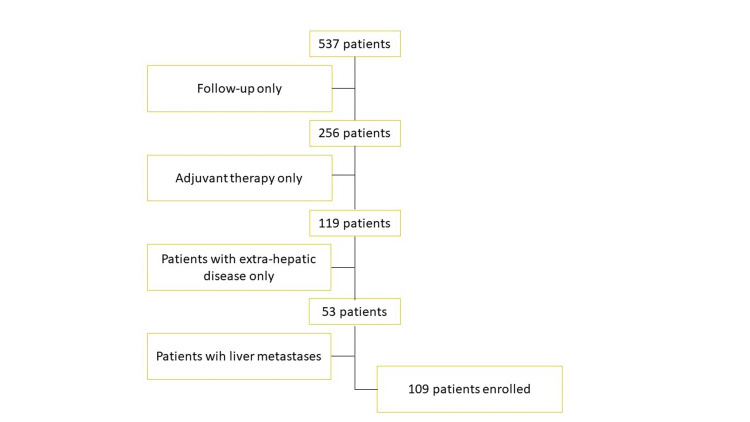
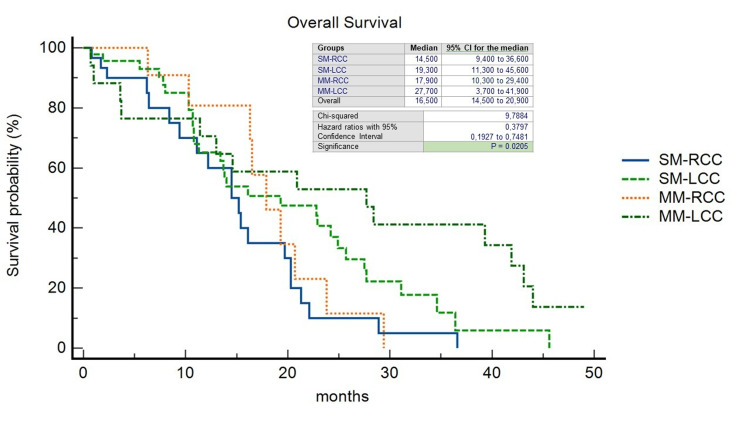
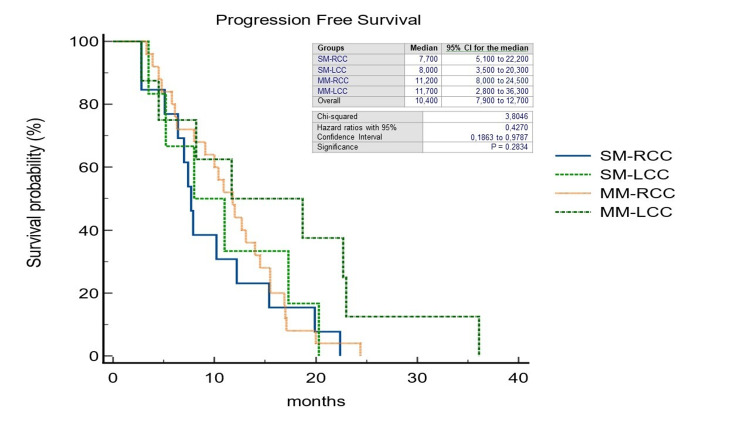
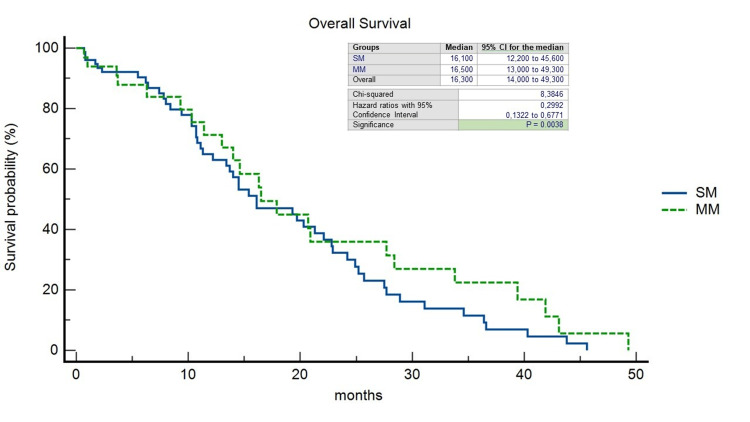
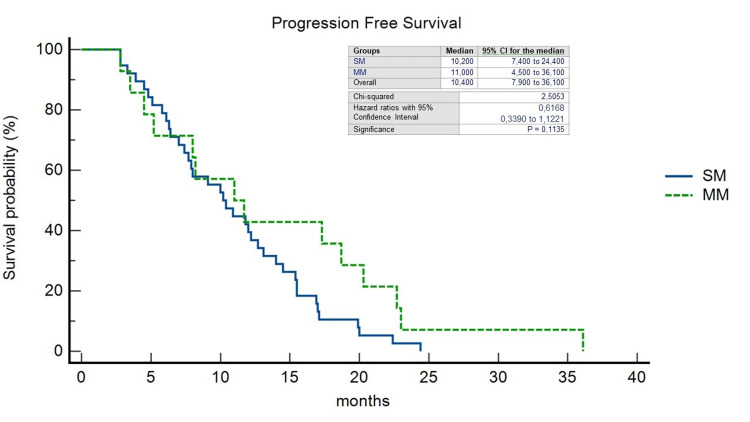
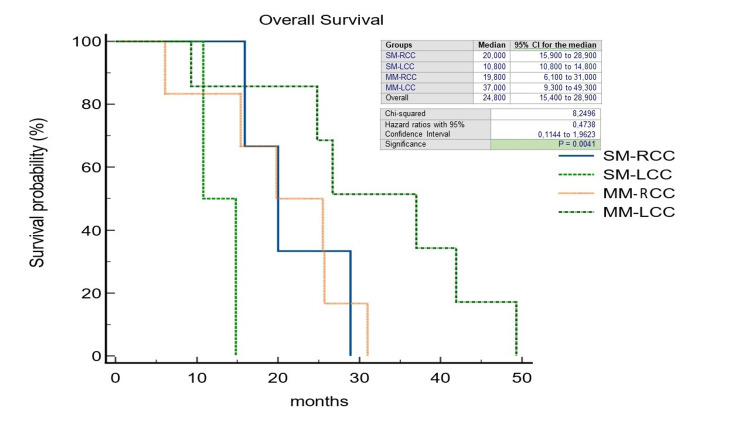
Background Numerous research studies have looked into how the primary tumor location (PTL) affects patients' prognosis for colorectal cancer (CRC). Our research aimed to investigate the prognostic effects of PTL in patients with synchronous (SM) and metachronous (MM) colorectal cancer liver metastases (CRCLM). Material and methods From 2016 to 2021, we looked back at the records of patients at our institute who were affected by CRCLM. Results 109 patients were included, of whom 21.1% received CRCLM resection (R0=73.9%), with 57.7% having left-sided colon cancer (LCC) and 42.2% having right-sided colon cancer (RCC). SM predominated (69.7%). The median duration of follow-up was 21,3 months (95%CI=15,4-25,2). ≥5 hepatic metastases prevailed in the SM group (N=61; 83.5%). 21% of all patients underwent CRCLM resection (R0=78.2%). We observed a double rate of patients unresponsive to standard systemic antineoplastic treatments in the SM group (35.8% vs. 17.9% of the MM group) (p=0.27). We found a significantly longer median overall survival (OS) in patients with MM-LCC compared with the other groups (27.7 months; HR=0.3797; 95%CI=0.19-0.74; p=0.0205). The median OS, regardless of PTL, was higher in the MM group (16,5 months vs. 16,1 months; HR=0,29; 95%CI=0,13-0,67; p=0.0038) as well as progression-free survival (PFS) (11 months vs. 10,2 months; HR=0,61; 95%CI=0,33-1,12; p=0.11). Finally, in patients undergoing liver surgery, a noteworthy median OS was shown to be significantly in favor of patients with metachronous liver metastases from the primary left tumor (37.0 months; HR=0.47; 95%CI=0.11-1.96; p=0.0041). Conclusions Our real-life study demonstrated that patients with LCC, particularly MM-LCC, have the highest survival and that the timing of CRCLM should be a prognostic factor.
Keywords: colorectal cancer; hepatic metastases; metachronous liver metastases; primary tumor location; synchronous liver metastases.
Copyright © 2022, Signorelli et al.
Conflict of interest statement
The authors have declared that no competing interests exist.
Figures
References
-
- IARC World Health Organization, © International Agency for Research on Cancer; [ Oct; 2022 ]. 2020. Colorectal Cancer Fact Sheet | GLOBOSCAN 2020 | International Agency for Research on Cancer.
-
- Surgical treatment of metastatic colorectal cancer. Chakedis J, Schmidt CR. Surg Oncol Clin N Am. 2018;27:377–399. - PubMed
-
- ESMO consensus guidelines for the management of patients with metastatic colorectal cancer. Van Cutsem E, Cervantes A, Adam R, et al. Ann Oncol. 2016;27:1386–1422. - PubMed
-
- Multimodal treatment strategies for colorectal liver metastases. Birrer DL, Tschuor C, Reiner C, et al. Swiss Med Wkly. 2021;151:0. - PubMed
-
- Lymphangiogenic gene expression is associated with lymph node recurrence and poor prognosis after partial hepatectomy for colorectal liver metastasis. Vellinga TT, Kranenburg O, Frenkel N, et al. Ann Surg. 2017;266:765–771. - PubMed
LinkOut - more resources
Full Text Sources