


Inhibitory Control Development: A Network Neuroscience Perspective
- PMID: 36300046
- PMCID: PMC9588931
- DOI: 10.3389/fpsyg.2022.651547
Inhibitory Control Development: A Network Neuroscience Perspective
Abstract
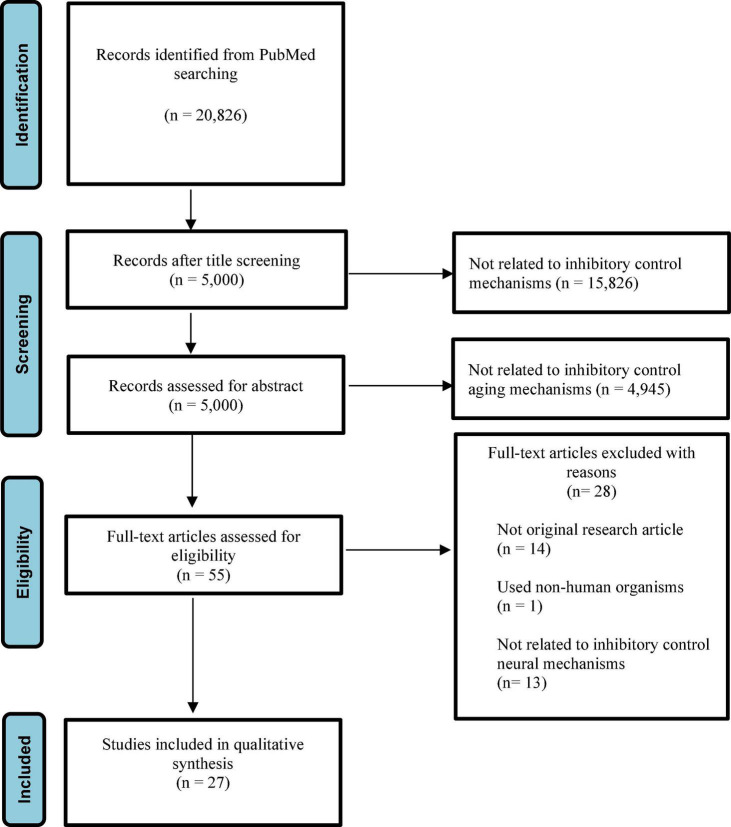
As one of the core executive functions, inhibition plays an important role in human life through development. Inhibitory control is defined as the ability to suppress actions when they are unlikely to accomplish valuable results. Contemporary neuroscience has investigated the underlying neural mechanisms of inhibitory control. The controversy started to arise, which resulted in two schools of thought: a modulatory and a network account of inhibitory control. In this systematic review, we survey developmental mechanisms in inhibitory control as well as neurodevelopmental diseases related to inhibitory dysfunctions. This evidence stands against the modulatory perspective of inhibitory control: the development of inhibitory control does not depend on a dedicated region such as the right inferior frontal gyrus (rIFG) but relies on a more broadly distributed network.
Keywords: executive function; inhibition; inhibitory control development; inhibitory control in adolescents; inhibitory control in children; rIFG.
Copyright © 2022 Kang, Hernández, Rahman, Voigt and Malvaso.
Conflict of interest statement
The authors declare that the research was conducted in the absence of any commercial or financial relationships that could be construed as a potential conflict of interest.
Figures
References
-
- American Psychiatric Association (2000). DSM-IV-TR: Tourette’s Disorder. Diagnostic and Statistical Manual of Mental Disorders, Text Revision (DSM-IV-TR) 4th ed. APA: Virginia, VA
Publication types
LinkOut - more resources
Full Text Sources
Research Materials
