Management of patients with bleeding disorders and educational needs regarding hemophilia a in 23 italian emergency departments - Results from a survey conducted in Piedmont
- PMID: 36300218
- PMCID: PMC9686153
- DOI: 10.23750/abm.v93i5.13538
Management of patients with bleeding disorders and educational needs regarding hemophilia a in 23 italian emergency departments - Results from a survey conducted in Piedmont
Abstract
Background: Haemophilia and von Willebrand disease are the bleeding disorders most frequently encountered in the emergency department (ED), that are often the first point of contact for patients. Evidence suggests that management in the ED is currently suboptimal, mainly because the physicians have few opportunities to deal with this kind of patients.
Objectives: We carried out a survey to investigate the management of patients with haemophilia A in Emergency Departments (EDs), and to understand the training needs of the involved physicians.
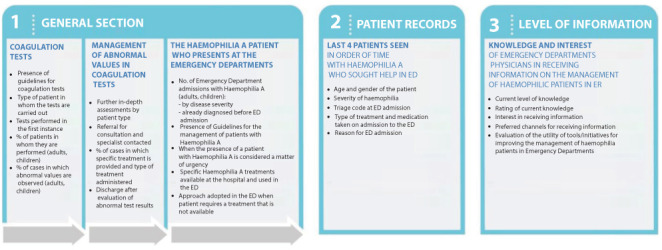
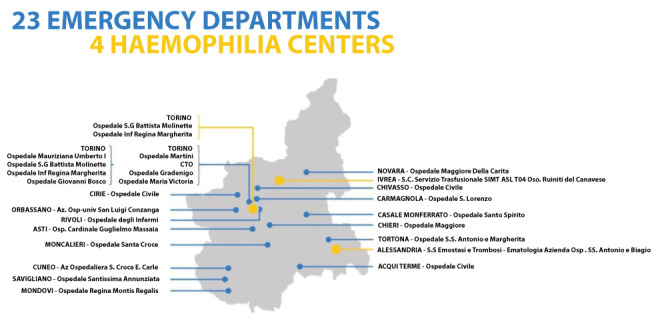
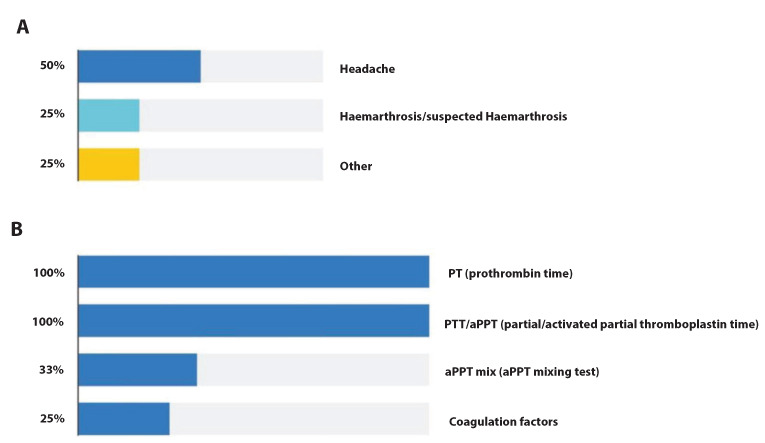
Methods: Overall, in Piedmont Region there are 32 EDs, and considering that our survey was conducted on 21 physicians working in 23 Emergency Departments (EDs), this number is representative of the Region's reality. The interviews were conducted through face-to-face meetings, including general aspects regarding the clinical characteristics and the management of patients, and self-evaluation of knowledge and interest in receiving information about the disease.
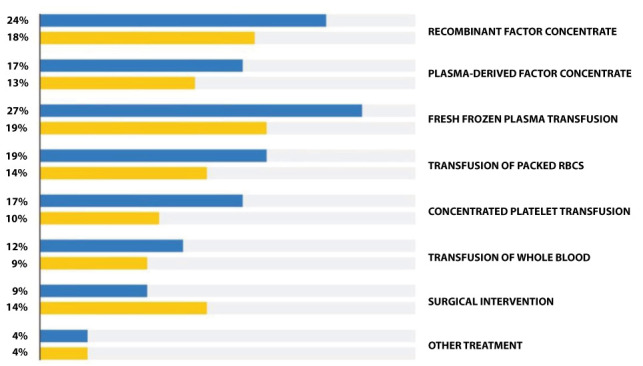
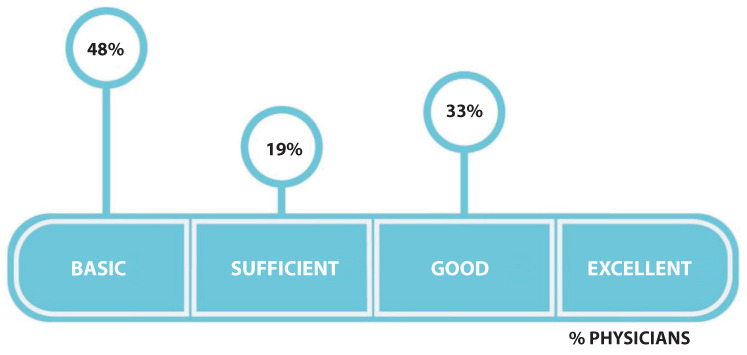
Results: In 2019, 131 patients with haemophilia A were admitted (108 adults, 23 paediatric). The best-known and most widely available and used treatments were plasma derivatives, followed by first- and second-generation recombinant FVIII. More recent recombinant and bypassing agents were less known. Half of the interviewees considered their -knowledge of bleeding disorders in general and haemophilia in particular to be "basic", and only one third defined it as "good"; however, 86% expressed great interest in receiving information about the topic.
Conclusions: The survey confirms the needs related to the clinical management of rare inherited clotting disorders in EDs. The physicians involved are keen to overcome this lack of knowledge, and proper initiatives should be implemented.
Conflict of interest statement
AB received honoraria for speaker’s bureau and/or participation in Advisory Boards from Bayer, CSL Behring, Kedrion, Novo Nordisk, Roche, Sobi, Takeda. BP, IR, CD, FV, AV, CL declare that they have no known competing financial interests or personal relationships that could have appeared to influence the work reported in this paper.
Figures
References
-
- Schwartz KR, Rubinstein M. Haemophilia And Von Willebrand Disease In Children: Emergency Department Evaluation And Management. Pediatr Emerg Med Pract. 2015;12:1–20. quiz 20–1. - PubMed
-
- Abbonizio F, Biffoni R, Arcieri R, Giampaolo A Associazione Italiana Centri Emofilia (AICE) Istituto Superiore di Sanità - Registro Nazionale Coagulopatie Congenite. Rapporti ISTISAN 20/14. Rapporto 2019. 2021:iii, 53.
-
- CDC. Data & Statistics on Haemophilia (04.05.2022) https://www.cdc.gov/ncbddd/hemophilia/data.html#:~:text=In%20the%20Unite....
-
- National Haemophilia Foundation. Bleeding Disorders (22.02.2022) https://www.hemophilia.org/bleeding-disorders-a-z.
-
- Zimmerman B, Valentino LA. Haemophilia: in review. Pediatr Rev. 2013;34:289–94. - PubMed
Publication types
MeSH terms
LinkOut - more resources
Full Text Sources
Medical