Baseline oxygen consumption decreases with cortical depth
- PMID: 36301995
- PMCID: PMC9642908
- DOI: 10.1371/journal.pbio.3001440
Baseline oxygen consumption decreases with cortical depth
Abstract
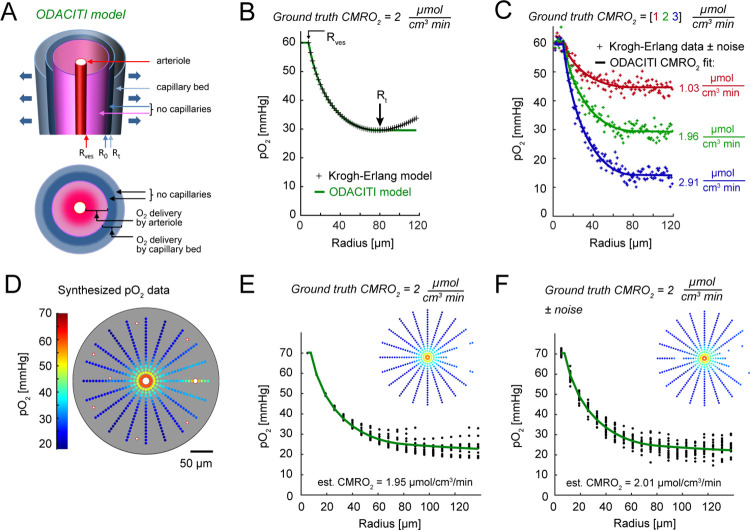
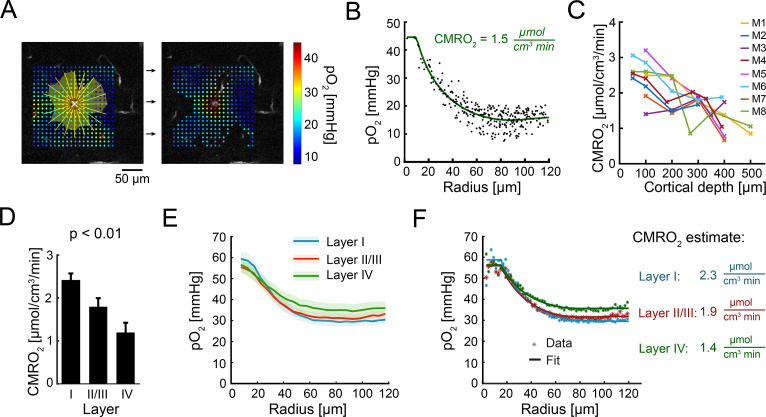
The cerebral cortex is organized in cortical layers that differ in their cellular density, composition, and wiring. Cortical laminar architecture is also readily revealed by staining for cytochrome oxidase-the last enzyme in the respiratory electron transport chain located in the inner mitochondrial membrane. It has been hypothesized that a high-density band of cytochrome oxidase in cortical layer IV reflects higher oxygen consumption under baseline (unstimulated) conditions. Here, we tested the above hypothesis using direct measurements of the partial pressure of O2 (pO2) in cortical tissue by means of 2-photon phosphorescence lifetime microscopy (2PLM). We revisited our previously developed method for extraction of the cerebral metabolic rate of O2 (CMRO2) based on 2-photon pO2 measurements around diving arterioles and applied this method to estimate baseline CMRO2 in awake mice across cortical layers. To our surprise, our results revealed a decrease in baseline CMRO2 from layer I to layer IV. This decrease of CMRO2 with cortical depth was paralleled by an increase in tissue oxygenation. Higher baseline oxygenation and cytochrome density in layer IV may serve as an O2 reserve during surges of neuronal activity or certain metabolically active brain states rather than reflecting baseline energy needs. Our study provides to our knowledge the first quantification of microscopically resolved CMRO2 across cortical layers as a step towards better understanding of brain energy metabolism.
Copyright: © 2022 Mächler et al. This is an open access article distributed under the terms of the Creative Commons Attribution License, which permits unrestricted use, distribution, and reproduction in any medium, provided the original author and source are credited.
Conflict of interest statement
The authors have declared that no competing interests exist.
Figures

References
Publication types
MeSH terms
Substances
Grants and funding
- R00 MH120053/MH/NIMH NIH HHS/United States
- U19 NS123717/NS/NINDS NIH HHS/United States
- R35 NS097265/NS/NINDS NIH HHS/United States
- R01 NS091230/NS/NINDS NIH HHS/United States
- R01 DA050159/DA/NIDA NIH HHS/United States
- R01 NS108472/NS/NINDS NIH HHS/United States
- R01 NS115401/NS/NINDS NIH HHS/United States
- R01 MH111359/MH/NIMH NIH HHS/United States
- U24 EB028941/EB/NIBIB NIH HHS/United States
- RF1 NS121095/NS/NINDS NIH HHS/United States
- K99 MH120053/MH/NIMH NIH HHS/United States
- U01 HL133362/HL/NHLBI NIH HHS/United States