


How Successful Is Surgical Sperm Retrieval in Klinefelter Syndrome?
- PMID: 36303963
- PMCID: PMC9580639
- DOI: 10.3389/frph.2021.636629
How Successful Is Surgical Sperm Retrieval in Klinefelter Syndrome?
Abstract
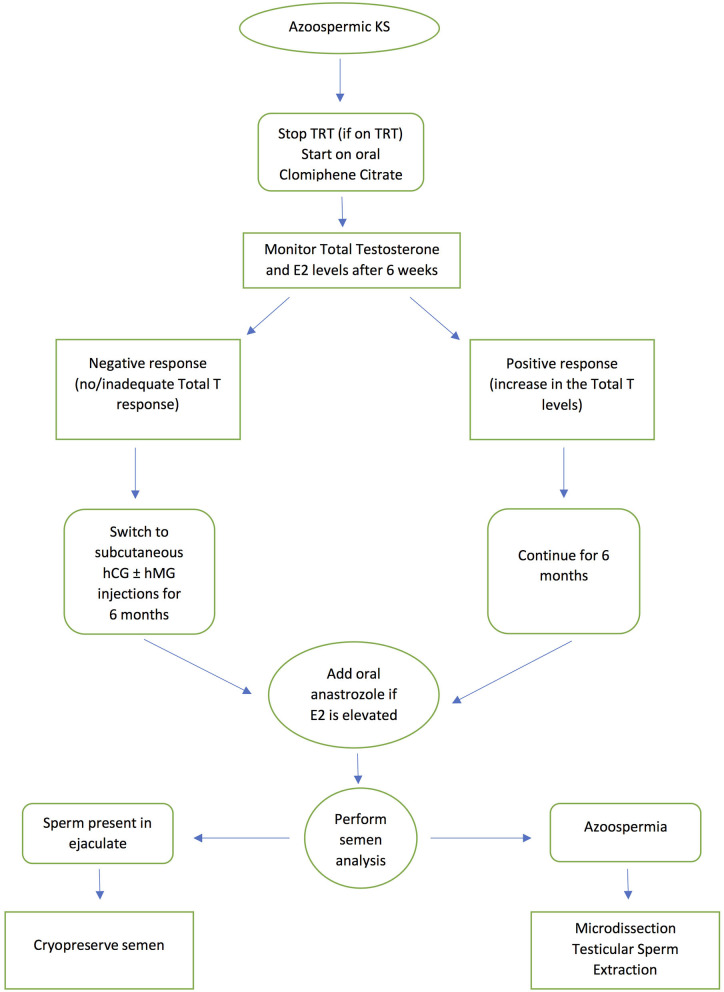
Klinefelter Syndrome (KS) is characterized by the presence of an extra X chromosome. It was first diagnosed in 1942 in a group of azoospermic men. KS is the most common chromosomal abnormality encountered in infertile men and accounts for more than 10% of the causes of azoospermia. Men who are azoospermic may still father children via testicular sperm extraction followed by intracytoplasmic sperm injection (ICSI). This review article summarizes the success rates of the available techniques for surgical sperm retrieval (SSR) in KS including conventional testicular sperm extraction (cTESE) and micro testicular sperm extraction (mTESE), as well as the risks of these procedures for future fertility. The evidence indicates that the SSR rate is as successful in non-mosaic men with KS as those with normal karyotypes, with retrieval rates of up to 55% reported. The influence of different factors that affect the chances of a successful outcome are discussed. In particular, the impact of aneuploidy rate, physical characteristics, co-morbidities, reproductive endocrine balance and the use of different hormone management therapies are highlighted. Evidence is presented to suggest that the single most significant determinant for successful SSR is the age of the patient. The success of SSR is also influenced by surgical technique and operative time, as well as the skills of the surgeon and embryology team. Rescue mTESE may be used successfully following failed TESE in KS patients in combination with hormone stimulation.
Keywords: Klinefelter syndrome; MicroTESE; TESE; hormone stimulation; surgical sperm retrieval; testicular sperm extraction.
Copyright © 2021 Kailash, Raheem and Homa.
Conflict of interest statement
The authors declare that the research was conducted in the absence of any commercial or financial relationships that could be construed as a potential conflict of interest.
Figures
References
-
- Klinefelter H, Reifenstein E, Albright F. Syndrome characterized by gynecomastia, aspermatogenesis without A-leydigism, and increased excretion of follicle-stimulating hormone. J Clin Endocrinol Metab. (1942) 2:615–27. 10.1210/jcem-2-11-615 - DOI
Publication types
LinkOut - more resources
Full Text Sources
