Reactive Oxygen Species and Oxidative Stress in the Pathogenesis of MAFLD
- PMID: 36304513
- PMCID: PMC9547261
- DOI: 10.14218/JCTH.2022.00067
Reactive Oxygen Species and Oxidative Stress in the Pathogenesis of MAFLD
Abstract
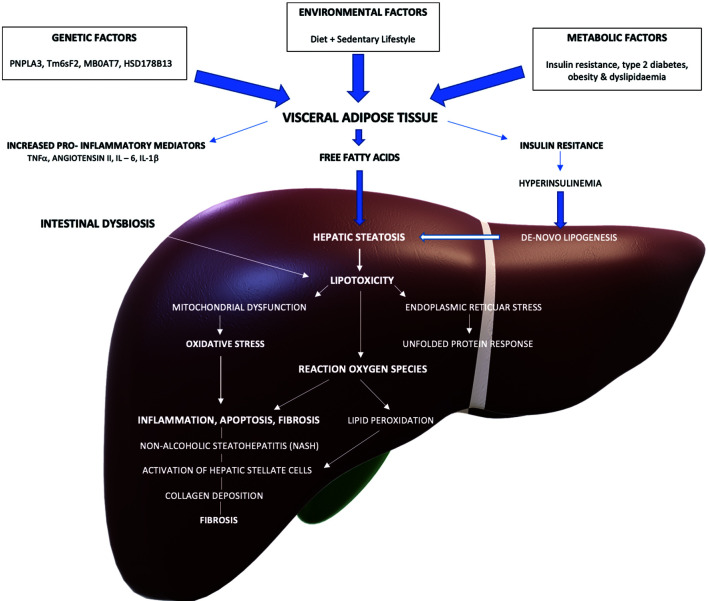
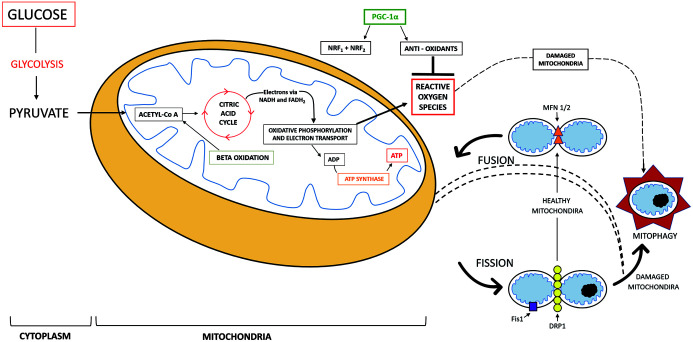
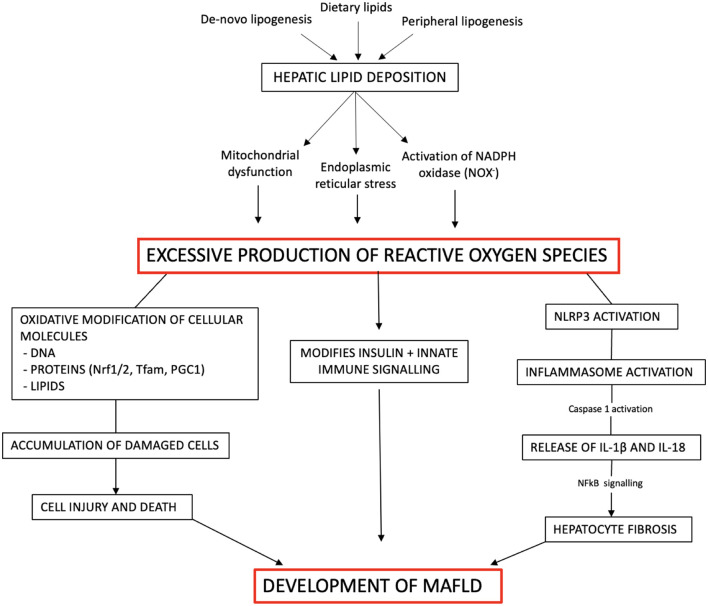
The pathogenesis of metabolic-associated fatty liver disease (MAFLD) is complex and thought to be dependent on multiple parallel hits on a background of genetic susceptibility. The evidence suggests that MAFLD progression is a dynamic two-way process relating to repetitive bouts of metabolic stress and inflammation interspersed with endogenous anti-inflammatory reparative responses. In MAFLD, excessive hepatic lipid accumulation causes the production of lipotoxins that induce mitochondrial dysfunction, endoplasmic reticular stress, and over production of reactive oxygen species (ROS). Models of MAFLD show marked disruption of mitochondrial function and reduced oxidative capacitance with impact on cellular processes including mitophagy, oxidative phosphorylation, and mitochondrial biogenesis. In excess, ROS modify insulin and innate immune signaling and alter the expression and activity of essential enzymes involved in lipid homeostasis. ROS can also cause direct damage to intracellular structures causing hepatocyte injury and death. In select cases, the use of anti-oxidants and ROS scavengers have been shown to diminish the pro-apoptopic effects of fatty acids. Given this link, endogenous anti-oxidant pathways have been a target of interest, with Nrf2 activation showing a reduction in oxidative stress and inflammation in models of MAFLD. Thyroid hormone receptor β (THRβ) agonists and nuclear peroxisome proliferation-activated receptor (PPAR) family have also gained interest in reducing hepatic lipotoxicity and restoring hepatic function in models of MAFLD. Unfortunately, the true interplay between the clinical and molecular components of MAFLD progression remain only partly understood. Most recently, multiomics-based strategies are being adopted for hypothesis-free analysis of the molecular changes in MAFLD. Transcriptome profiling maps the unique genotype-phenotype associations in MAFLD and with various single-cell transcriptome-based projects underway, there is hope of novel physiological insights to MAFLD progression and uncover therapeutic targets.
Keywords: Fatty liver disease; Metabolic-associated fatty liver disease; Non-alcoholic steatohepatitis; Oxidative stress; Reactive oxidation species.
© 2022 Authors.
Conflict of interest statement
The authors have no conflict of interests related to this publication.
Figures
References
Publication types
LinkOut - more resources
Full Text Sources