


The emergence and development of behavioral individuality in clonal fish
- PMID: 36307437
- PMCID: PMC9616841
- DOI: 10.1038/s41467-022-34113-y
The emergence and development of behavioral individuality in clonal fish
Abstract
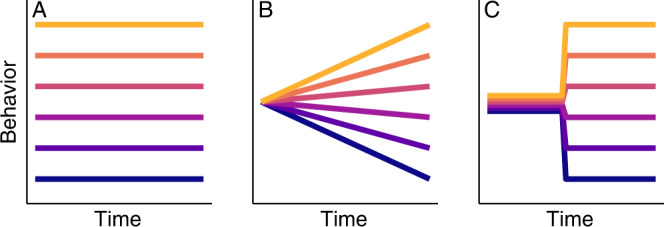
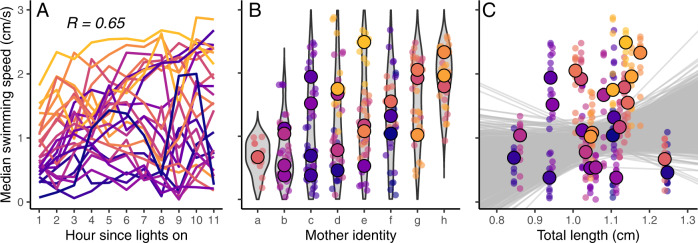
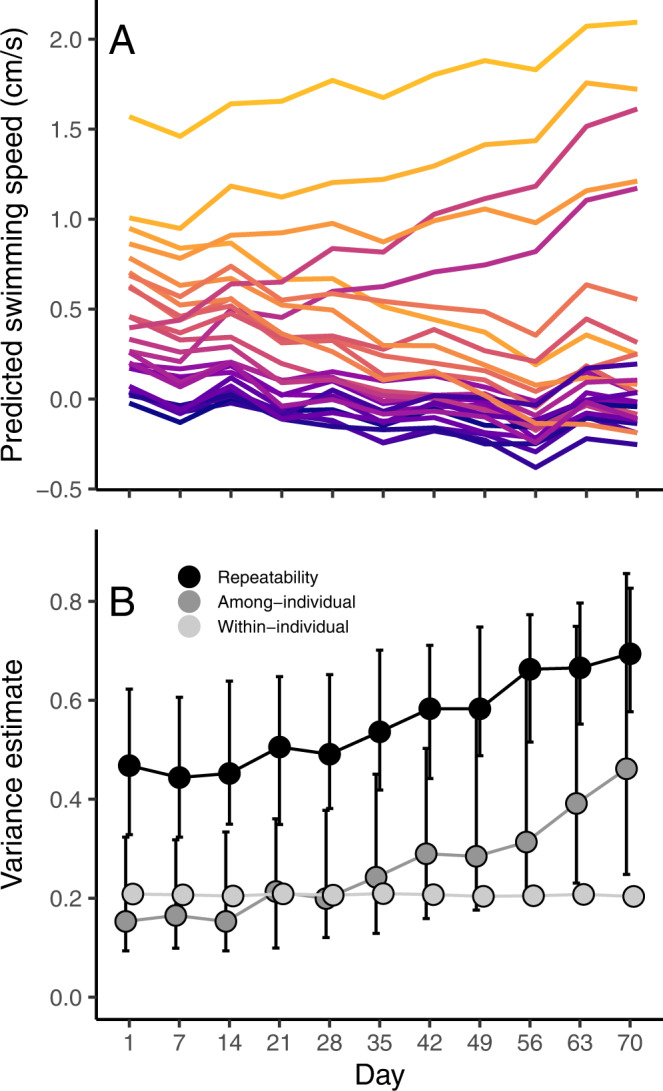
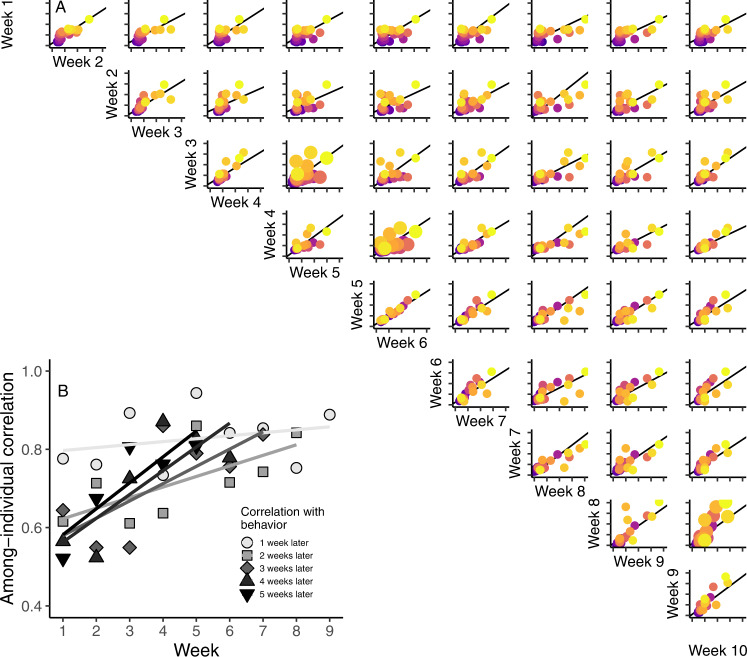
Behavioral individuality is a ubiquitous phenomenon in animal populations, yet the origins and developmental trajectories of individuality, especially very early in life, are still a black box. Using a high-resolution tracking system, we mapped the behavioral trajectories of genetically identical fish (Poecilia formosa), separated immediately after birth into identical environments, over the first 10 weeks of their life at 3 s resolution. We find that (i) strong behavioral individuality is present at the very first day after birth, (ii) behavioral differences at day 1 of life predict behavior up to at least 10 weeks later, and (iii) patterns of individuality strengthen gradually over developmental time. Our results establish a null model for how behavioral individuality can develop in the absence of genetic and environmental variation and provide experimental evidence that later-in-life individuality can be strongly shaped by factors pre-dating birth like maternal provisioning, epigenetics and pre-birth developmental stochasticity.
© 2022. The Author(s).
Conflict of interest statement
The authors declare no competing interests.
Figures
References
-
- Polderman TJC, et al. Meta-analysis of the heritability of human traits based on fifty years of twin studies. Nat. Genet. 2015;47:702–709. - PubMed
-
- Laskowski KL, Doran C, Bierbach D, Krause J, Wolf M. Naturally clonal vertebrates are an untapped resource in ecology and evolution research. Nat. Ecol. Evolution. 2019;3:161–169. - PubMed
-
- Vrijenhoek RC. Unisexual fish: model systems for studying ecology and evolution. Annu. Rev. Ecol. Syst. 1994;25:71–96.
-
- Gartner K. A third component causing random variability beside environment and genotype. A reason for the limited success of a 30 year long effort to standardize laboratory animals? Lab Anim. 1990;24:71–77. - PubMed
-
- Wong AHC, Gottesman II, Petronis A. Phenotypic differences in genetically identical organisms: the epigenetic perspective. Hum. Mol. Genet. 2005;14:R11–R18. - PubMed
