


Longitudinal patterns of the relation between anxiety, depression and posttraumatic stress disorder among postpartum women with and without maternal morbidities in Northwest Ethiopia: a cross-lagged autoregressive structural equation modelling
- PMID: 36309711
- PMCID: PMC9617360
- DOI: 10.1186/s13690-022-00978-0
Longitudinal patterns of the relation between anxiety, depression and posttraumatic stress disorder among postpartum women with and without maternal morbidities in Northwest Ethiopia: a cross-lagged autoregressive structural equation modelling
Abstract
Background: The postpartum period is a time where mothers can undergo significant changes that increase vulnerability for depression, anxiety and posttraumatic stress disorder symptoms. However, the direct and indirect factors of depression, anxiety and posttraumatic stress disorder symptoms and their direction of relationships following childbirth is not well investigated in Ethiopia. The aim of this study was to determine the direct and indirect factors of depression, anxiety and posttraumatic stress disorder symptoms and their direction of relationships following childbirth.
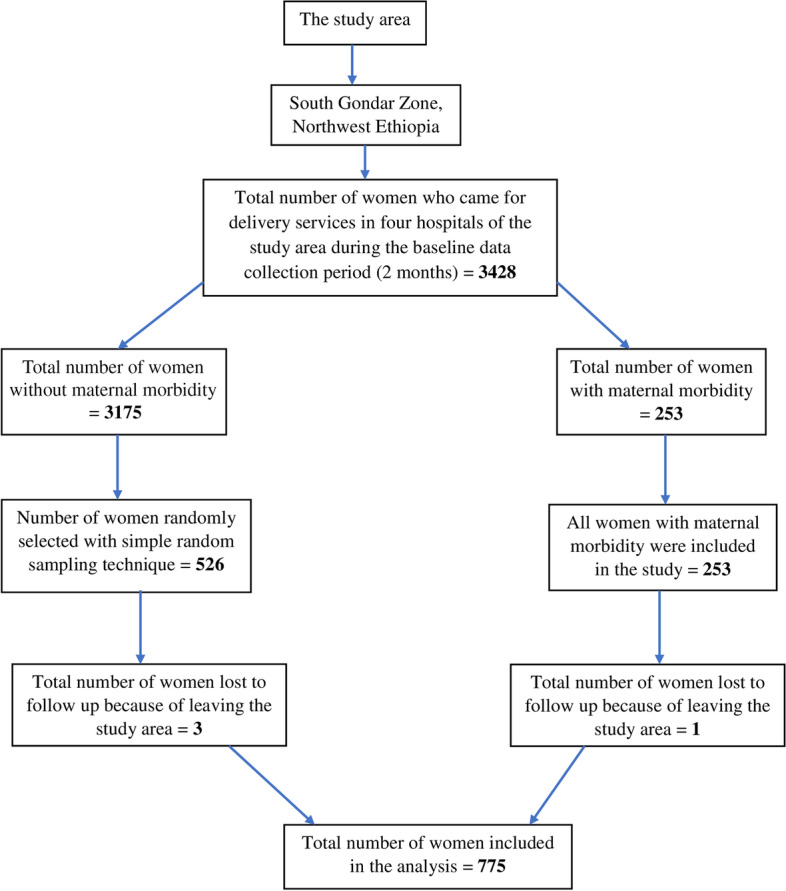
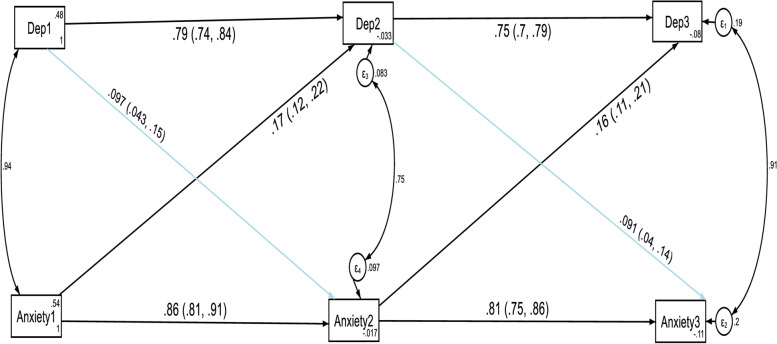
Methods: A total of 775 women consented to participate at the first, second and third follow-up of the study (6th, 12th and 18th week of postpartum period) during October, 2020 - March, 2021. Women were recruited after childbirth and before discharge using the World Health Organization maternal morbidity working group criteria to identify exposed and non-exposed groups. A cross-lagged autoregressive path analysis and linear structural equation modelling were carried out using Stata version 16 software.
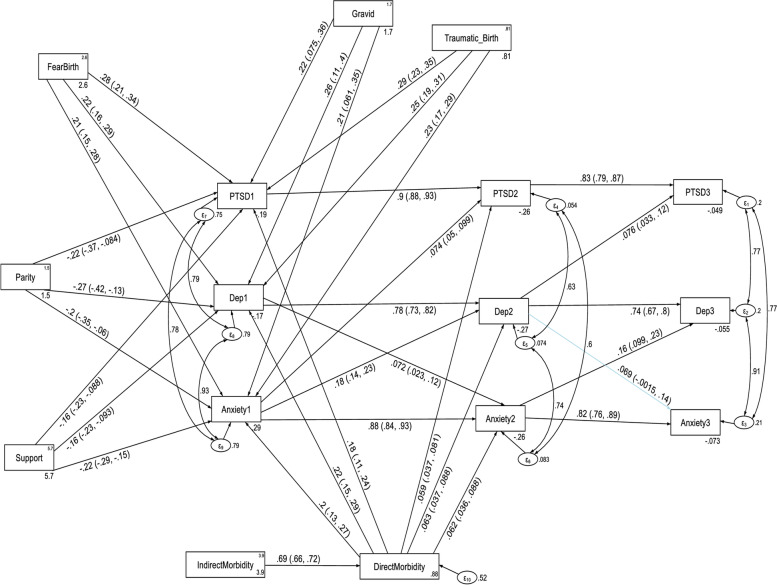
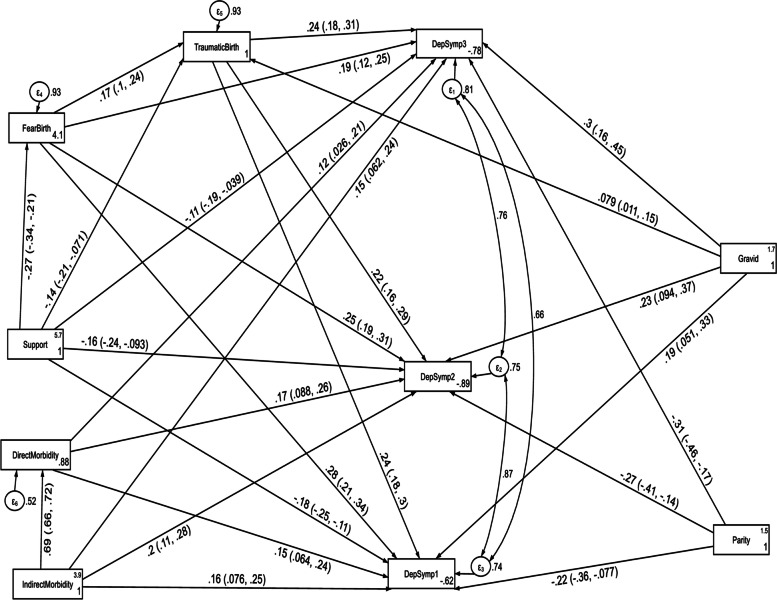
Results: Prevalence rates of anxiety were 18.5%, 15.5% and 8.5% at the 6th, 12th and 18th week of postpartum respectively. The prevalence rates for depression were also found to be 15.5%, 12.9% and 8.6% respectively during the same follow up period and for posttraumatic stress disorder it was found to be 9.7%, 6.8% and 3.5% at the 6th, 12th and 18th week of postpartum respectively. Moreover, anxiety and depression were found to be a causal risk factors for posttraumatic stress disorder in the postpartum period. Direct maternal morbidity, fear of childbirth, higher gravidity, perceived traumatic childbirth and indirect maternal morbidity were found to have a direct and indirect positive association with depression, anxiety and posttraumatic stress disorder. In contrast, higher parity, higher family size and higher social support have a direct and indirect negative association.
Conclusion: Postnatal mental health screening, early diagnosis and treatment of maternal morbidities, developing encouraging strategies for social support and providing adequate information about birth procedures and response to mothers' needs during childbirth are essential to improve maternal mental health in the postpartum period.
Keywords: Anxiety; Autoregressive; Cross-lagged; Depression; Maternal morbidities; Postpartum women; Posttraumatic stress disorder; Structural equation modelling.
© 2022. The Author(s).
Conflict of interest statement
None declared.
Figures




References
-
- Van der Zee-van AI, Boere-Boonekamp MM, Groothuis-Oudshoorn CG, Reijneveld SA. Postpartum depression and anxiety: a community-based study on risk factors before, during and after pregnancy. J Affect Disord. 2021;286:158–165. - PubMed
-
- Association AP. Diagnostic and statistical manual of mental disorders (DSM-5®): American Psychiatric Pub; 2013. - PubMed
-
- Organization WH. Maternal mental health and child health and development in resource-constrained settings: report of a UNFPA. World Health Organization; 2009.
LinkOut - more resources
Full Text Sources
