


Characterization and fungicide sensitivity of Colletotrichum godetiae causing sweet cherry fruit anthracnose in Guizhou, China
- PMID: 36312935
- PMCID: PMC9611538
- DOI: 10.3389/fmicb.2022.923181
Characterization and fungicide sensitivity of Colletotrichum godetiae causing sweet cherry fruit anthracnose in Guizhou, China
Abstract
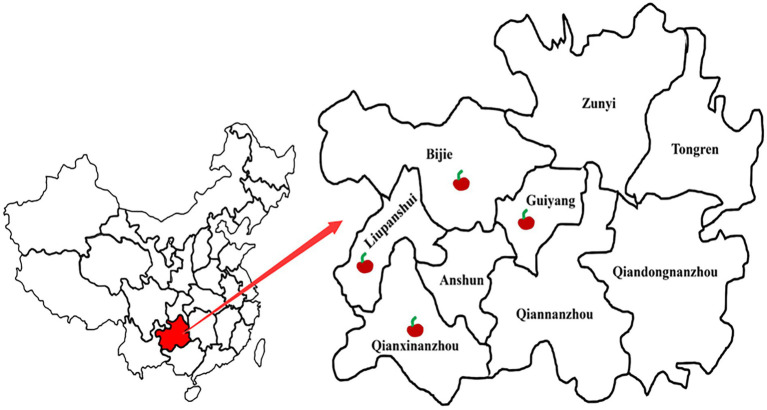
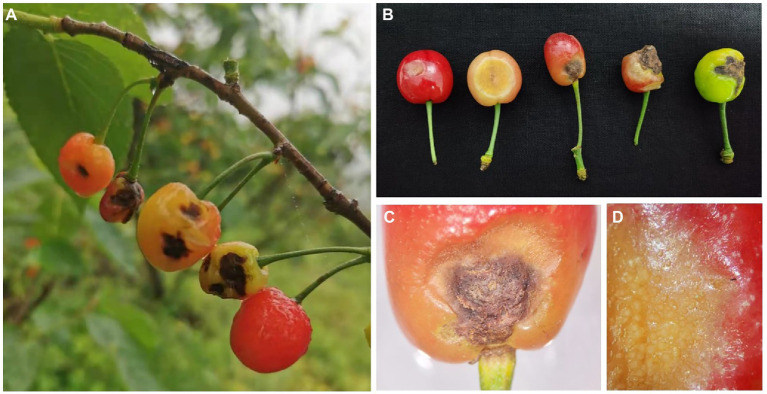
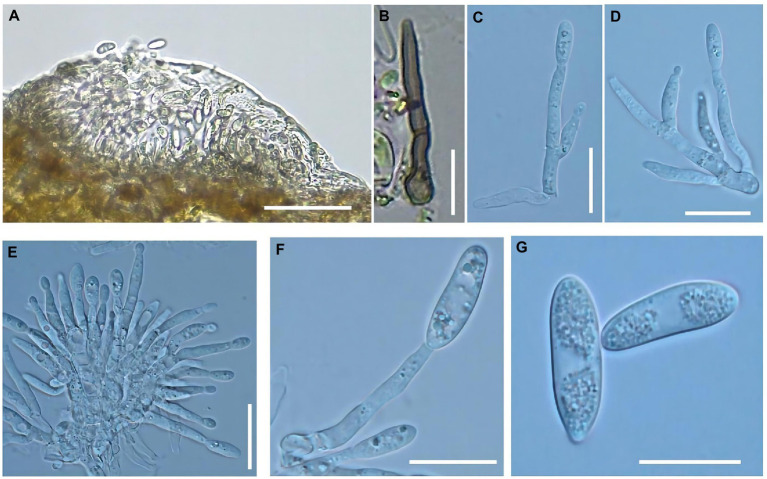
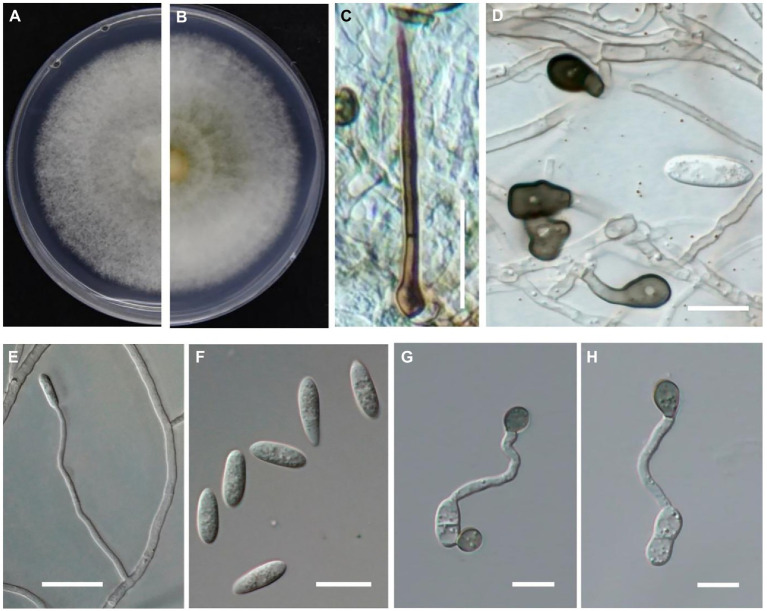
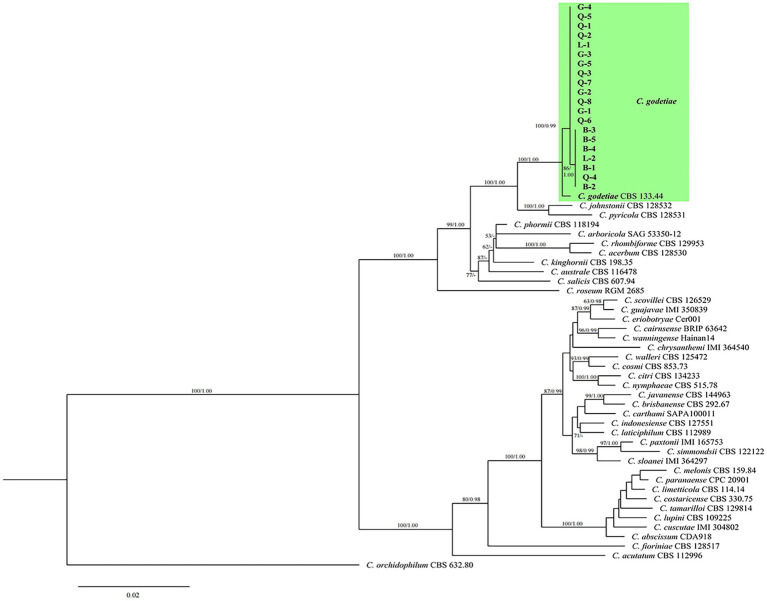
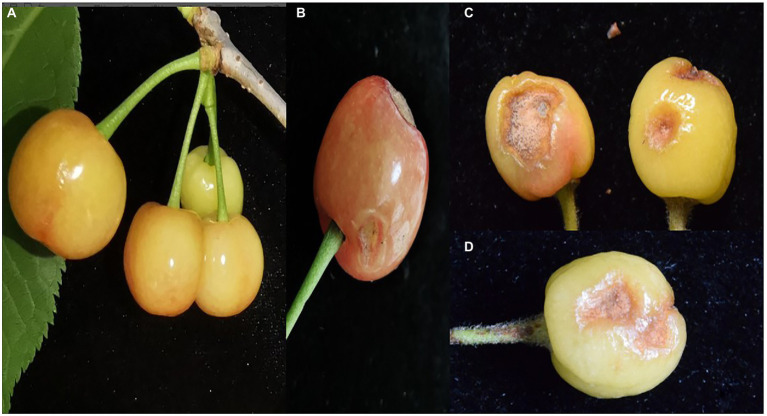
Sweet cherry is an important fruit crop with high economic and ornamental value in China. However, cherry fruit anthracnose, caused by Colletotrichum species, greatly impacts cherry yield and quality. Here, we surveyed cherry anthracnose in Guizhou, China from 2019-2020. Necrotic sweet cherry fruits were collected from different areas in Guizhou and examined. A total of 116 Colletotrichum strains were isolated from these symptomatic fruits. Based on the morphological characteristics of the isolates and phylogenetic analyses of concatenate internal transcribed spacer (ITS) region and ACT, CHS-1, GAPDH, TUB2, and HIS3 genes, the pathogen responsible for causing sweet cherry anthracnose was identified as Colletotrichum godetiae. Pathogenicity tests were conducted by inoculating healthy sweet cherry fruits with spore suspensions of the fungal pathogen, and Koch's postulates were confirmed by pathogen re-isolation and identification. The Q-1 isolate showed different sensitivities to 13 fungicides, exhibiting seven different modes of action, and its EC50 values ranged from 0.04 to 91.26 μg ml-1. According to that, the sensitivity of 20 isolates from different samples to ten fungicides with better performance, were measured. The results showed that 6 of the 10 fungicides (difenoconazole, propiconazole, prochloraz-manganese, pyraclostrobin, trifloxystrobin-tebuconazole, and difenoconazole-azoxystrobin) all showed higher sensitive to the 20\u00B0C. godetiae isolates, and no resistance groups appeared. Its EC50 values ranged from 0.013 to 1.563 μg ml-1. In summary, this is the first report demonstrating that C. godetiae causes sweet cherry anthracnose and the results of this study provide insights into how sweet cherry anthracnose could be effectively controlled in China.
Keywords: Cerasus pseudocerasus; Colletotrichum; multi-gene; plant disease; sweet cherry fruit anthracnose.
Copyright © 2022 Peng, Pan, Tan, Zeng, Lin, Jiang, Zhao, Tian and Zhao.
Conflict of interest statement
The authors declare that the research was conducted in the absence of any commercial or financial relationships that could be construed as a potential conflict of interest.
Figures
References
-
- Baggio J. S., Wang N. Y., Peres N. A., Amorim L. (2018). Baseline sensitivity of Colletotrichum acutatum isolates from Brazilian strawberry fields to azoxystrobin, difenoconazole, and thiophanate-methyl. Trop Plant Pathol. 43, 533–542. doi: 10.1007/s40858-018-0232-2 - DOI
-
- Baroncelli R., Sarrocco S., Zapparata A., Tavarini S., Angelini L. G., Vannacci G. (2015). Characterization and epidemiology of Colletotrichum acutatum sensu lato (C. chrysanthemi) causing C. arthamus tinctorius anthracnose. Plant Pathol. 64, 375–384. doi: 10.1111/ppa.12268 - DOI
-
- Baroncelli R., Sreenivasaprasad S., Lane C. R., Thon M. R., Sukno S. A. (2014). First report of Colletotrichum acutatum sensu lato (Colletotrichum godetiae) causing anthracnose on grapevine (Vitis vinifera) in the United Kingdom. New Disease Reports 29, 26. doi: 10.5197/j.2044-0588.2014.029.026 - DOI
LinkOut - more resources
Full Text Sources
Research Materials
