


The pathogenesis, diagnosis, prevention, and treatment of CAR-T cell therapy-related adverse reactions
- PMID: 36313336
- PMCID: PMC9616161
- DOI: 10.3389/fphar.2022.950923
The pathogenesis, diagnosis, prevention, and treatment of CAR-T cell therapy-related adverse reactions
Abstract
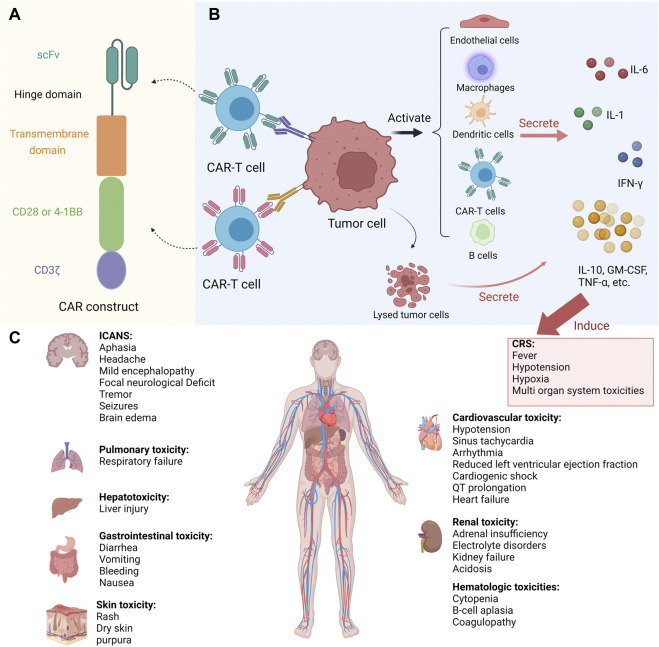
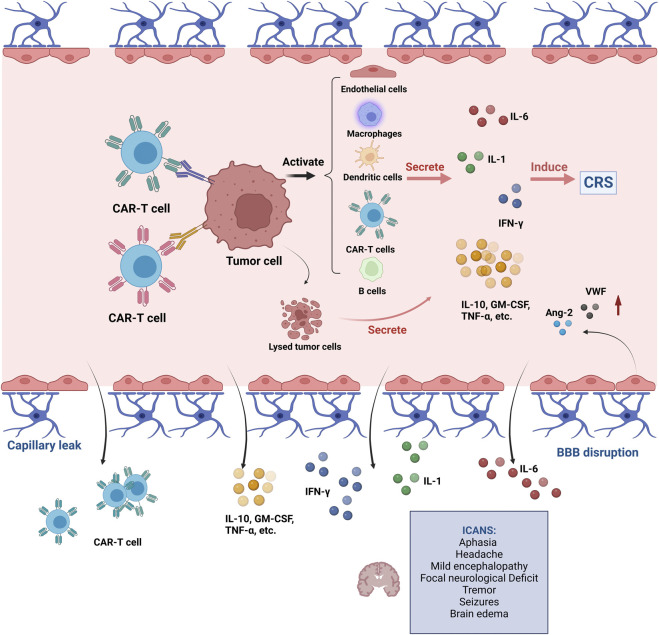
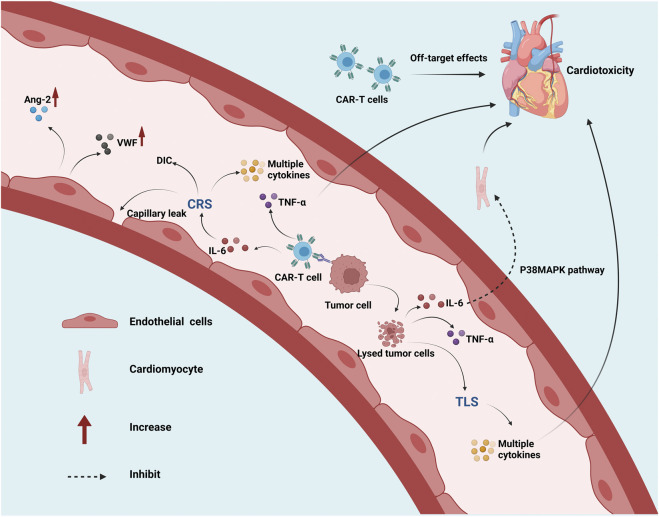
Chimeric antigen receptor (CAR)-T cell therapy is effective in the treatment of refractory/relapsed (r/r) hematological malignancies (r/r B-cell lymphoblastic leukemia, B-cell lymphoma, and multiple myeloma). In addition, it is being explored as a treatment option for solid tumors. As of 31 March 2022, seven CAR-T therapies for hematological malignancies have been approved worldwide. Although CAR-T therapy is an effective treatment for many malignancies, it also causes adverse effects. The incidence of cytokine release syndrome (CRS), the most common adverse reaction after infusion of CAR-T cells, is as high as 93%.CRS, is the leading risk factor of immune effector cell-associated neurotoxicity syndrome (ICANS), as well as cardiovascular, hematological, hepatorenal, skin, pulmonary, and gastrointestinal toxicity. Severe adverse reactions complicated by CRS severely impede the widespread application of CAR-T therapy. The CAR-T product was initially approved in 2017; however, only limited studies have investigated the adverse reactions owing to CAR-T therapy compared to that of clinically approved drugs. Thus, we aimed to elucidate the mechanisms, risk factors, diagnostic criteria, and treatment of toxicities concurrent with CRS, thereby providing a valuable reference for the safe, effective, and widespread application of CAR-T therapy.
Keywords: CAR-T cell therapy; ICANS; consensus grading; cytokine release syndrome; organ system toxicity; treatment strategies.
Copyright © 2022 Li, Ming, Fu, Li, Wu, Jiang, Li, Ni, Li, Su and Liu.
Conflict of interest statement
The authors declare that the research was conducted in the absence of any commercial or financial relationships that could be construed as a potential conflict of interest.
Figures
References
-
- Abbasi A., Peeke S., Shah N., Mustafa J., Khatun F., Lombardo A., et al. (2020). Axicabtagene ciloleucel CD19 CAR-T cell therapy results in high rates of systemic and neurologic remissions in ten patients with refractory large B cell lymphoma including two with HIV and viral hepatitis. J. Hematol. Oncol. 13 (1), 1. 10.1186/s13045-019-0838-y - DOI - PMC - PubMed
-
- Abramson J. S., Palomba M. L., Gordon L. I., Lunning M. A., Wang M., Arnason J., et al. (2020). Lisocabtagene maraleucel for patients with relapsed or refractory large B-cell lymphomas (TRANSCEND NHL 001): A multicentre seamless design study. Lancet 396 (10254), 839–852. 10.1016/S0140-6736(20)31366-0 - DOI - PubMed
-
- Ahmed A., Merrill S. A., Alsawah F., Bockenstedt P., Campagnaro E., Devata S., et al. (2019). Ruxolitinib in adult patients with secondary haemophagocytic lymphohistiocytosis: An open-label, single-centre, pilot trial. Lancet. Haematol. 6 (12), e630–e637. 10.1016/S2352-3026(19)30156-5 - DOI - PMC - PubMed
Publication types
LinkOut - more resources
Full Text Sources
Research Materials
