. 2022 Oct 31;7(1):132.
doi: 10.1038/s41541-022-00537-2.

Characterization of B-cell and T-cell responses to a tetravalent dengue purified inactivated vaccine in healthy adults

Affiliations

Characterization of B-cell and T-cell responses to a tetravalent dengue purified inactivated vaccine in healthy adults

Heather Friberg et al. NPJ Vaccines. .

Abstract

The increasing global impact of dengue underscores the need for a dengue virus (DENV) vaccine. We assessed B-cell and T-cell responses following vaccination with four formulations of a tetravalent dengue purified inactivated vaccine (DPIV) in dengue-primed and dengue-naive adults from two studies (NCT01666652, NCT01702857). Frequencies of DPIV-induced memory B cells specific to each DENV serotype remained high up to 12 months post-vaccination, and were higher in the dengue-primed than dengue-naive adults. A subsequent DPIV booster dose induced strong anamnestic B-cell responses. Multifunctional CD4+ T cells (predominantly expressing IL-2) were induced by DPIV, with higher frequencies in dengue-primed adults. DPIV-induced CD4+ T cells also demonstrated in vitro proliferative capacity and antigen-specific production of GM-CSF, IFN-γ, and IL-13. CD8+ T-cell responses were undetectable in dengue-naive adults and low in dengue-primed individuals. B- and T-cell responses persisted up to 12 months post-vaccination in both dengue-primed and dengue-naive adults.


Conflict of interest statement

H.F., L.L., L.J.M., R.G.J., S.J.T. and J.R.C. received financial and other support without any personal financial benefit from GSK as part of the Cooperative Research and Development Agreement (CRADA) between the US Army and GSK; they also receive travel support through the CRADA. A.C.S., R.M.P., and P.M. were employees of GSK and held shares in GSK at the time of study conduct. The institution of C.D. received funding from GSK and the US Army Medical Materiel Development Activity to conduct this study. H.F., L.L., L.J.M., A.C.S., R.M.P., R.G.J., C.D., S.J.T., P.M. and J.R.C. declare no other financial and non-financial relationships and activities. M.G. and A.K. declare no financial and non-financial relationships and activities and no conflicts of interest. The opinions or assertions contained herein are the private views of the authors and are not to be construed as reflecting the official views of the US Army or the US Department of Defense. The investigators have adhered to the policies for protection of human subjects as prescribed in AR 70-25. Dengvaxia is a trademark owned by or licensed to Sanofi Pasteur.

Figures

Fig. 1
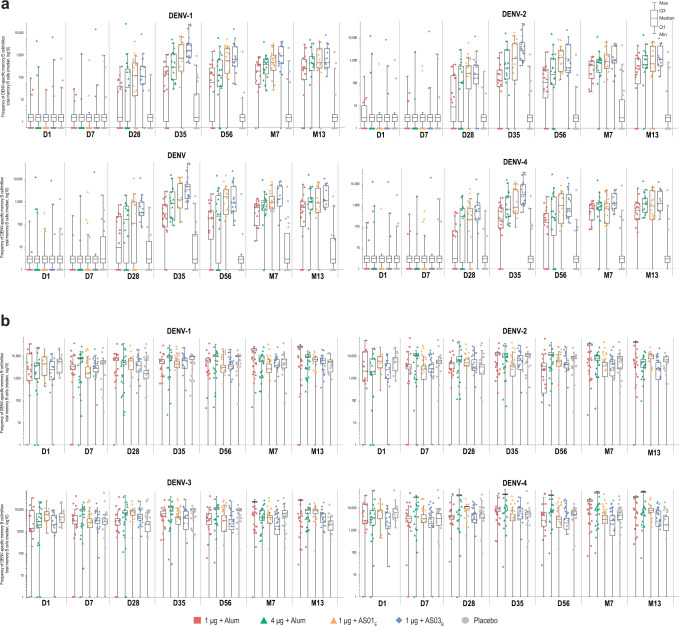
Fig. 1. Frequencies of memory B cells specific to dengue virus serotypes 1–4.
Values are shown at multiple time points in dengue-naive (a) and dengue-primed (b) adults following 2-dose DPIV vaccination (adapted according-to-protocol cohort for immunogenicity). Error bars on the box plot represent the Min and Max values in each group. Min and Max values were calculated as (Q1–1.5*interquartile range)/(Q3 + 1.5* interquartile range). Individual values are plotted for each group. D, day; D0, pre-vaccination; D7, 7 days post-dose 1; D28, 28 days post-dose 1; D35, 7 days post-dose 2; D56, 28 days post-dose 2; DENV, dengue virus; DPIV, tetravalent dengue purified inactivated vaccine; M, month; M7, 6 months post-dose 2; M13, 12 months post-dose 2.
Fig. 2
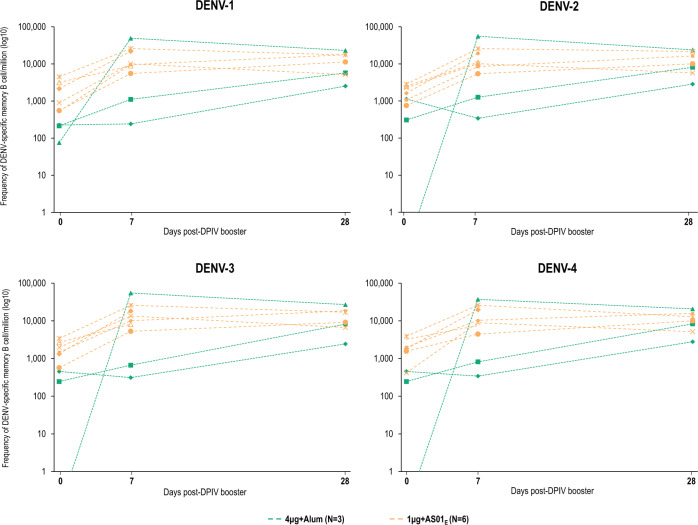
Fig. 2. Individual frequencies of memory B cells specific to dengue virus serotypes 1–4.
Values shown are for a subset of dengue-naive participants who received a DPIV booster (according-to-protocol cohort for immunogenicity for dose 3 subset). DENV, dengue virus; DPIV, tetravalent dengue purified inactivated vaccine; N, number of study participants who received a DPIV booster. Lines indicate responses of individual participants.
Fig. 3
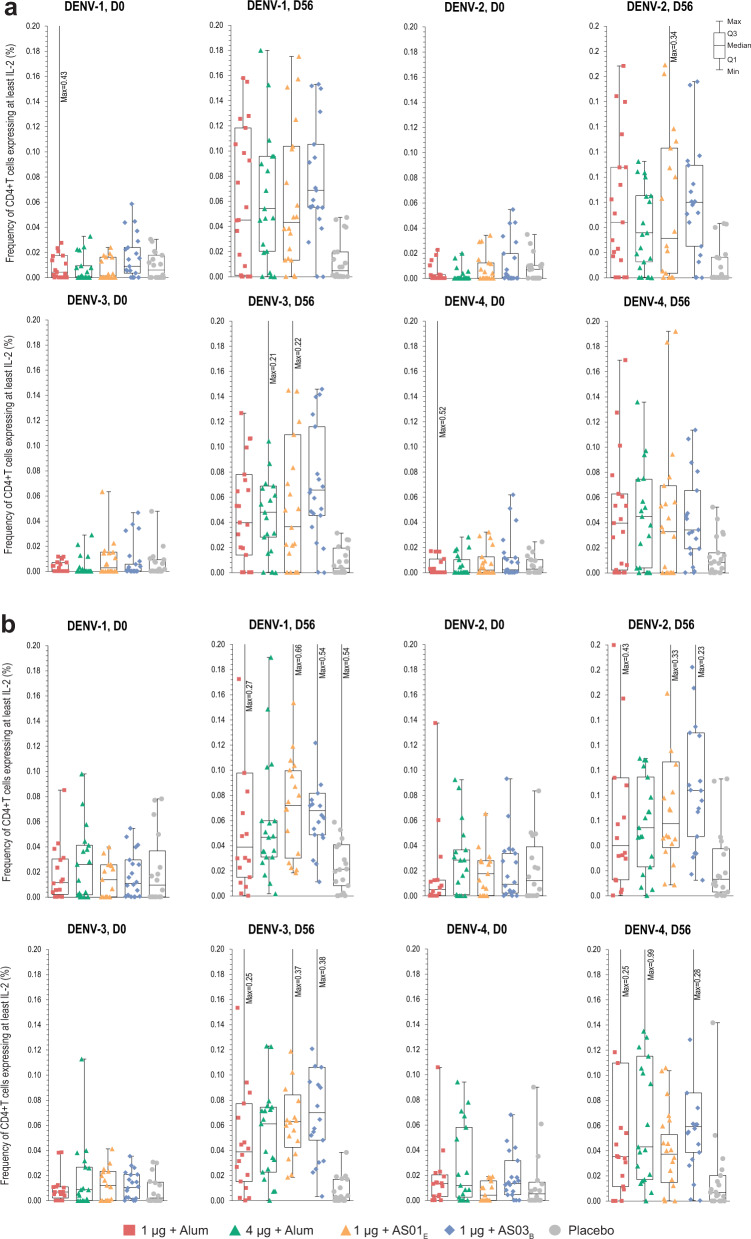
Fig. 3. Frequencies of CD4+ T cells specific to dengue virus serotypes 1–4 expressing at least IL-2.
T cells were quantified using the combined capsid/pre-membrane and envelope region peptide pools in the predominantly dengue-naive (a) and dengue-primed (b) populations (according-to-protocol cohort for cell-mediated immunogenicity at day 56), at day 0 (pre-vaccination) and day 56 following 2-dose DPIV administration. Individual values are plotted for each group. Error bars on the box plot represent the Min and Max values in each group. D, day; D0, pre-vaccination; D56, 28 days post-dose 2; DENV, dengue virus; DPIV, tetravalent dengue purified inactivated vaccine; Min/Max, minimum/maximum observation; Q1, Q3, first and third quartiles; ◊, geometric mean frequency. For each serotype, the combined capsid/pre-membrane and envelope region peptide pools ((C + M) + E pool)-specific frequency was derived by adding the (C + M) pool specific frequency and the E pool specific frequency. Note: Data were not background-subtracted.
Fig. 4
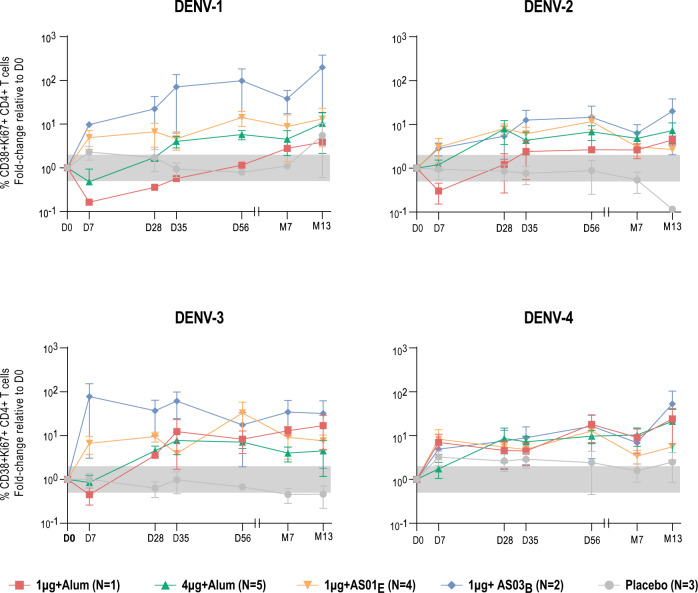
Fig. 4. Median fold change in the percentage of activated CD38 + Ki67 + CD4+ T cells among total CD4+ T cells.
Changes are relative to day 0 (pre-vaccination) values, after 6–7 days in vitro culture with combined DENV capsid/pre-membrane and envelope region peptide pools, following DPIV vaccination of dengue-naive adults (adapted according-to-protocol cohort for immunogenicity subset). Error bars represent standard errors. D, day; D0, pre-vaccination; D7, 7 days post-dose 1; D28, 28 days post-dose 1; D35, 7 days post-dose 2; D56, 28 days post-dose 2; DENV, dengue virus; DPIV, tetravalent dengue purified inactivated vaccine; M, month; M7, 6 months post-dose 2; M13, 12 months post-dose 2; N, number of participants, expressed as a range. The gray box indicates +/− two-fold.
Fig. 5
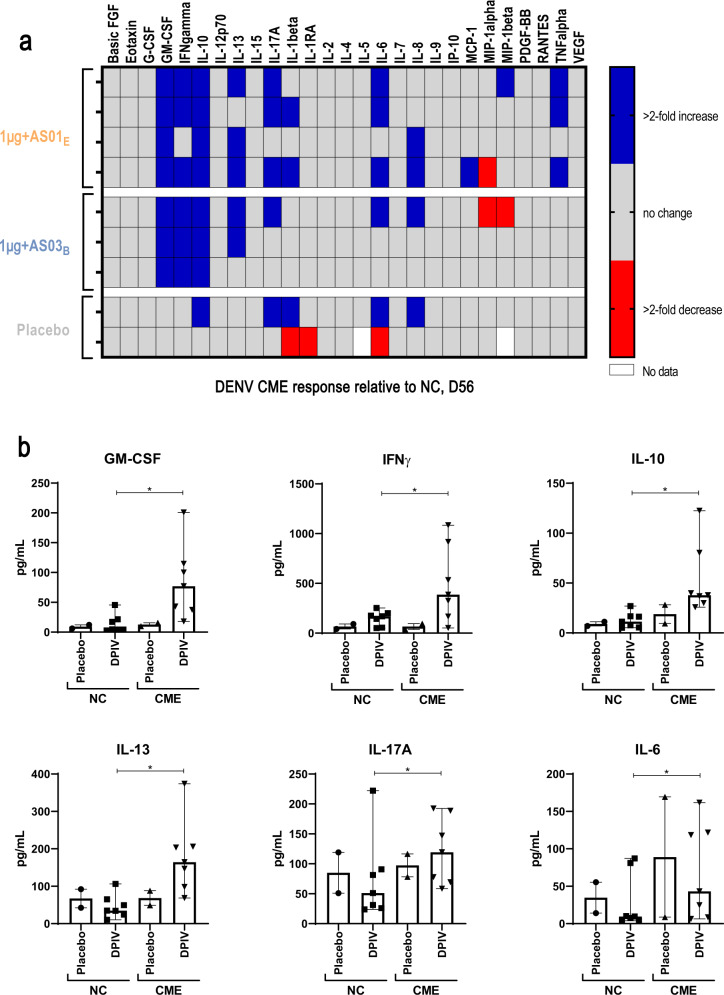
Fig. 5. Cytokine analysis of 6–7 days culture supernatants.
The panels show the difference in the production of 27 cytokines (using combined DENV capsid/pre-membrane and envelope region peptide pools) at day 56 (a) and the concentrations of cytokines showing a greater than two-fold change in at least four vaccinated individuals (b) (adapted according-to-protocol cohort for immunogenicity subset). Error bars represent the Min and Max values in each group. CME, combined capsid/pre-membrane and envelope; D, day; D56, 28 days post-dose 2; DENV, dengue virus; FGF, fibroblast growth factor; G-CSF, granulocyte colony-stimulating factor; GM-CSF, granulocyte-macrophage colony-stimulating factor; IFN, interferon; IL, interleukin; IP-10, interferon-inducible protein 10; MCP-1, monocyte chemoattractant protein-1; MIP, macrophage inflammatory protein; NC, negative control; PDGF, platelet-derived growth factor; TNF, tumor necrosis factor; VEGF, vascular endothelial growth factor. *Significant difference in the DPIV groups comparing NC vs CME stimulation as assessed by Holm-Sidak using α = 0.05; computations assumed that all time points were sampled from populations with the same scatter.

References

    1. World Health Organization. Dengue and severe dengue. Key facts. http://www.who.int/news-room/fact-sheets/detail/dengue-and-severe-dengue (2019).
    1. World Health Organization. Dengue and severe dengue. Fact sheet. http://apps.who.int/mediacentre/factsheets/fs117/en/index.html (2017).
    1. Johnson N, et al. Emerging mosquito-borne threats and the response from European and Eastern Mediterranean countries. Int. J. Environ. Res. Public Health. 2018;15:2775. doi: 10.3390/ijerph15122775. - DOI - PMC - PubMed
    1. Castro MC, Wilson ME, Bloom DE. Disease and economic burdens of dengue. Lancet Infect. Dis. 2017;17:e70–e78. doi: 10.1016/S1473-3099(16)30545-X. - DOI - PubMed
    1. Shepard DS, Undurraga EA, Halasa YA, Stanaway JD. The global economic burden of dengue: a systematic analysis. Lancet Infect. Dis. 2016;16:935–941. doi: 10.1016/S1473-3099(16)00146-8. - DOI - PubMed