Review
. 2022 Nov 1;8(1):89.
doi: 10.1038/s41522-022-00352-6.

Host-microbiome interactions: Gut-Liver axis and its connection with other organs

Affiliations
Review

Host-microbiome interactions: Gut-Liver axis and its connection with other organs

Swadha Anand et al. NPJ Biofilms Microbiomes. .

Abstract

An understanding of connections between gut microbiome and liver has provided important insights into the pathophysiology of liver diseases. Since gut microbial dysbiosis increases gut permeability, the metabolites biosynthesized by them can reach the liver through portal circulation and affect hepatic immunity and inflammation. The immune cells activated by these metabolites can also reach liver through lymphatic circulation. Liver influences immunity and metabolism in multiple organs in the body, including gut. It releases bile acids and other metabolites into biliary tract from where they enter the systemic circulation. In this review, the bidirectional communication between the gut and the liver and the molecular cross talk between the host and the microbiome has been discussed. This review also provides details into the intricate level of communication and the role of microbiome in Gut-Liver-Brain, Gut-Liver-Kidney, Gut-Liver-Lung, and Gut-Liver-Heart axes. These observations indicate a complex network of interactions between host organs influenced by gut microbiome.


Conflict of interest statement

S.M. and S.A. are employed by company Tata Consultancy Services Ltd., (TCS) and are part of TCS Research. Both authors declare no competing interests.

Figures
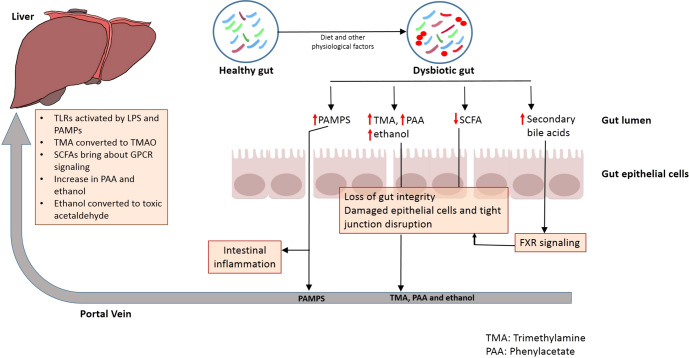
Fig. 1
Fig. 1. Translocation of metabolites in Gut–liver axis.
Translocation of metabolites and pathogen associated molecular patterns (PAMPs) biosynthesized by microbes in the gut through the portal circulation to liver where they exert multiple effects on liver health condition.
Fig. 2
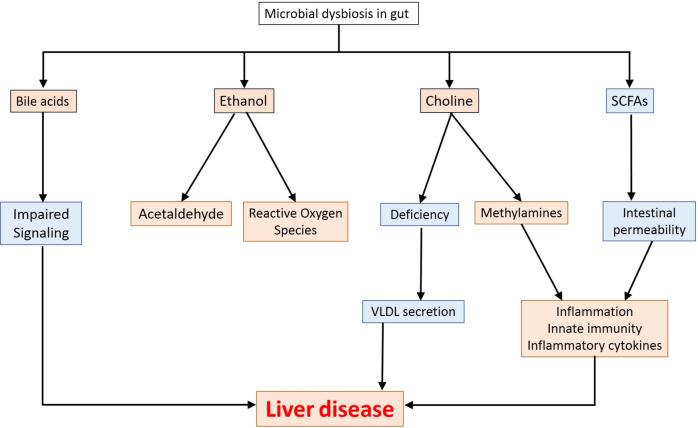
Fig. 2. Gut metabolites and liver disease.
Metabolites biosynthesized by the microbiome and their impact on onset of liver disease.
Fig. 3
Fig. 3. Gut–Liver–brain axis.
Impairment of liver urea cycle in liver disease condition leads to increase in uremic toxins and ammonia which reach the brain and affect neurotransmitter signaling and astrocyte swelling.
Fig. 4
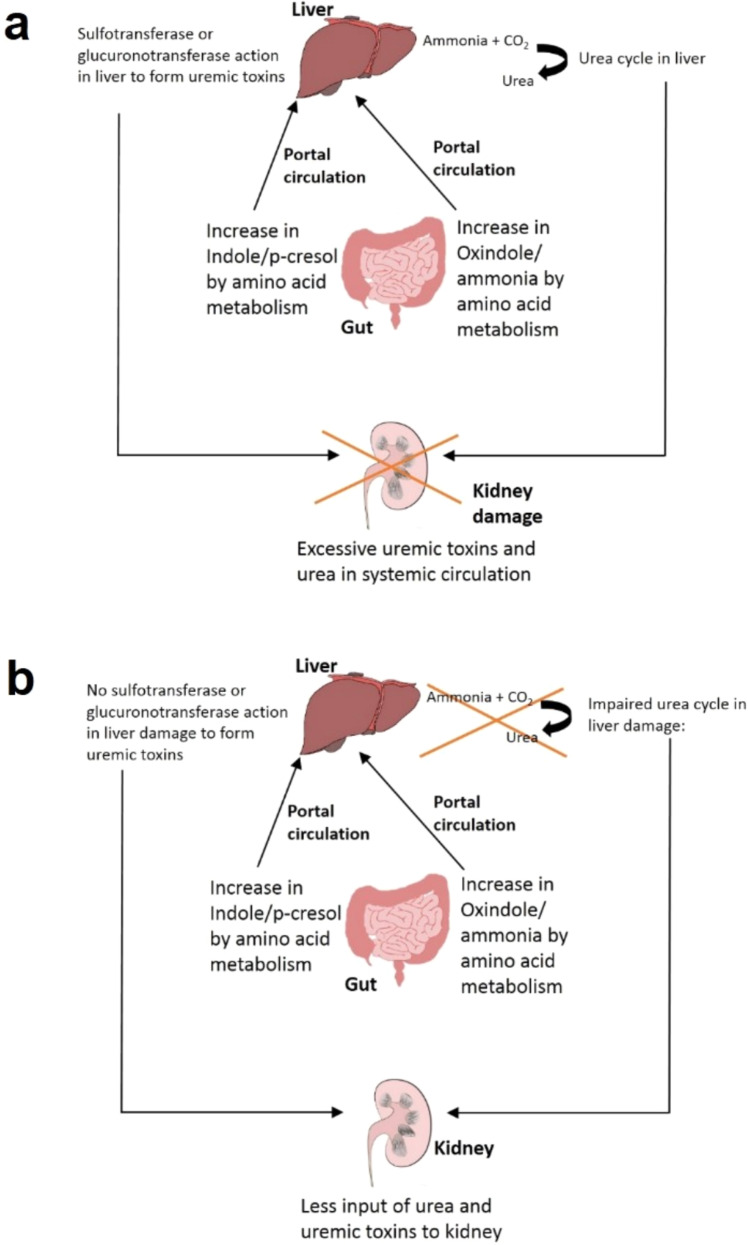
Fig. 4. Gut–Liver–kidney axis and liver damage.
a Gut–Liver–kidney axis without liver damage: Oxindole and cresol produced by gut microbiome are converted to uremic toxins in liver. The uremic toxins reach kidneys through portal circulation. b Gut–Liver–Kidney axis with liver damage: Oxindole and cresol produced in the gut are not converted to uremic toxins in liver.

References

    1. Schmidt TSB, Raes J, Bork P. The human gut microbiome: from association to modulation. Cell. 2018;172:1198–1215. doi: 10.1016/j.cell.2018.02.044. - DOI - PubMed
    1. Kho, Z. Y. & Lal, S. K. The human gut microbiome – a potential controller of wellness and disease. Front. Microbiol. 9, 1835 (2018). - PMC - PubMed
    1. Anand, S. & Mande, S. S. Diet, microbiota and gut-lung connection. Front. Microbiol. 9, 2147 (2018). - PMC - PubMed
    1. Bajaj JS. Alcohol, liver disease and the gut microbiota. Nat. Rev. Gastroenterol. Hepatol. 2019;16:235–246. doi: 10.1038/s41575-018-0099-1. - DOI - PubMed
    1. Kirpich IA, Marsano LS, McClain CJ. Gut-liver axis, nutrition, and non-alcoholic fatty liver disease. Clin. Biochem. 2015;48:923–930. doi: 10.1016/j.clinbiochem.2015.06.023. - DOI - PMC - PubMed

Substances