


An observatory on changes in dreaming during a pandemic: a living systematic review (part 1)
- PMID: 36320190
- PMCID: PMC9877779
- DOI: 10.1111/jsr.13742
An observatory on changes in dreaming during a pandemic: a living systematic review (part 1)
Abstract
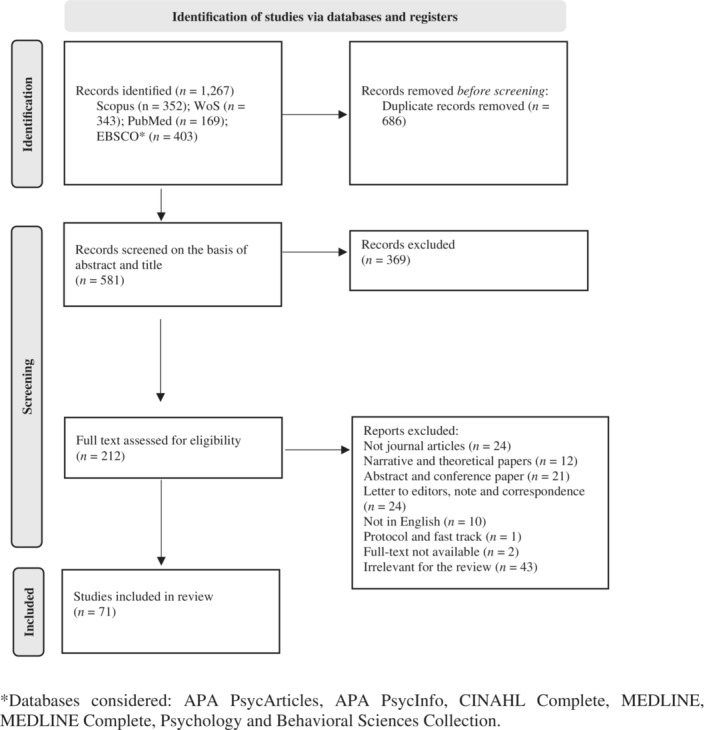
A 'new' way of dreaming has emerged during the pandemic, enhancing the interest of psychological literature. Indeed, during the years of the spread of coronavirus disease 2019 (COVID-19), many studies have investigated dream-related phenomena and dreaming functions. Considering the constant and rapid emergence of new results on this topic, the main aim of this study was to create an 'observatory' on the short- and long-term consequences of the COVID-19 pandemic on dreaming, by means of a living systematic review. The baseline results are presented, in accordance with the Preferred Reporting Items for Systematic Reviews and Meta-Analyses statement guidelines, to identify and discuss existing studies about dreams and dreaming during the COVID-19 pandemic published until February 2022. Web of Science, Embase, EBSCO, and PubMed were used for the search strategy, yielding 71 eligible papers included in the review. Our results show: (a) a more intense oneiric activity during lockdown; (b) changes in dreaming components (especially dream-recall and nightmare frequency); (c) a particular dreaming scenario ('pandemic dreams'); (d) an alteration of the dreaming-waking-life continuum and a specific function of dreaming as emotional regulator. Findings suggest that monitoring changes in dreaming provides important information about psychological health and could also contribute to the debate on the difficulties of dreaming, as well as sleeping, in particular during and after a period of 'collective trauma'.
Keywords: dreaming; dreams; living systematic review; pandemic; psychological health.
© 2022 The Authors. Journal of Sleep Research published by John Wiley & Sons Ltd on behalf of European Sleep Research Society.
Conflict of interest statement
The authors declare that they have no conflict of interest.
Figures
References
-
- Aknin, L. B. , Andretti, B. , Goldszmidt, R. , Helliwell, J. F. , Petherick, A. , De Neve, J. E. , Dunn, E. W. , Fancourt, D. , Goldberg, E. , Jones, S. P. , Karadag, O. , Karam, E. , Layard, R. , Saxena, S. , Thornton, E. , Whillans, A. , & Zaki, J. (2022). Policy stringency and mental health during the COVID‐19 pandemic: A longitudinal analysis of data from 15 countries. The lancet. Public Health, 7, e417–e426. 10.1016/S2468-2667(22)00060-3 - DOI - PMC - PubMed
-
- Alfonsi, V. , Gorgoni, M. , Scarpelli, S. , Zivi, P. , Sdoia, S. , Mari, E. , Quaglieri, A. , Ferlazzo, F. , Giannini, A. M. , & De Gennaro, L. (2021). Changes in sleep pattern and dream activity across and after the COVID‐19 lockdown in Italy: A longitudinal observational study. Journal of Sleep Research, 31, e13500. 10.1111/jsr.13500 - DOI - PMC - PubMed
-
- Aragona, M. , Tumiati, M. C. , Ferrari, F. , Viale, S. , Nicolella, G. , Barbato, A. , Cavani, A. , Costanzo, G. , & Mirisola, C. (2022). Psychopathological effects of the coronavirus (Sars‐CoV‐2) imposed lockdown on vulnerable patients in treatment in a mental health outpatient department for migrants and individuals in poor socioeconomic conditions. International Journal of Social Psychiatry, 68, 203–209. 10.1177/0020764020988572 - DOI - PubMed
-
- Barrett, D. (2001). Trauma and dreams. Harvard University Press.
Publication types
MeSH terms
LinkOut - more resources
Full Text Sources
Medical
