. 2022 Sep 21;12(41):26908-26921.
doi: 10.1039/d2ra04254a. eCollection 2022 Sep 16.

The effect of Bacillus cereus LV-1 on the crystallization and polymorphs of calcium carbonate

Affiliations

The effect of Bacillus cereus LV-1 on the crystallization and polymorphs of calcium carbonate

Guoguo Yang et al. RSC Adv. .

Abstract

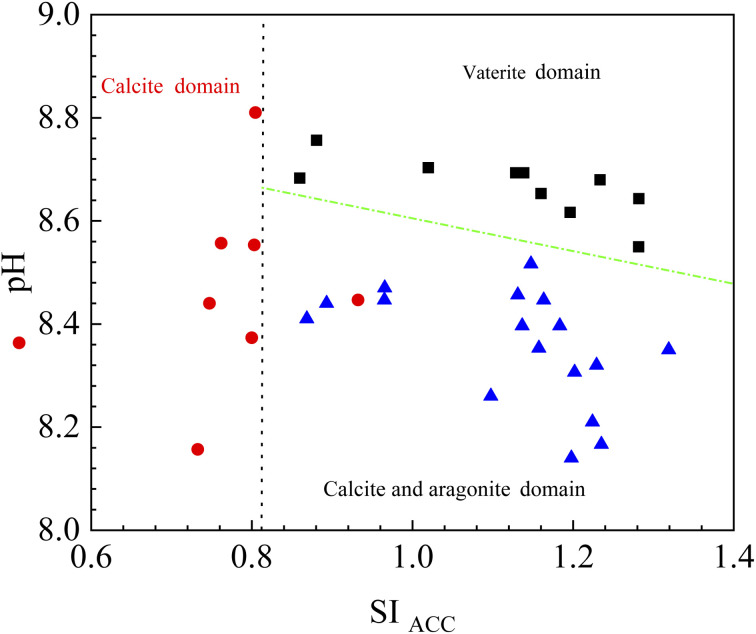
The study of CaCO3 polymorphism is of great significance for understanding the mechanism of carbonate mineralization induced by bacteria and the genesis of carbonate rock throughout geological history. To investigate the effect of bacteria and shear force on CaCO3 precipitation and polymorphs, biomineralization experiments with Bacillus cereus strain LV-1 were conducted under the standing and shaking conditions. The results show that LV-1 induced the formation of calcite and vaterite under the standing and shaking conditions, respectively. However, the results of mineralization in the media and the CaCl2 solution under both kinetic conditions suggest the shear force does not affect the polymorphs of calcium carbonate in abiotic systems. Further, mineralization experiments with bacterial cells and extracellular polymeric substances (EPS) were performed under the standing conditions. The results reveal that bacterial cells, bound EPS (BEPS), and soluble EPS (SEPS) are favorable to the formation of spherical, imperfect rhombohedral, and perfect rhombohedral minerals, respectively. The increase in the pH value and saturation index (SI) caused by LV-1 metabolism under the shear force played key roles in controlling vaterite precipitation, whereas bacterial cells and EPS do not play roles in promoting vaterite formation. Furthermore, we suggest that vaterite formed if pH > 8.5 and SIACC > 0.8, while calcite formed if pH was between 8.0-9.0 and SIACC < 0.8. Bacterial cells and BEPS are the main factors affecting CaCO3 morphologies in the mineralization process of LV-1. This may provide a deeper insight into the regulation mechanism of the polymorphs and morphologies during bacterially induced carbonate mineralization.


Conflict of interest statement

The authors report no declarations of interest.

Figures
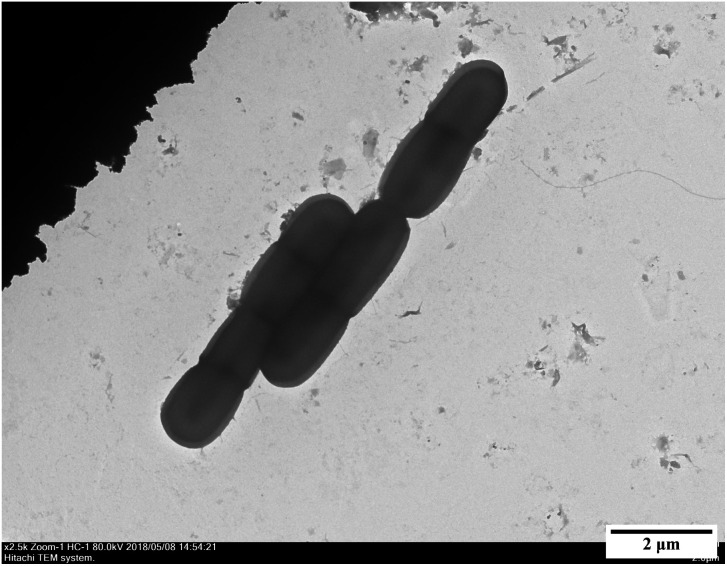
Fig. 1
Fig. 1. Morphologies of bacterial cells (incubated on a solid medium after 24 h).
Fig. 2
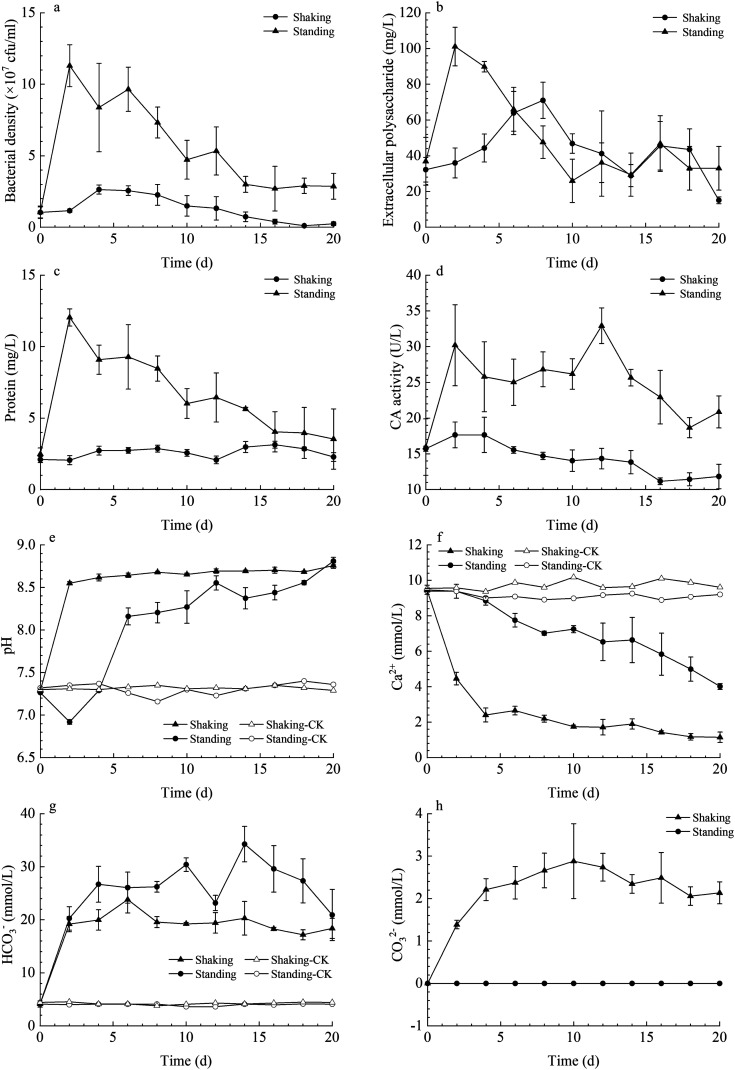
Fig. 2. Temporal changes of bacterial density (a), content of extracellular polysaccharide (b) and protein (c), CA activity (d), pH value (e), concentration of Ca2+ (f), HCO3 (g) and CO32− (h) in the standing and shaking bacterial experiments.
Fig. 3
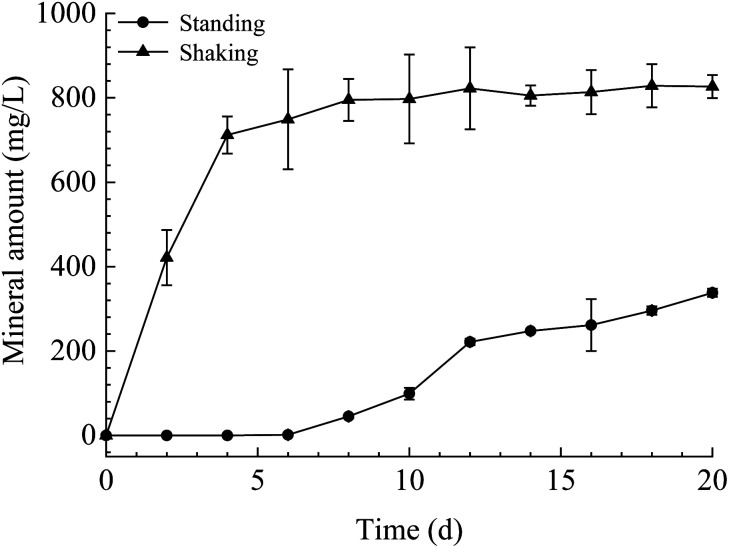
Fig. 3. Temporal changes of mineral amount in the shaking and standing bacterial experiments.
Fig. 4
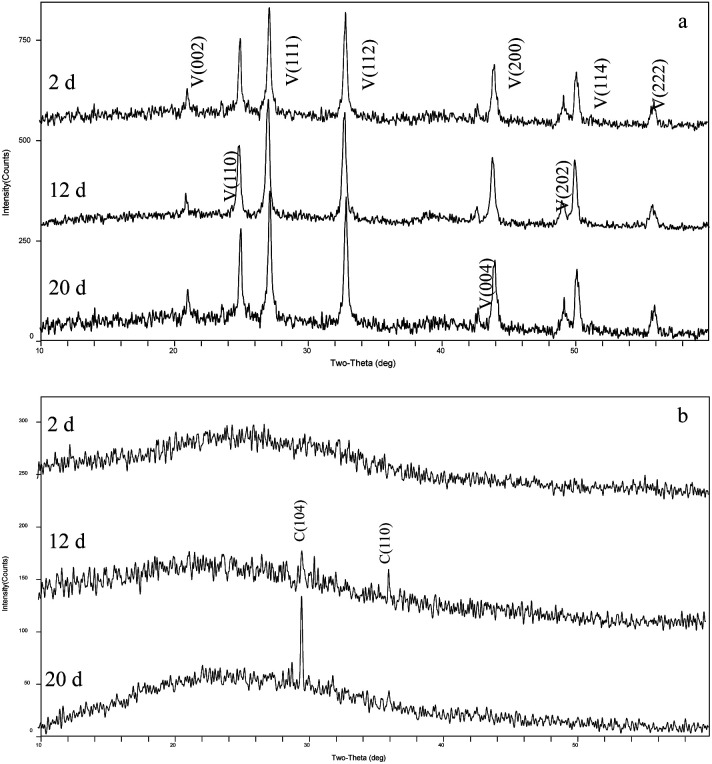
Fig. 4. XRD patterns of precipitates formed in the shaking (a) and standing (b) bacterial experiments. C – calcite; V – vaterite.
Fig. 5
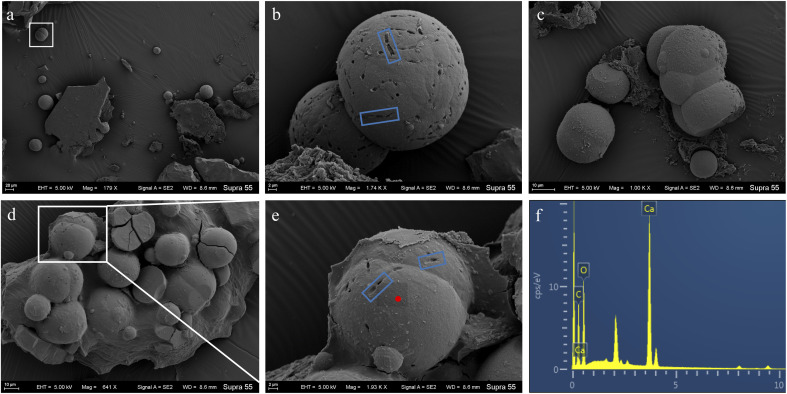
Fig. 5. FE-SEM images of carbonate mineral from the shaking bacterial experiments (a–c) spherulites and twin-spheres (marked with white rectangular boxes) on day 2, there are some pores as chain-like arrangement on the surface of spherulites (marked with blue rectangular boxes); (d) and (e) spherical and twin-spheres particles on day 20, the pores of chain-like arrangements encase within spherulites (marked with blue rectangular boxes); (f) EDS spectrum of the red dot in (e).
Fig. 6
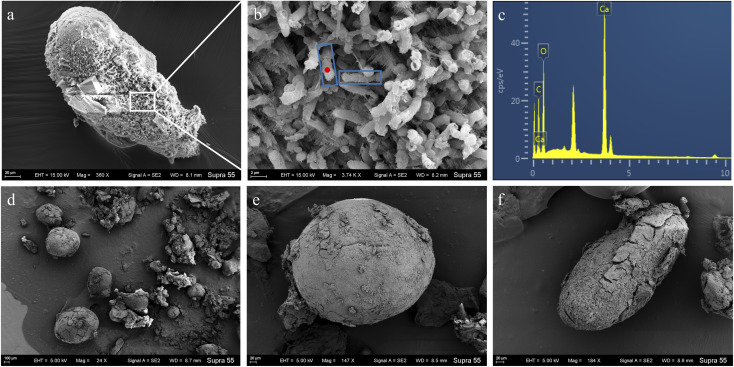
Fig. 6. FE-SEM images of carbonate mineral from the standing bacterial experiments. (a) and (b) Rod-shaped nanoparticles of macroscale crystal aggregates on day 12 show chain-like arrangements similar with bacterial cells (highlighted with blue rectangular boxes); (c) EDS spectrum of the red dot in (b); (d) spherulitic, rod-shaped, and irregular morphologies on day 20; (e) spherical mineral; (f) rod-shaped mineral.
Fig. 7
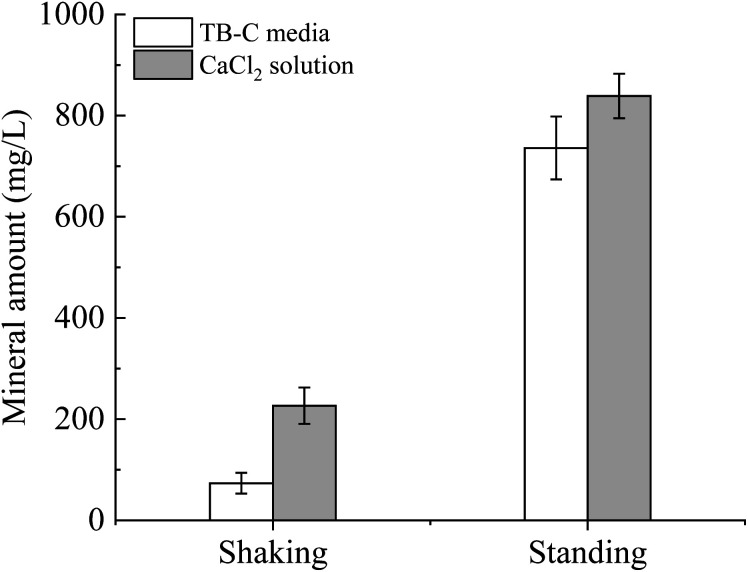
Fig. 7. Mineral amount in the system by gas diffusion under the shaking and standing conditions.
Fig. 8
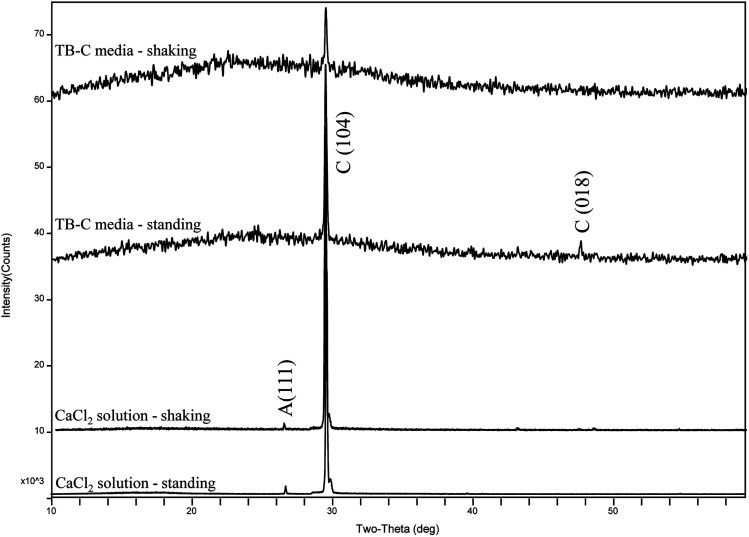
Fig. 8. XRD patterns of precipitates formed in the system by gas diffusion under the shaking and standing conditions.
Fig. 9
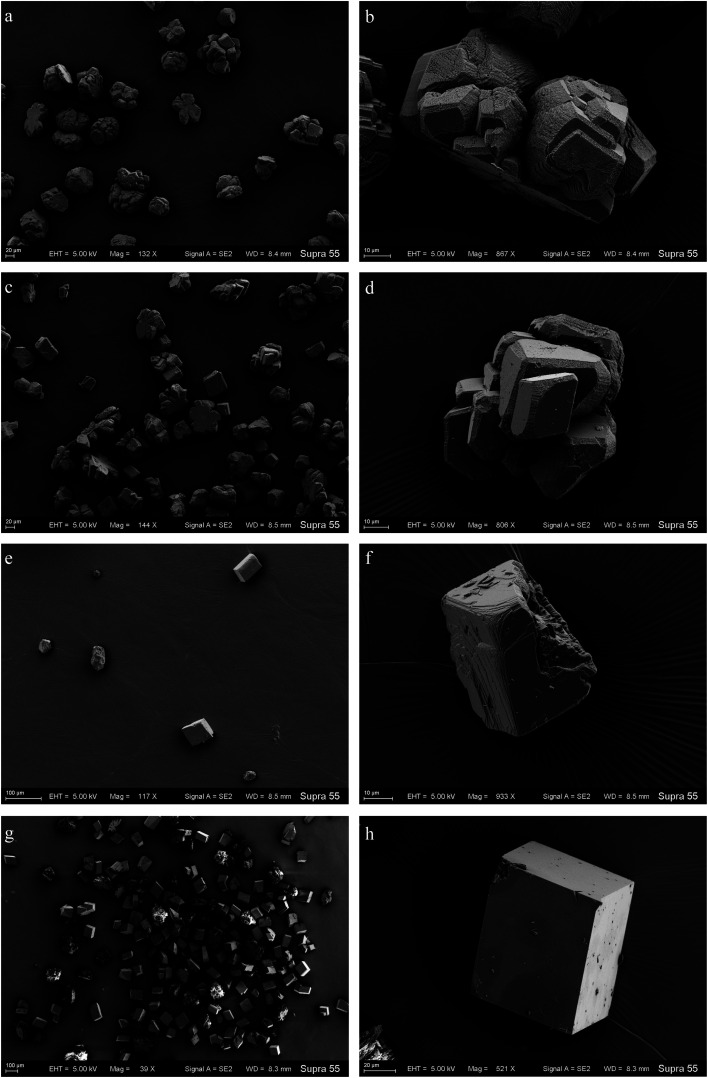
Fig. 9. FE-SEM images of the products mineralized in the TB-C media under the shaking (a, b) and standing (c, d) conditions; CaCl2 solution under the shaking (e, f) and standing (g, h) conditions.
Fig. 10
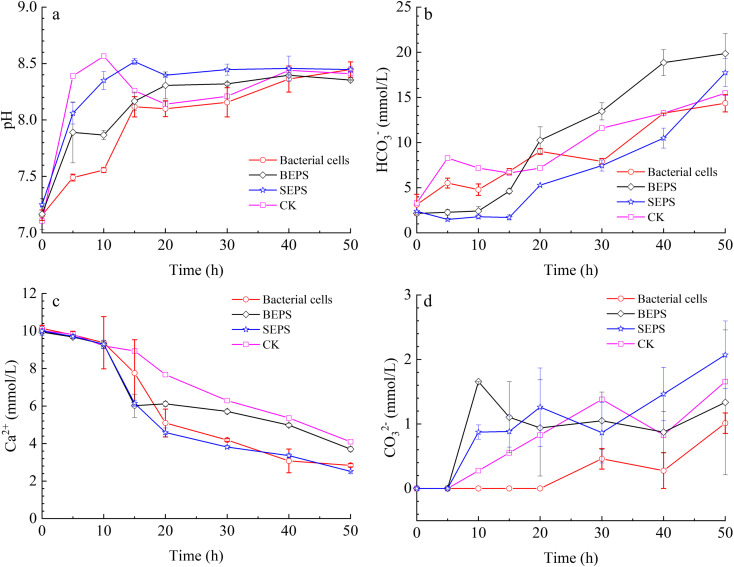
Fig. 10. Temporal changes of pH value (a), concentration of HCO3 (b), CO32− (c), and Ca2+ (d) in the mineralization experiments with bacterial cells, BEPS, SEPS, and deionized water (CK).
Fig. 11
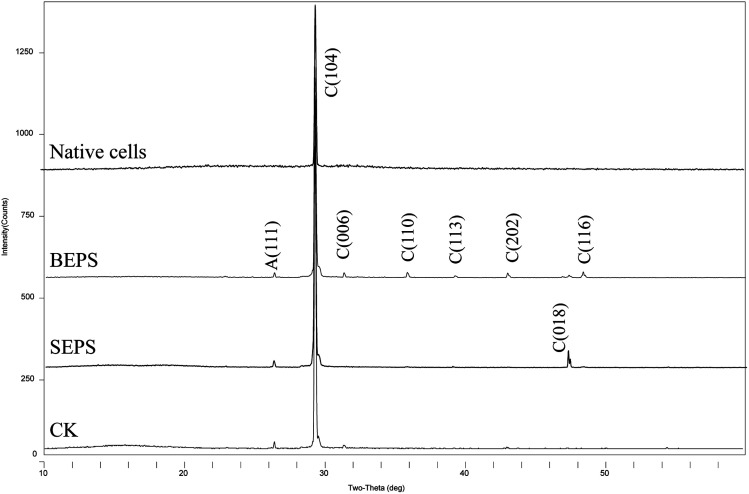
Fig. 11. XRD patterns of precipitates formed in mineralization experiments of different bacterial components. C – calcite; A – aragonite.
Fig. 12
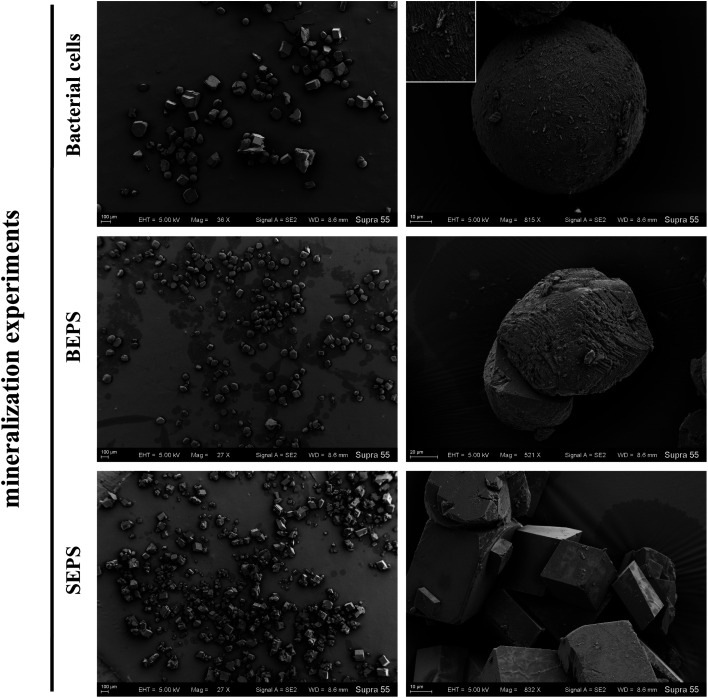
Fig. 12. FE-SEM images and EDS spectrum of precipitates formed at 50th hours in the experiments with different bacterial components. Bacterial cells: spherulite (marked with white circles), imperfect rhombohedra with obtuse edges (marked with white arrows), perfect rhombohedra and irregular. BEPS: imperfect rhombohedra with obtuse edges and perfect rhombohedra; SEPS: perfect rhombohedra and rhombohedra with obtuse edges.
Fig. 13
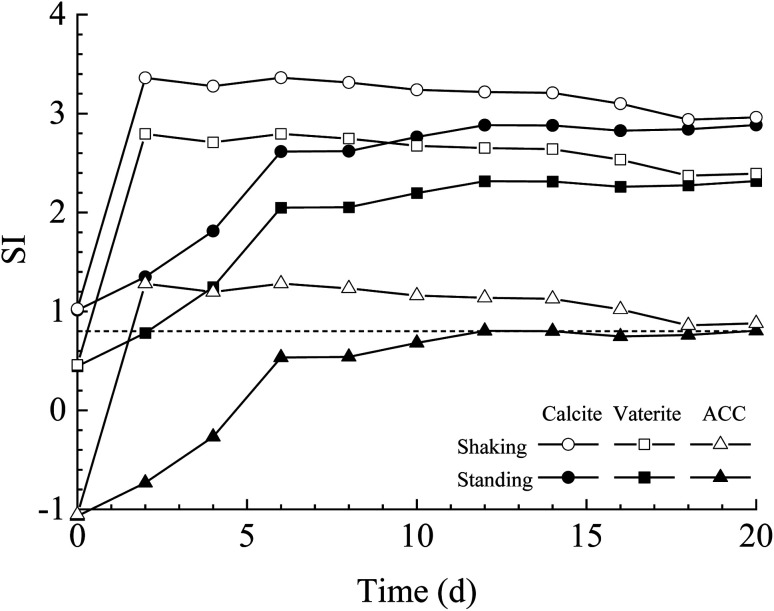
Fig. 13. Temporal changes of SI value in the solution under the shaking and standing conditions.
Fig. 14
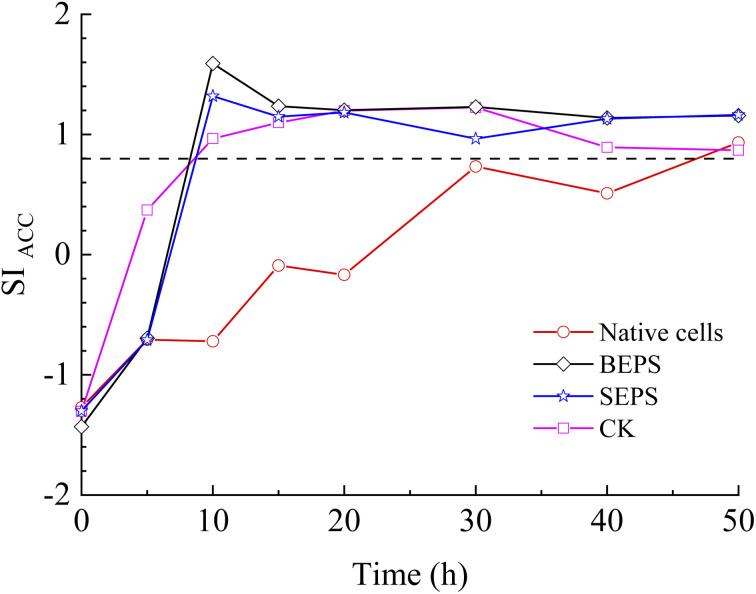
Fig. 14. Temporal changes of SIACC in the experiments with bacterial cells, BEPS and SEPS.
Fig. 15
Fig. 15. The sketch of stability field for vaterite, calcite and aragonite. The data are from this paper.
Fig. 16
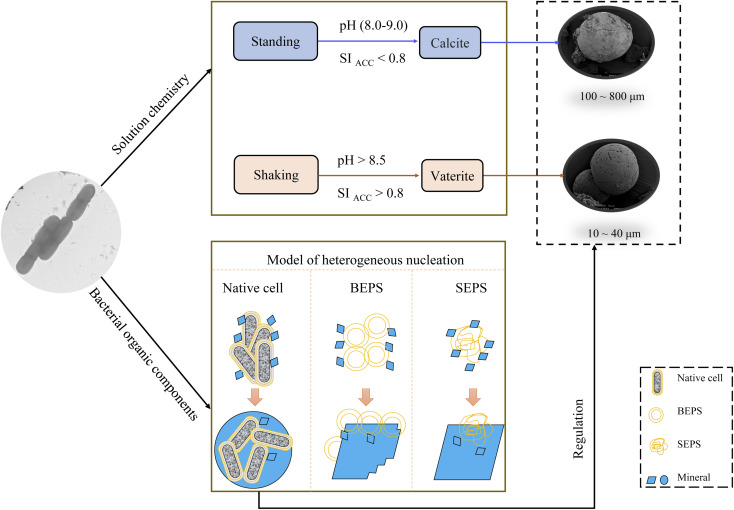
Fig. 16. The possible mechanism of calcium carbonate crystallization induced by LV-1.

References

    1. Li H. Yao Q. Z. Wang F. P. Huang Y. R. Fu S. Q. Zhou G. T. Geochim. Cosmochim. Acta. 2019;256:35–48.
    1. Zhu T. Dittrich M. Front. Bioeng. Biotechnol. 2016;4:4. - PMC - PubMed
    1. Dhami N. K. Reddy M. S. Mukherjee A. Front. Microbiol. 2013;4:314. - PMC - PubMed
    1. Qin W. Wang C. Y. Ma Y. X. Shen M. J. Li J. Jiao K. Tay F. R. Niu L. N. Adv. Mater. 2020;32:e1907833. - PubMed
    1. Han Z. Wang J. Zhao H. Tucker M. E. Zhao Y. Wu G. Zhou J. Yin J. Zhang H. Zhang X. Yan H. Minerals. 2019;9:218.