


Associative learning contributes to the persistence of fatigue-like behavior in male mice in a model of cancer survivorship
- PMID: 36323360
- PMCID: PMC10208403
- DOI: 10.1016/j.bbi.2022.10.018
Associative learning contributes to the persistence of fatigue-like behavior in male mice in a model of cancer survivorship
Abstract
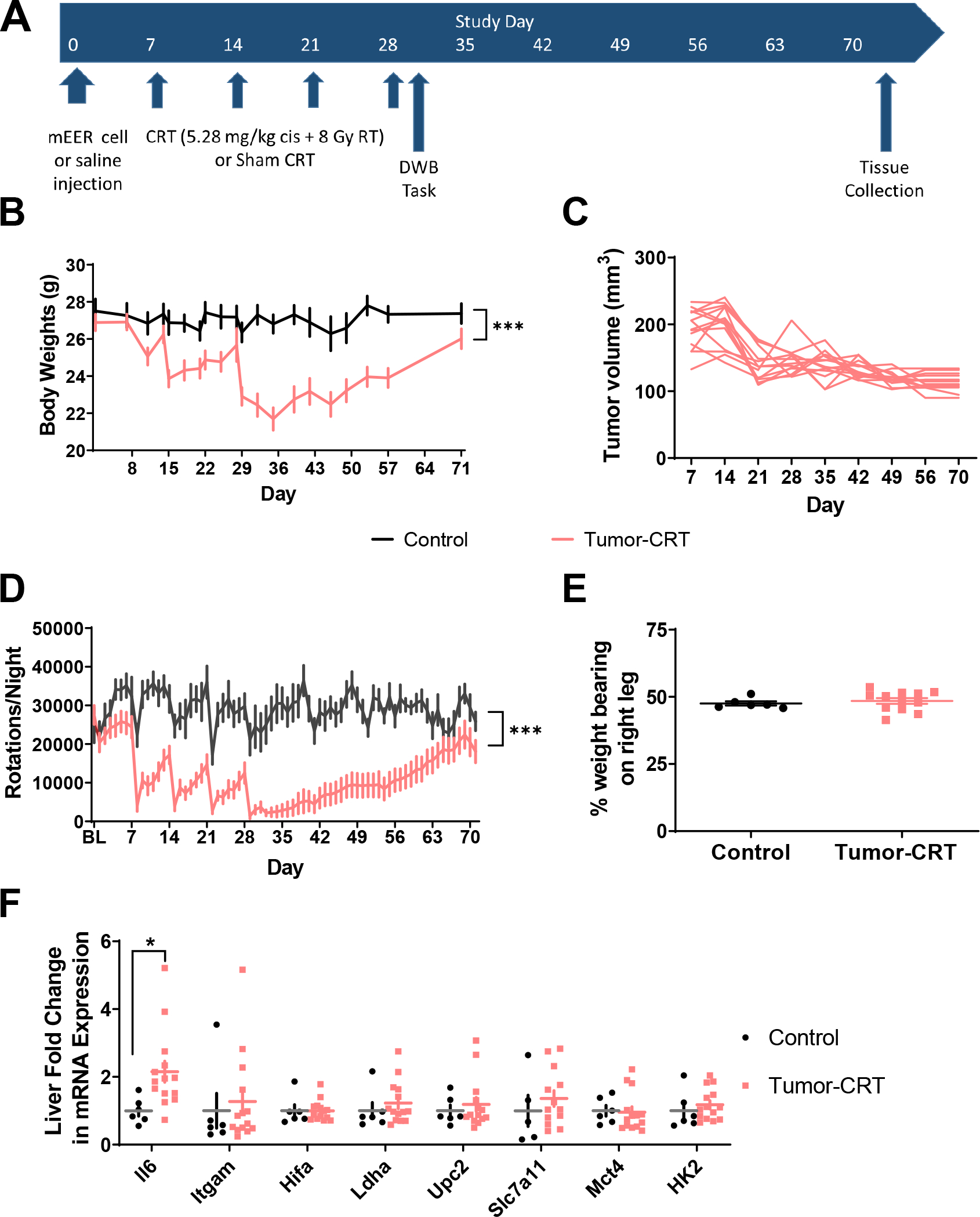
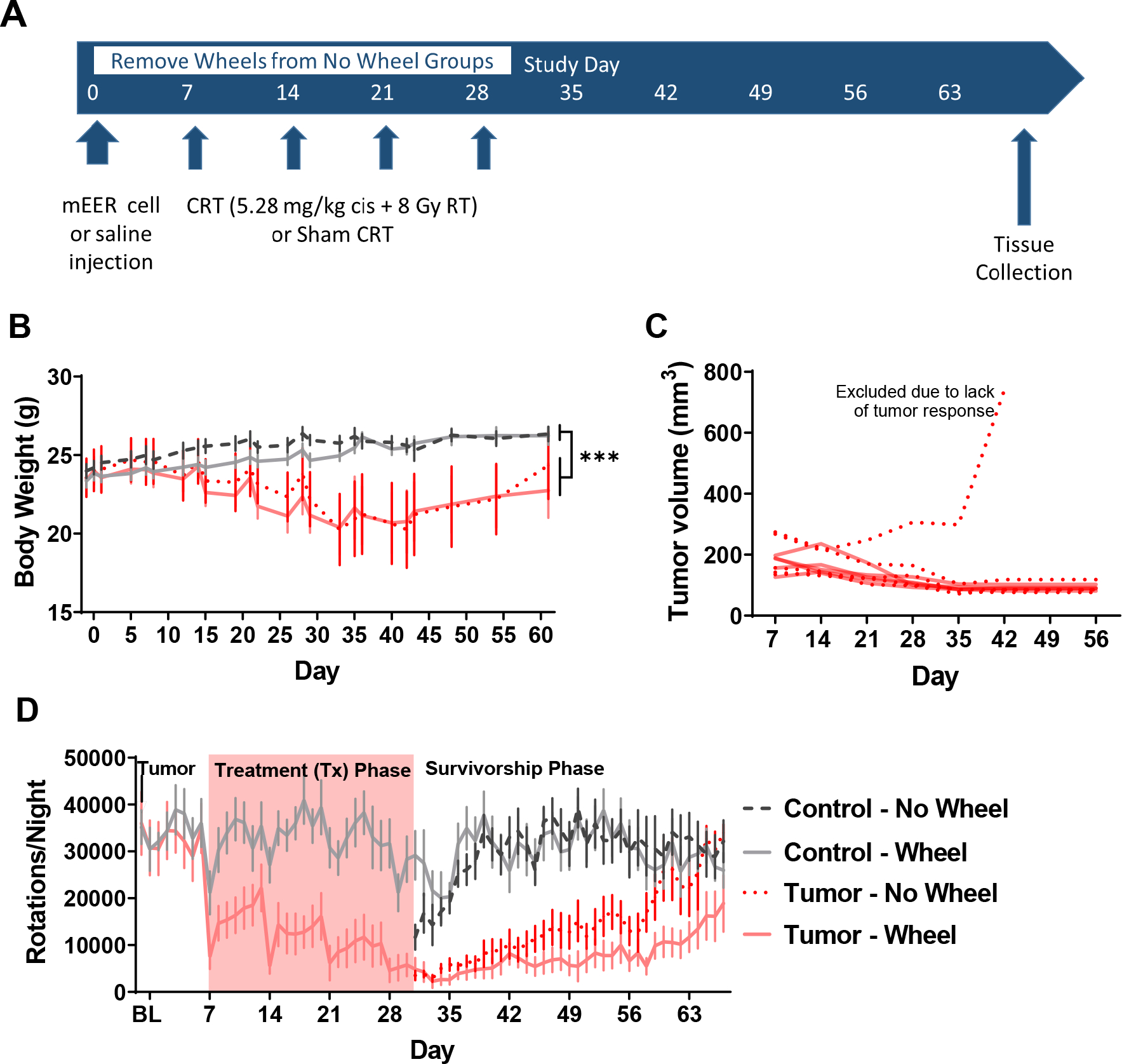
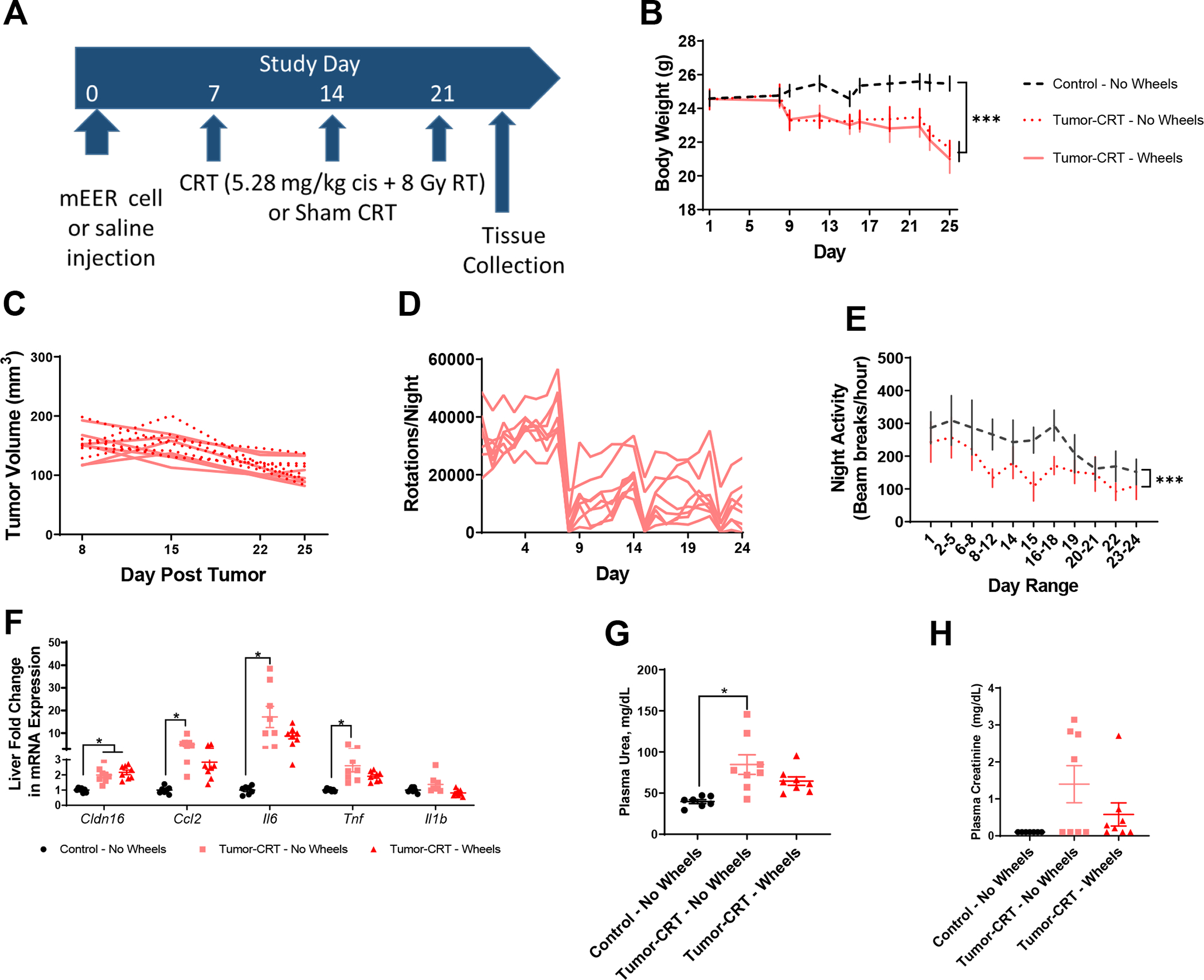
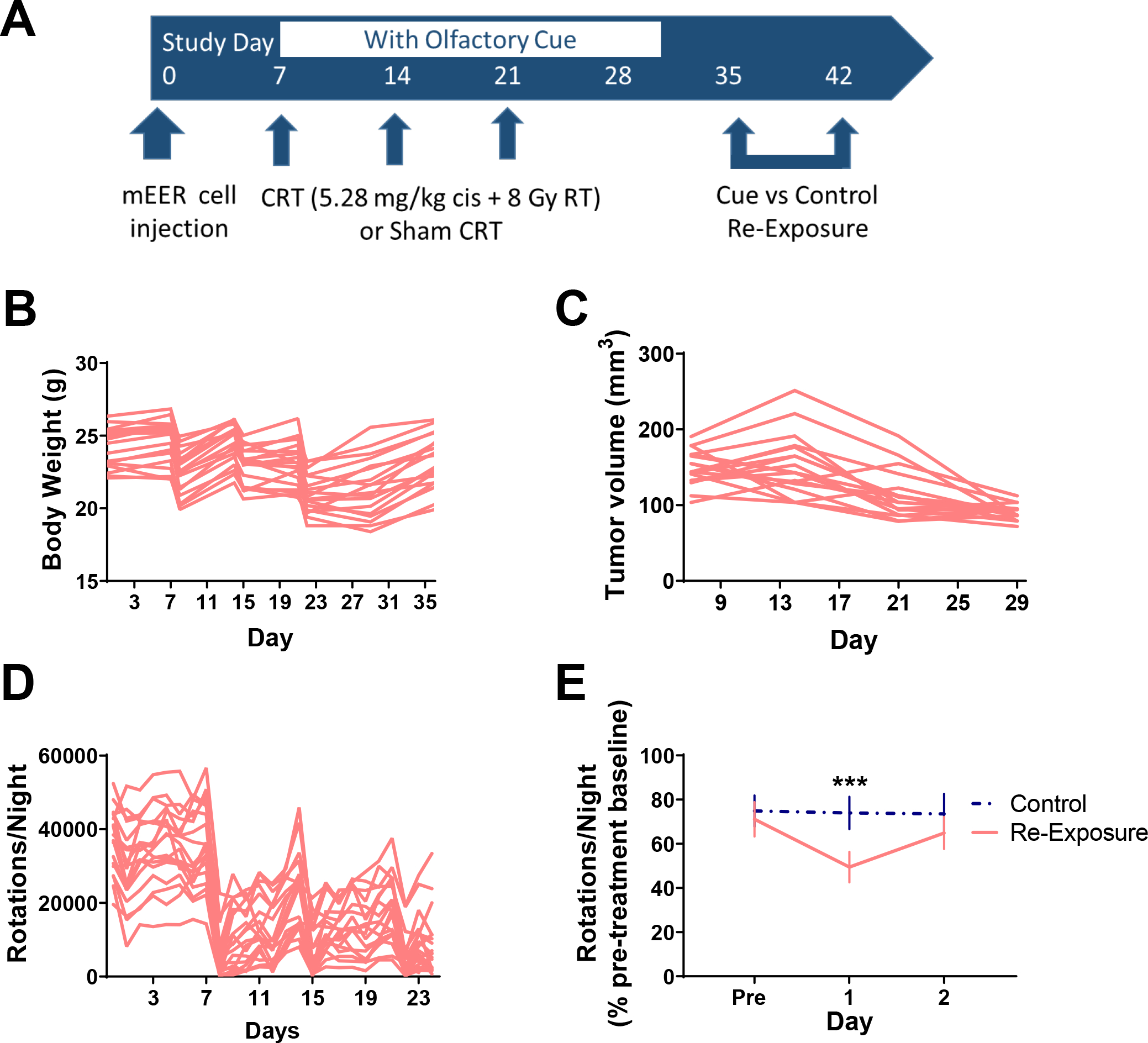
Persistent fatigue is a debilitating side effect that impacts a significant proportion of cancer survivors for which there is not yet an FDA-approved treatment. While certainly a multi-factorial problem, persistent fatigue could be due, in part, to associations learned during treatment. Therefore, we sought to investigate the role of associative learning in the persistence of fatigue using a preclinical model of cancer survivorship. For this purpose, we used a murine model of human papilloma virus-related head and neck cancer paired with a curative regimen of cisplatin-based chemoradiation in male C57BL/6J mice. Fatigue-like behavior was assessed by measuring variations in voluntary wheel running using a longitudinal design. Treatment robustly decreased voluntary wheel running, and this effect persisted for more than a month posttreatment. However, when wheels were removed during treatment, to minimize treatment-related fatigue, mice showed a more rapid return to baseline running levels. We confirmed that the delayed recovery observed in mice with continual wheel access was not due to increased treatment-related toxicity, in fact running attenuated cisplatin-induced kidney toxicity. Finally, we demonstrated that re-exposure to a treatment-related olfactory cue acutely re-instated fatigue. These data provide the first demonstration that associative processes can modulate the persistence of cancer-related fatigue-like behavior.
Keywords: Associative learning; Cancer; Chemoradiation; Conditioned responses; Fatigue; Survivorship.
Copyright © 2022 Elsevier Inc. All rights reserved.
Conflict of interest statement
Declaration of Competing Interest The authors declare that they have no known competing financial interests or personal relationships that could have appeared to influence the work reported in this paper.
Figures
References
-
- Ader R, 1989. Conditioned immune responses and pharmacotherapy. Arthritis & Rheumatism: Official Journal of the American College of Rheumatology 2, A58–A64. - PubMed
-
- Ader R, Cohen N, Bovbjerg D, 1982. Conditioned suppression of humoral immunity in the rat. Journal of comparative and physiological psychology 96, 517–521. - PubMed
-
- Bower JE, Ganz PA, Desmond KA, Rowland JH, Meyerowitz BE, Belin TR, 2000. Fatigue in breast cancer survivors: occurrence, correlates, and impact on quality of life. Journal of clinical oncology : official journal of the American Society of Clinical Oncology 18, 743–753. - PubMed
Publication types
MeSH terms
Grants and funding
LinkOut - more resources
Full Text Sources
Medical
