


Mini-mental state examination (MMSE) scores in elderly Jordanian population
- PMID: 36324704
- PMCID: PMC9616230
- DOI: 10.1016/j.cccb.2021.100016
Mini-mental state examination (MMSE) scores in elderly Jordanian population
Abstract
Background: The Mini-Mental State Examination (MMSE) is a simple informative and validated screening test of cognitive functions. No data of MMSE scores has been published about elderly Jordanian population. Objective: To study the MMSE scores in the elderly Jordanian population (defined as age of 50 years or more).
Methods: This was a cross sectional study. A 250 healthy elderly Jordanians were interviewed and tested for their MMSE score. Their scores were analyzed and the effect of age, gender, education, marital status, diabetes mellitus (DM), hypertension (HTN), smoking, dyslipidemia, heart disease (HD), and family history of dementia (FHD) on the score was studied.
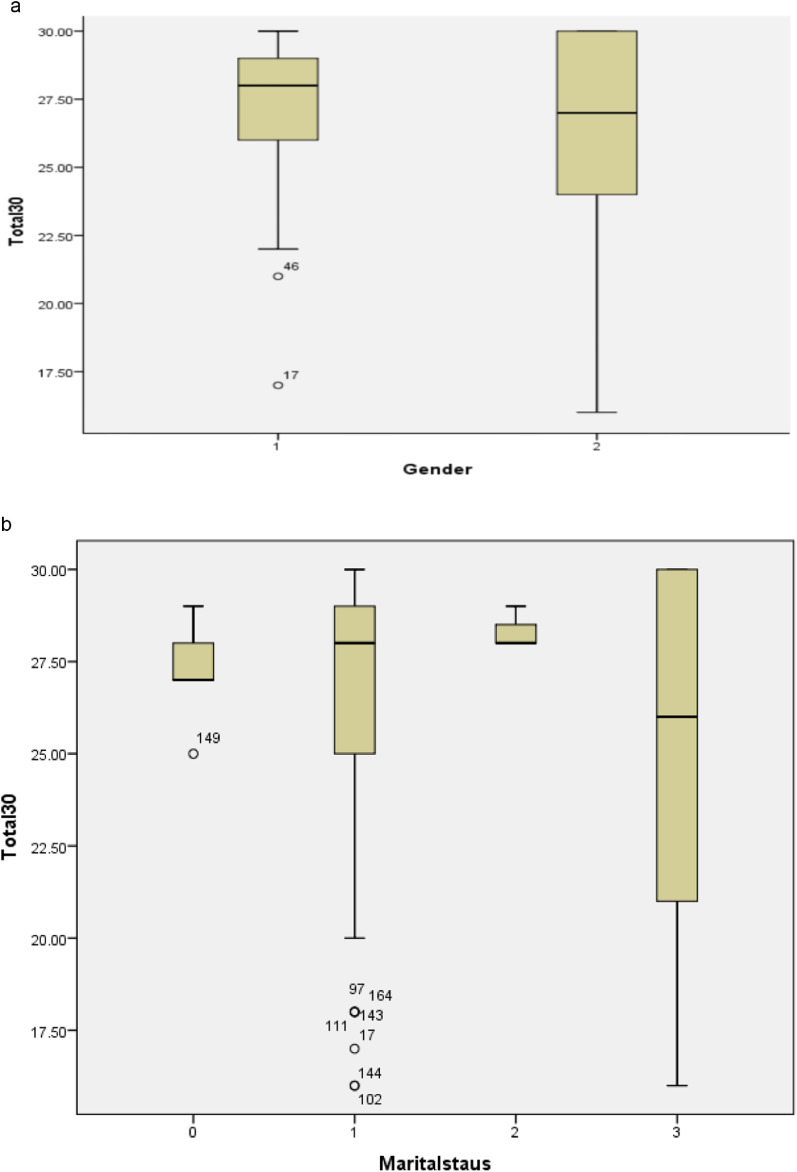
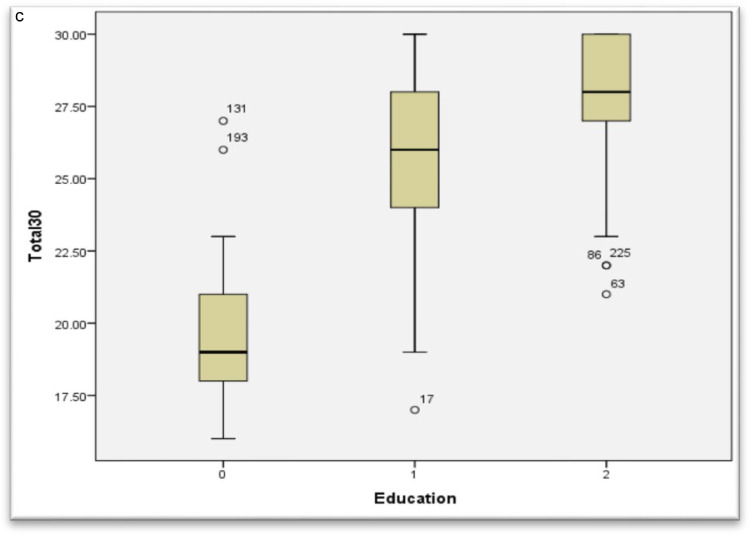
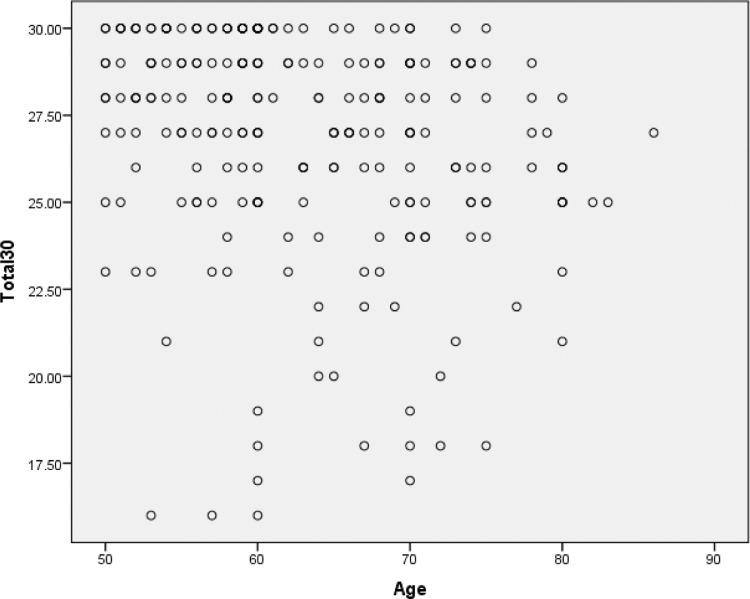
Results: MMSE scores of 236 elderly subjects, aged 63±8.4 years (range 50-86 years) were analyzed. There were 111 (47%) males. There was a direct correlation between MMSE score and education level. People with a higher education (college) had the highest scores in comparison with people who are illiterates or have a high school level. The score correlated negatively with age (Pearson correlation r = -0.23, p = 0.00). Other studied variables did not correlate with score on multivariate analysis.
Conclusion: Jordanians ≥50 years old with no previous brain disease scored 26.7 ± 3.2. Education was the most important determining factor of this score. the score showed also a negative correlation with age. We suggest that in this population a cut off score of 24 for those with high education beyond high school and 21 for those with up to high school education and it is not appropriate for illiterate.
Keywords: Atherosclerosis risk factors; Jordanians (≥50 years old); MMSE; Mini-mental state examination.
© 2021 The Author(s).
Conflict of interest statement
There is no conflict of interest to be disclosed by any of the authors.
Figures
References
-
- Folstein M.F., Folstein S.E., McHugh P.R. Mini-Mental State Examination: a practical method for grading the cognitive state of patients for the clinician. J. Psychiatr. Res. 1975;12:189–198. - PubMed
-
- Crum R.M., James M.H.S., Anthony J.C., Basset S.S., Folstein M.F. Population based norms for the mini mental state examination. JAMA. 1993;269:2386–2391. - PubMed
-
- Mitchell A.J. A meta-analysis of the accuracy of the mini-mental state examination in the detection of dementia and mild cognitive impairment. J. Psychiatr. Res. 2009;43(4):411–431. - PubMed
-
- Harvan J.R., Cotter V. An evaluation of dementia screening in the primary care setting. J. Am. Acad. Nurse Pract. 2006;18(8):351–360. - PubMed
-
- Grut M., Fratiglioni L., Viitanen M., Winblad B. Accuracy of the Mini-Mental Status Examination as a screening test for dementia in a Swedish elderly population. Acta Neurol. Scand. 1993;87(4):312–317. - PubMed
LinkOut - more resources
Full Text Sources
