Review
. 2022 Oct 14:10:994528.
doi: 10.3389/fcell.2022.994528. eCollection 2022.

c-Met-integrin cooperation: Mechanisms, tumorigenic effects, and therapeutic relevance

Affiliations
Review

c-Met-integrin cooperation: Mechanisms, tumorigenic effects, and therapeutic relevance

Justas Stanislovas et al. Front Cell Dev Biol. .

Abstract

c-Met is a receptor tyrosine kinase which upon activation by its ligand, the hepatocyte growth factor, mediates many important signalling pathways that regulate cellular functions such as survival, proliferation, and migration. Its oncogenic and tumorigenic signalling mechanisms, greatly contributing to cancer development and progression, are well documented. Integrins, heterogeneous adhesion receptors which facilitate cell-extracellular matrix interactions, are important in biomechanically sensitive cell adhesion and motility but also modulate diverse cell behaviour. Here we review the studies which reported cooperation between c-Met and several integrins, particularly β1 and β4, in various cell models including many tumour cell types. From the various experimental models and results analysed, we propose that c-Met-integrin cooperation occurs via inside-out or outside-in signalling. Thus, either c-Met activation triggers integrin activation and cell adhesion or integrin adhesion to its extracellular ligand triggers c-Met activation. These two modes of cooperation require the adhesive function of integrins and mostly lead to cell migration and invasion. In a third, less conventional, mode of cooperation, the integrin plays the role of a signalling adaptor for c-Met, independently from its adhesive property, leading to anchorage independent survival. Recent studies have revealed the influence of endocytic trafficking in c-Met-integrin cooperation including the adaptor function of integrin occurring on endomembranes, triggering an inside-in signalling, believed to promote survival of metastatic cells. We present the evidence of the cooperation in vivo and in human tissues and highlight its therapeutic relevance. A better understanding of the mechanisms regulating c-Met-integrin cooperation in cancer progression could lead to the design of new therapies targeting this cooperation, providing more effective therapeutic approaches than c-Met or integrin inhibitors as monotherapies used in the clinic.

Keywords: c-Met; cancer; endocytosis; integrins; metastasis; signalling; trafficking.


Conflict of interest statement

The authors declare that the research was conducted in the absence of any commercial or financial relationships that could be construed as a potential conflict of interest.

Figures
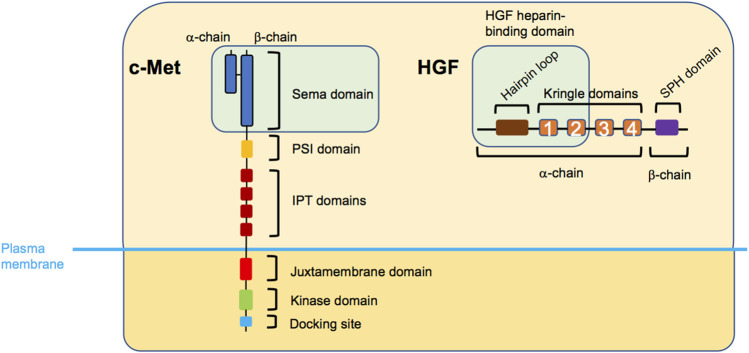
FIGURE 1
FIGURE 1
Structure of c-Met and HGF. The extracellular region of c-Met entails the Sema domain, plexin-semaphorin-integrin (PSI) domain, and four consecutively arranged immunoglobulin-plexin-transcription (IPT) factors domains, while the intracellular part is composed of a juxtamembrane domain, a kinase domain, and the docking site domain. HGF entails the hairpin loop, four consecutive kringle domains, and a serine protease homology (SPH) domain. The green boxes indicate the c-Met-HGF binding regions. Note, that the PSI and IPT domains are also involved in correct positioning of HGF.
FIGURE 2
FIGURE 2
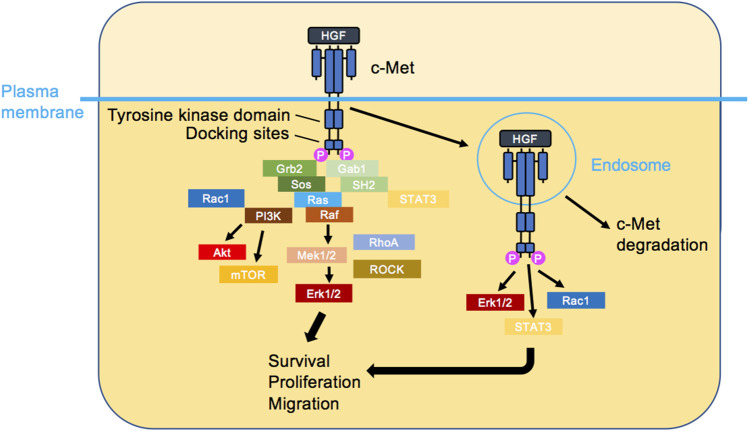
c-Met signalling. HGF triggers c-Met dimerisation, activation and the initiation of several signalling cascades. The classical view is that c-Met signalling occurs at the plasma membrane (left). Recently, it has been shown that HGF-bound c-Met internalises rapidly and transmits signalling from endosomes (right), leading to the activation of signal transducer and activator of transcription 3 (STAT3), ERK1/2 and PI3K/AKT. Ultimately, cellular responses such as survival, proliferation and migration are induced.
FIGURE 3
FIGURE 3
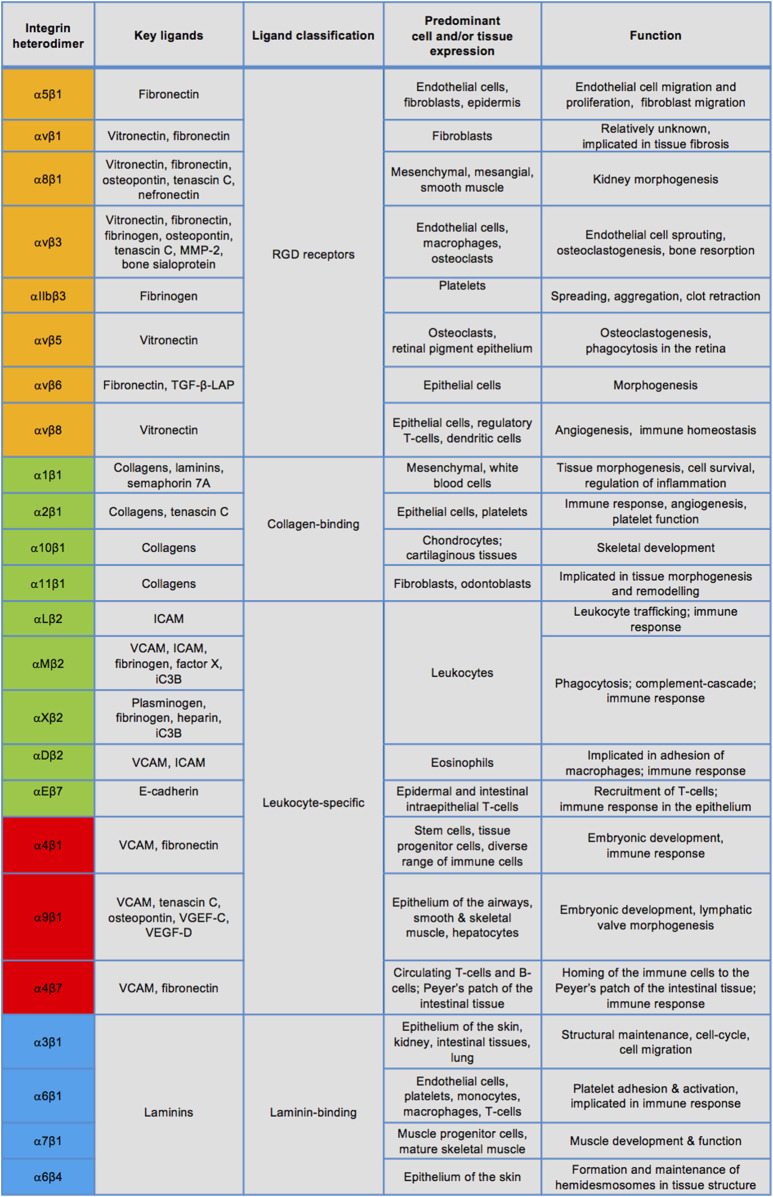
Known integrin heterodimers and their ligands, expression, and physiological roles. Integrins in the orange coloured rows have an α subunit evolutionarily related to PS2 proteins of Drosophila, those in the green coloured rows share an α subunit with an αI domain. The blue rows indicate integrins containing an α subunit related to PS1 Drosophila proteins and many of these integrins recognise the ECM ligands containing the RGD motif, whereas the red rows denote integrins separated by their α4/α9 domains. The list of ligands, cell/tissue expression and functions is not exclusive. MMP-2: matrix metalloprotease-2, TGF-β-LAP: transforming growth factor- β-latency-associated peptide, ICAM: intracellular adhesion molecule, VCAM: vascular cell adhesion molecule.
FIGURE 4
FIGURE 4
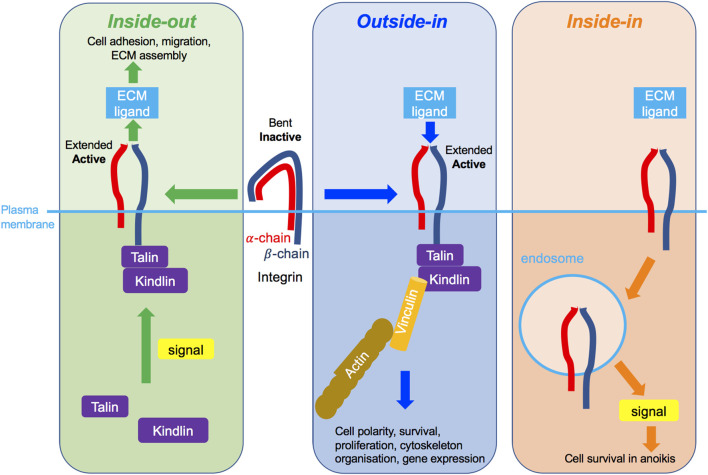
Different modes of integrin signalling. Left green box: Inside-out integrin signalling. An intracellular signal, such as promoted by an activated growth factor receptor, triggers the recruitment to the integrin β-chain of key molecules including talin and kindlin, leading to conformational change of integrins, which become extended and active and can then bind to its ligand in the ECM. As a consequence, cell adhesion, migration and/or ECM assembly are promoted. Middle blue box: Outside-in integrin signalling. The binding of the integrin to the ECM outside of the cell triggers its change of conformation to become extended and active, leading to the recruitment of several molecules to the cytoplasmic tail of the β-chain, such as talin, kindlin and vinculin, and the connection to the actin cytoskeleton. As a consequence, cell polarity, survival, cytoskeleton organisation or gene expression are promoted. Right organge box: Inside-in signalling, a third mode of integrin signalling, recently described for β1 integrin. The integrin transmits signalling from endosomes in cells in suspension alone. As a consequence, cell survival in anoikis is promoted.
FIGURE 5
FIGURE 5
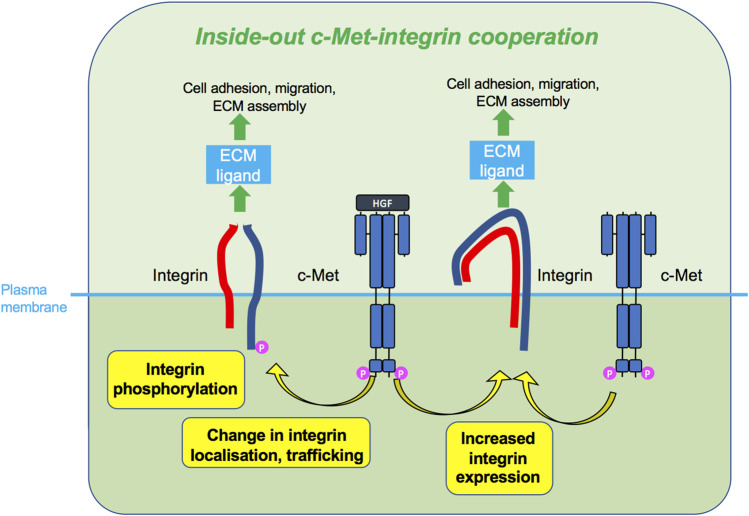
Inside-out c-Met-integrin cooperation. c-Met, upon HGF stimulation or sometimes without HGF, promotes integrin activity, such as phosphorylation, increased expression or change in localisation. Activated integrins can in turn bind ECM ligand and induce cellular responses such as adhesion and migration.
FIGURE 6
FIGURE 6
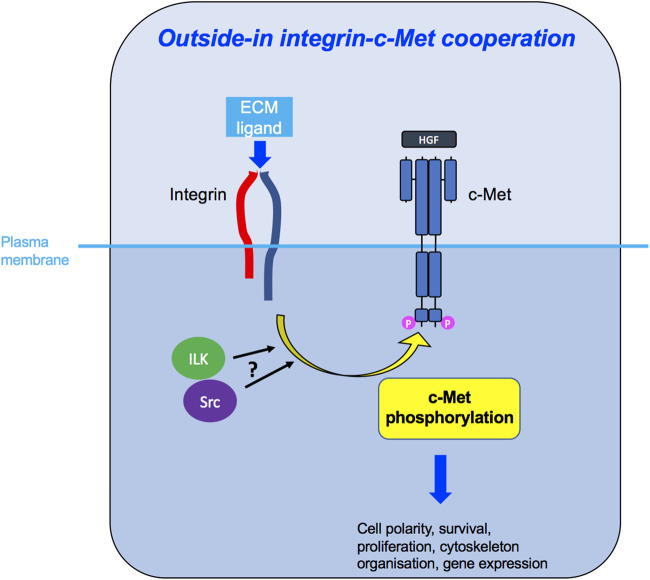
Outside-in integrin-c-Met cooperation. Integrin activation, through binding to its ligand in the ECM, leads to downstream c-Met phosphorylation, potentially via ILK and/or Src kinases, enabling c-Met-induced intracellular signalling and diverse cellular functions.
FIGURE 7
FIGURE 7
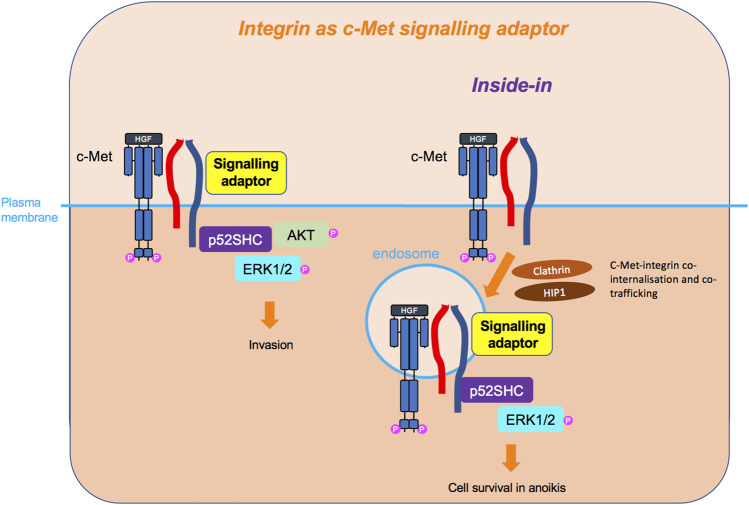
Integrin as c-Met signalling adaptor and the inside-in signalling. Integrins, so far β4 and β1, can also act as adaptors independently of their extracellular domain and adhesive property, linking c-Met to downstream signalling molecules, such as p52SHC adaptor, leading to ERK1/2 and AKT sustained signalling. For the β1 integrin, this cooperation has been shown to occur on an endomembrane, following the co-internalisation of c-Met and β1. This inside-in signalling triggers cell survival independently of anchorage.
FIGURE 8
FIGURE 8
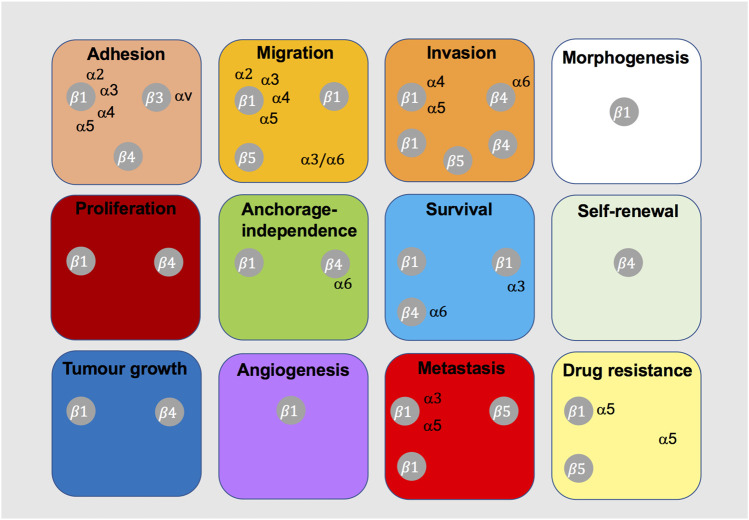
Integrins shown to cooperate with c-Met in tumorigenic cell behaviour. This diagram indicates the integrins that have been shown to cooperate with c-Met for the indicated cancer-related cell function or process.

References

    1. Alanko J., Mai A., Jacquemet G., Schauer K., Kaukonen R., Saari M., et al. (2015). Integrin endosomal signalling suppresses anoikis. Nat. Cell Biol. 17, 1412–1421. 10.1038/ncb3250 - DOI - PMC - PubMed
    1. Alday-Parejo B., Stupp R., Ruegg C. (2019). Are integrins still practicable targets for anti-cancer therapy? Cancers (Basel) 11, E978. 10.3390/cancers11070978 - DOI - PMC - PubMed
    1. Anthis N. J., Haling J. R., Oxley C. L., Memo M., Wegener K. L., Lim C. J., et al. (2009). Beta integrin tyrosine phosphorylation is a conserved mechanism for regulating talin-induced integrin activation. J. Biol. Chem. 284, 36700–36710. 10.1074/jbc.M109.061275 - DOI - PMC - PubMed
    1. Baldacci S., Kherrouche Z., Descarpentries C., Wislez M., Dansin E., Furlan A., et al. (2018). MET exon 14 splicing sites mutations: A new therapeutic opportunity in lung cancer. Rev. Mal. Respir. 35, 796–812. 10.1016/j.rmr.2018.01.011 - DOI - PubMed
    1. Barrow-Mcgee R., Kermorgant S. (2014). Met endosomal signalling: In the right place, at the right time. Int. J. Biochem. Cell Biol. 49C, 69–74. 10.1016/j.biocel.2014.01.009 - DOI - PubMed