


The effect of a postpartum intrauterine device programme on choice of contraceptive method in Tanzania: a secondary analysis of a cluster-randomized trial
- PMID: 36330537
- PMCID: PMC9849716
- DOI: 10.1093/heapol/czac094
The effect of a postpartum intrauterine device programme on choice of contraceptive method in Tanzania: a secondary analysis of a cluster-randomized trial
Abstract
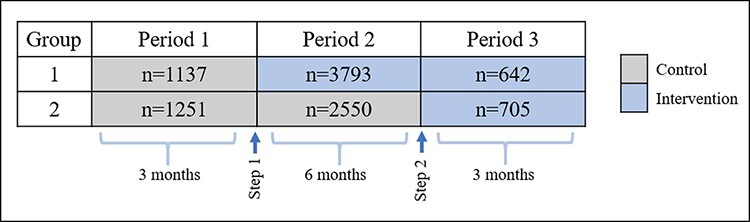
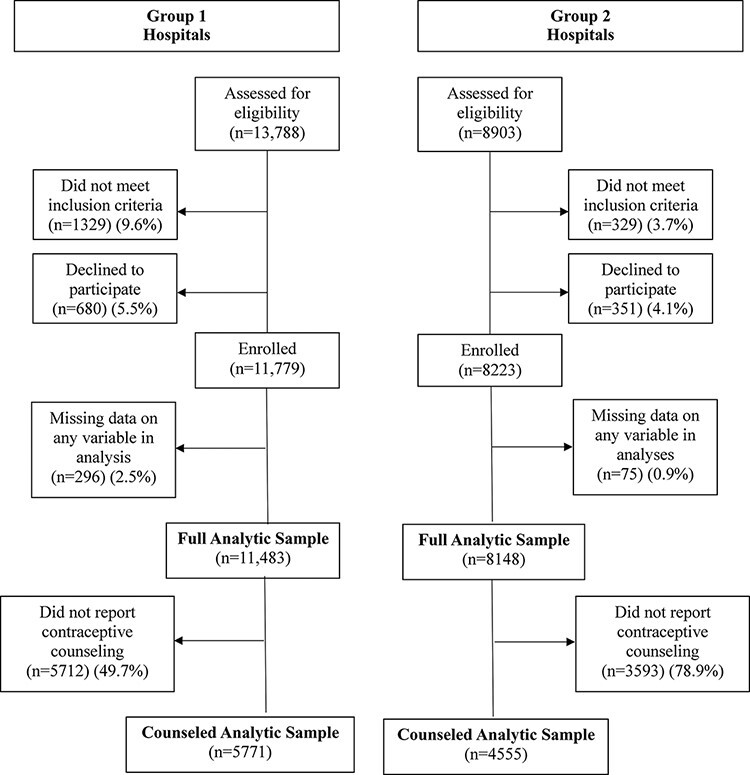
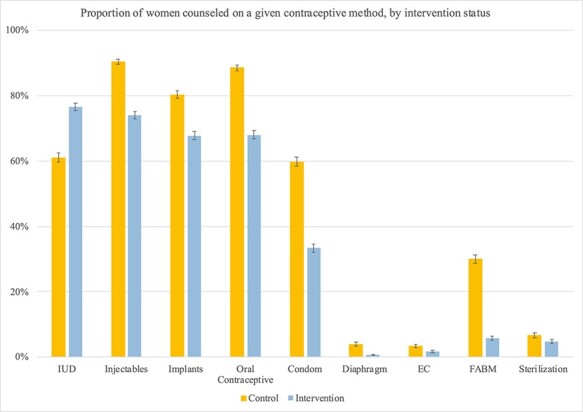
Vertical global health programmes often evaluate success with a narrow focus on programmatic outcomes. However, evaluation of broader patient-centred and unintended outcomes is critical to assess impacts on patient choice and autonomy. Here, we evaluate the effects of a postpartum intrauterine device (PPIUD) intervention on outcomes related to contraceptive method choice. The stepped-wedge cluster randomized contolled trial (RCT) took place in five Tanzanian hospitals. Hospitals were randomized to receive immediate (Group 1; n = 11 483 participants) or delayed (Group 2; n = 8148 participants) intervention. The intervention trained providers on PPIUD insertion and counselling. The evaluation surveyed eligible women (18+, resided in Tanzania, gave birth at a study hospital) on provider postpartum contraceptive counselling during pregnancy or immediately postpartum. In our completed study, participants were considered exposed (n = 9786) or unexposed (n = 10 145) to the intervention based on the location and timing of their birth (no blinding). Our secondary analysis examined differences by intervention exposure on the likelihood of being counselled on IUD only, multiple methods, multiple method durations, a broad method mix; and on the number of methods women were counselled across two samples: all eligible women, and only women who reported receiving any contraceptive counselling. Among all eligible women, counselling on the IUD alone was 7% points higher among the exposed (95% confidence interal (CI): 0.02, 0.12). Among women who received any counselling, those exposed to the intervention were counselled on 1.12 fewer contraceptive methods (95% CI: 0.10, 2.34). The likelihood of receiving counselling on any non-IUD method decreased among those exposed, while the likelihood of being counselled on an IUD alone was 14% points higher among the exposed (95% CI: 0.06, 0.22), suggesting this intervention increased IUD-specific counselling but reduced informed contraceptive choice. These findings underscore the importance of broad metrics that capture autonomy and rights (in addition to programmatic goals) at all stages of health programme planning and implementation.
Keywords: Tanzania; Vertical health programmes; family planning; programme evaluation; quality of care; sexual and reproductive health and rights.
© The Author(s) 2022. Published by Oxford University Press in association with The London School of Hygiene and Tropical Medicine.
Figures
References
-
- Barot S, Cohen S, Darroch J. et al. 2015. Sexual and reproductive health and rights indicators for the SDGs. https://www.guttmacher.org/pubs/SRHR-Indicators-Post-2015-Recommendation....
-
- Bashford A, Levine P. 2010. The Oxford Handbook of the History of Eugenics. Oxford: Oxford University Press.
-
- Brown W, Druce N, Bunting J. et al. 2014. Developing the “120 by 20” goal for the Global FP2020 Initiative. Studies in Family Planning 45: 73–84. - PubMed
-
- Cahill N, Sonneveldt E, Stover J. et al. 2018. Modern contraceptive use, unmet need, and demand satisfied among women of reproductive age who are married or in a union in the focus countries of the Family Planning 2020 initiative: a systematic analysis using the Family Planning Estimation Tool. The Lancet 391: 870–82. - PMC - PubMed
Publication types
MeSH terms
Substances
Grants and funding
LinkOut - more resources
Full Text Sources
Medical
