


The Assembled Genome of the Stroke-Prone Spontaneously Hypertensive Rat
- PMID: 36330812
- PMCID: PMC9814308
- DOI: 10.1161/HYPERTENSIONAHA.122.20140
The Assembled Genome of the Stroke-Prone Spontaneously Hypertensive Rat
Abstract
Background: We report the creation and evaluation of a de novo assembly of the genome of the spontaneously hypertensive rat, the most widely used model of human cardiovascular disease.
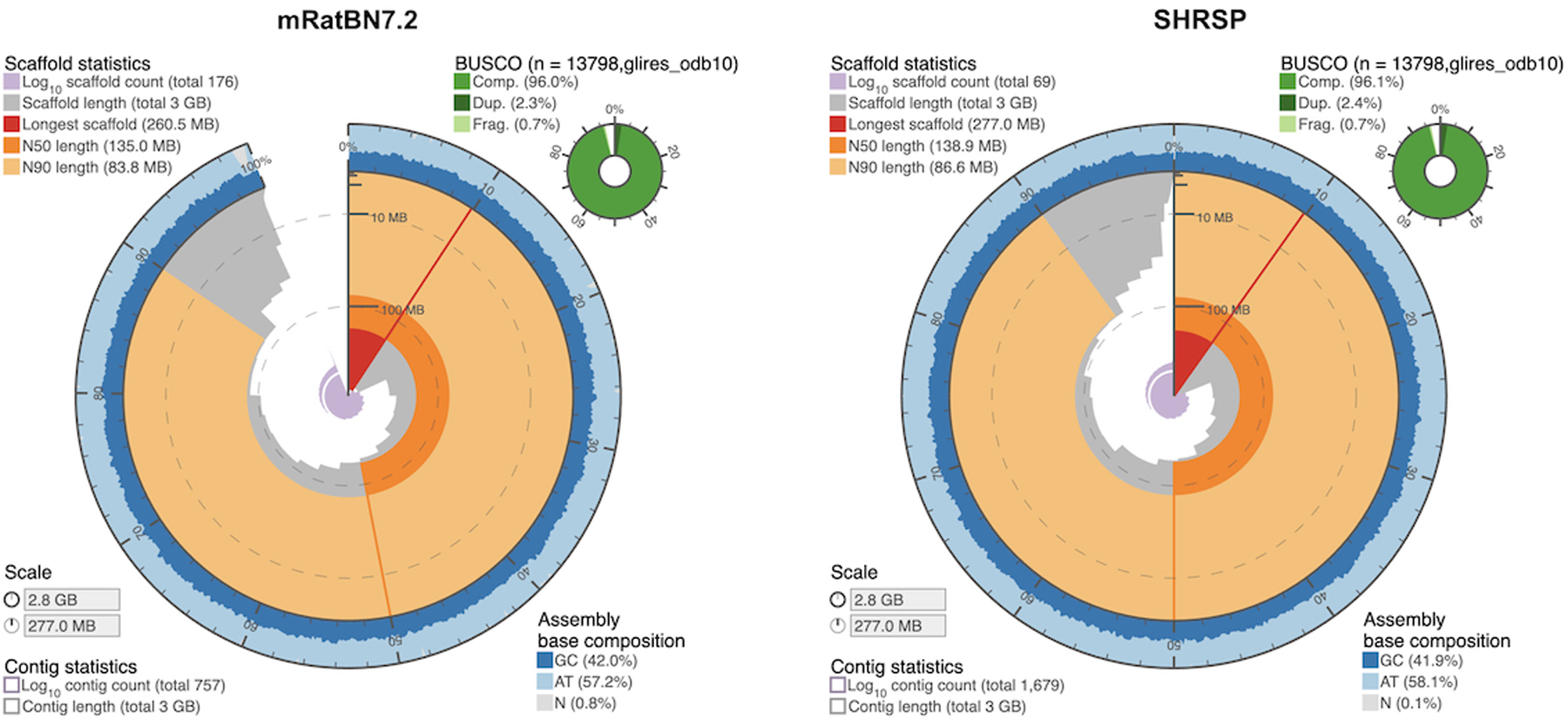
Methods: The genome is assembled from long read sequencing (PacBio HiFi and continuous long read data [CLR]) and scaffolded with long-range structural information obtained from Bionano optical maps and proximity ligation sequencing proximity analysis of the genome. The genome assembly was polished with Illumina short reads. Completeness of the assembly was investigated using Benchmarking Universal Single Copy Orthologs analysis. The genome assembly was also evaluated with the rat reference gene set, using NCBI automated protocols. We also generated orthogonal single molecule transcript sequence reads (Iso-Seq) from 8 tissues and used them to validate the coding assembly, to annotate the assembly with RNA transcripts representing unique full length transcript isoforms for each gene and to determine whether divergences between RefSeq sequences and the assembly were attributable to assembly errors or polymorphisms.
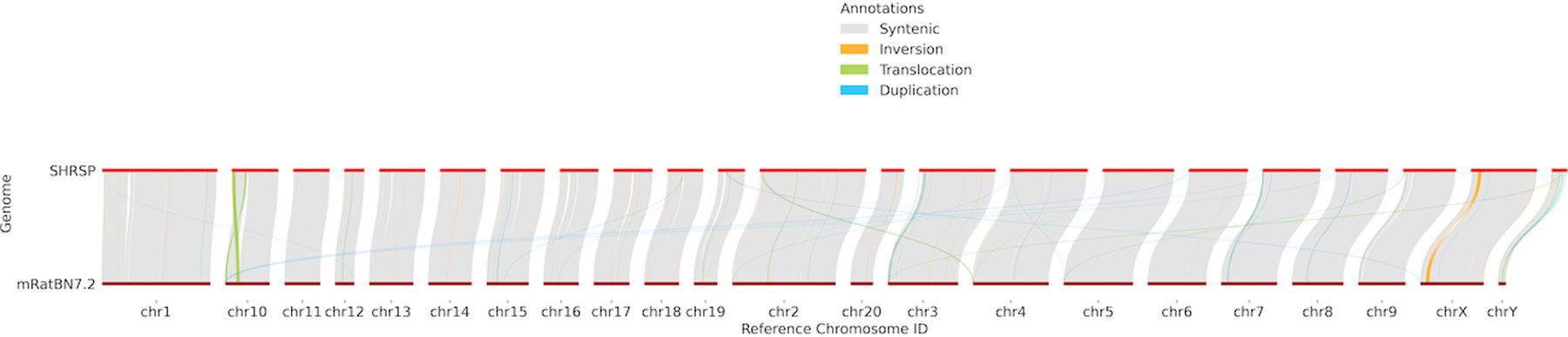
Results: The assembly analysis indicates that this assembly is comparable in contiguity and completeness to the current rat reference assembly, while the use of HiFi sequencing yields an assembly that is more correct at the single base level. Synteny analysis was performed to uncover the extent of synteny and the presence and distribution of chromosomal rearrangements between the reference and this assembly.
Conclusion: The resulting genome assembly is reference quality and captures significant structural variation.
Keywords: cardiovascular diseases; genomics; spontaneously hypertensive rat; synteny; whole genome sequencing.
Figures
References
Publication types
MeSH terms
Grants and funding
LinkOut - more resources
Full Text Sources
Medical
