


Concepts from behavioral theories can guide clinicians in coaching for behavior change
- PMID: 36335082
- PMCID: PMC10153998
- DOI: 10.1016/j.pec.2022.10.013
Concepts from behavioral theories can guide clinicians in coaching for behavior change
Abstract
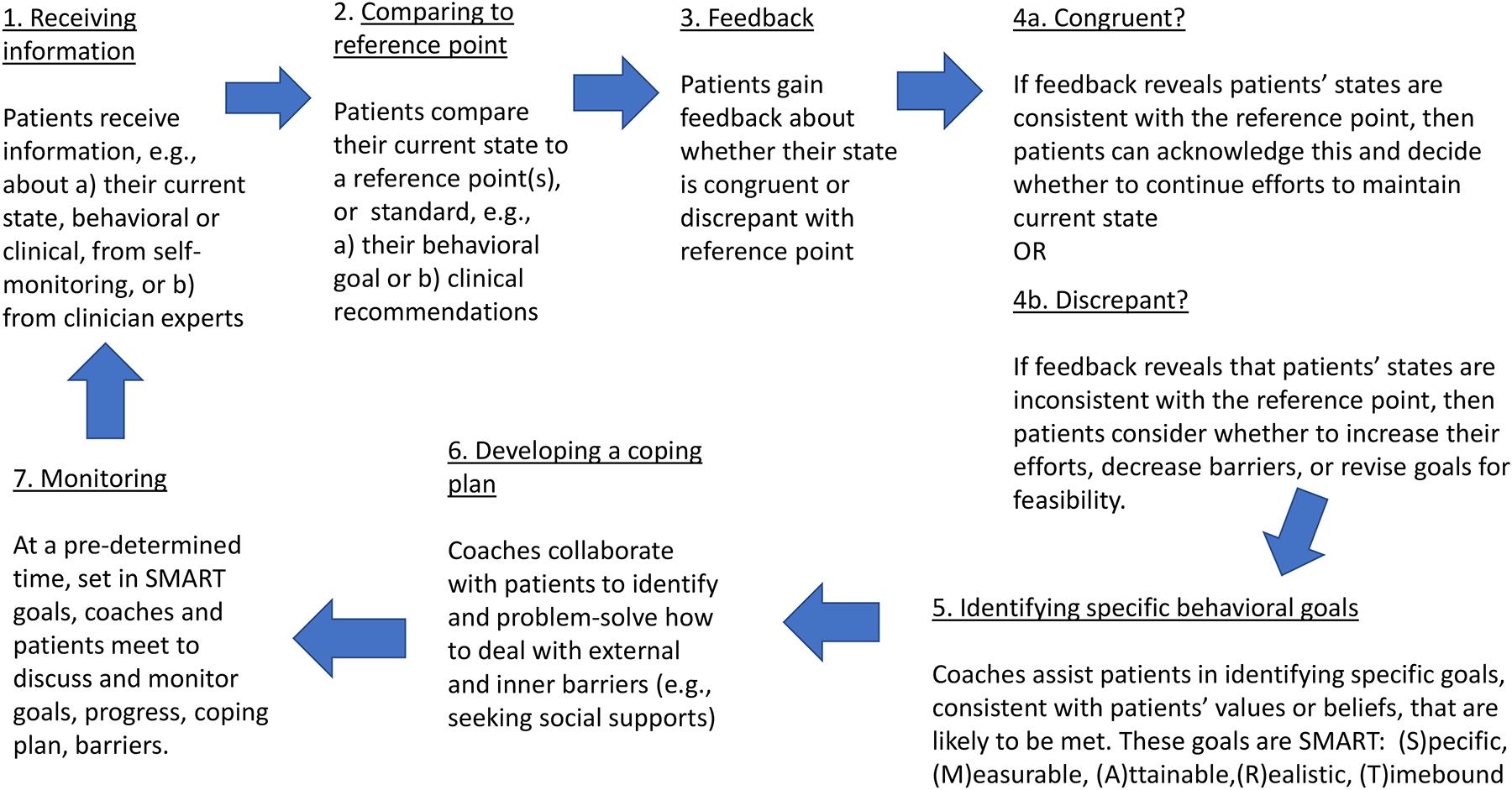
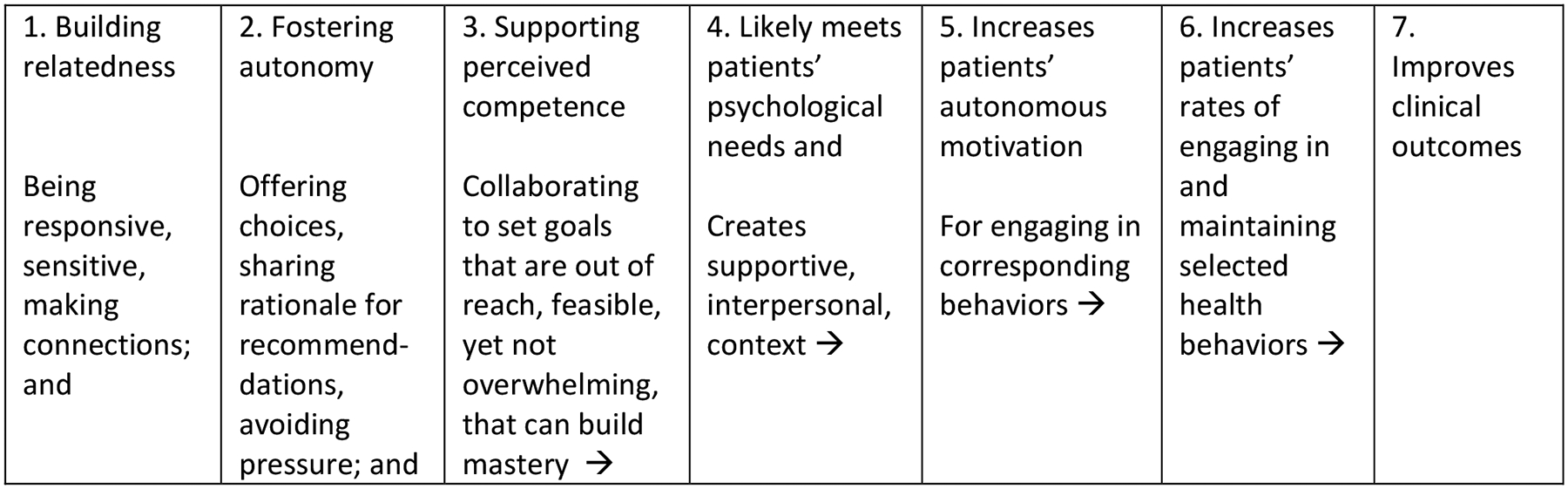
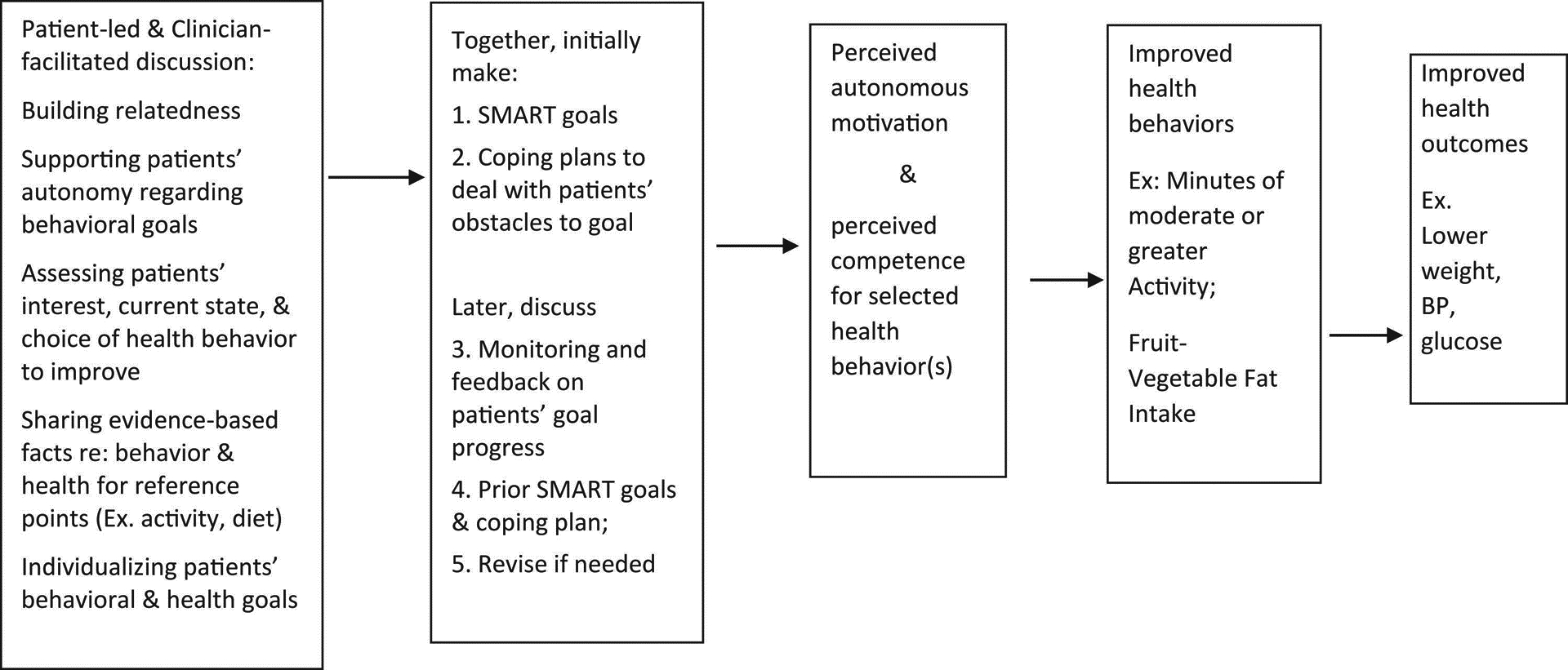
Objectives: Many patients do not engage in health behaviors that can control common, chronic illnesses. Clinicians have opportunities to promote health behaviors yet may lack skills for coaching effectively about health behaviors. Our aims are to: present definitions of coaching, propose concepts for coaching about behavior change from two theories, share theory-guided research on behavior change relevant to ambulatory care settings, and delineate how concepts from these theories can guide coaching.
Methods: In our discussion, we explain how two behavioral theories are complementary and applicable to coaching, present empirical support for these theories, and describe applications of these concepts for practice.
Conclusions and practice implications: Self-determination theory can guide clinicians in how to interact with patients to meet patients' psychological needs, to promote health behaviors, and subsequent health status. Self-regulation theory can guide coaches in what concepts to address for behavior change. These complementary theories have been supported in rigorous research with adult populations in ambulatory care settings.
Keywords: Disease; From MeSH headings: Behavior; Health promotion; Primary prevention; Psychosocial intervention; Secondary prevention.
Copyright © 2022 Elsevier B.V. All rights reserved.
Figures
References
-
- Centers for Disease Control and Prevention. National Center for Chronic Disease Prevention and Health Promotion (NCCDPHP): About Chronic Diseases, https://www.cdc.gov/chronicdisease/about/; 2021. [accessed 7 July 2021].
-
- Centers for Disease Control and Prevention. National Ambulatory Medical Care Survey: 2018 National Summary Tables, https://www.cdc.gov/nchs/data/ahcd/namcs_summary/2018-namcs-web-tables-5...; 2018. [accessed 7 July 2021].
Publication types
MeSH terms
Grants and funding
LinkOut - more resources
Full Text Sources
