


Clockwise rotation of perspective view improves spatial recognition of complex environments in aging
- PMID: 36335225
- PMCID: PMC9637164
- DOI: 10.1038/s41598-022-23301-x
Clockwise rotation of perspective view improves spatial recognition of complex environments in aging
Abstract
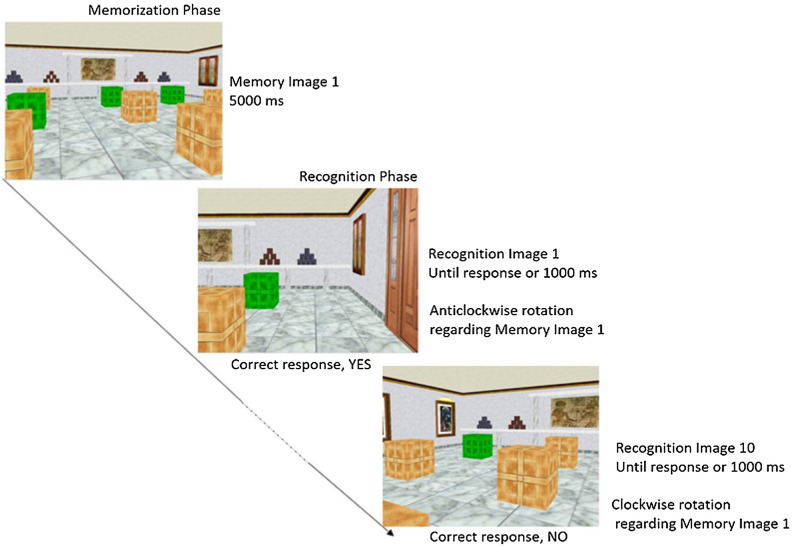
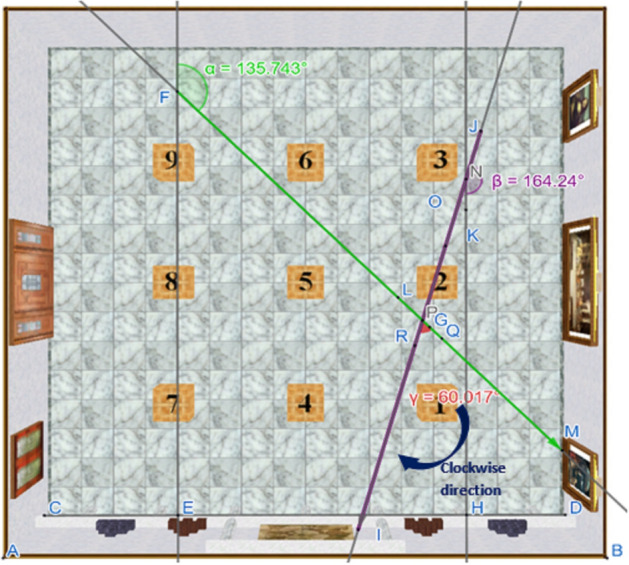
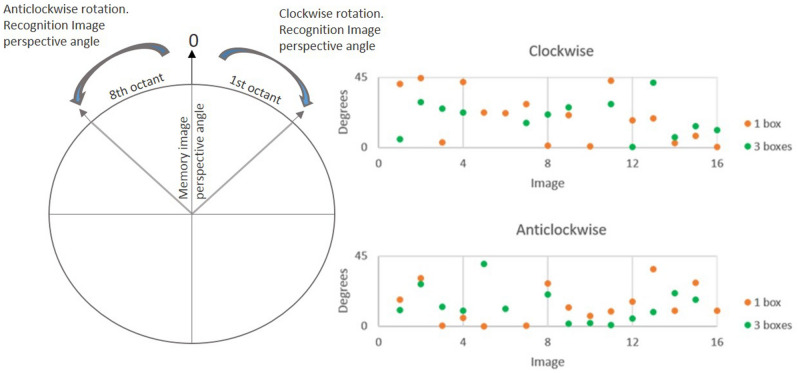
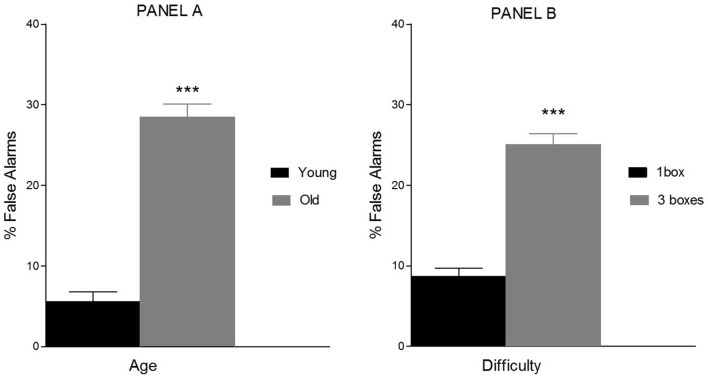
Deciphering the human spatial cognition system involves the development of simple tasks to assess how our brain works with shapes and forms. Prior studies in the mental rotation field disclosed a clockwise rotation bias on how basic stimuli are perceived and processed. However, there is a lack of a substantial scientific background for complex stimuli and how factors like sex or aging could influence them. Regarding the latter point, it is well known that our spatial skills tend to decline as we grow older. Hence, the hippocampal system is especially sensitive to aging. These neural changes underlie difficulties for the elderly in landmark orientation or mental rotation tasks. Thus, our study aimed to check whether the effect of clockwise and anticlockwise rotations in the spatial recognition of complex environments could be modulated by aging. To do so, 40 young adults and 40 old adults performed the ASMRT, a virtual spatial memory recognition test. Results showed that young adults outperformed old adults in all difficulty conditions (i.e., encoding one or three boxes positions). In addition, old adults were affected more than young adults by rotation direction, showing better performance in clockwise rotations. In conclusion, our study provides evidence that aging is particularly affected by the direction of rotation. We suggest that clockwise bias could be linked with the cognitive decline associated with aging. Future studies could address this with brain imaging measures.
© 2022. The Author(s).
Conflict of interest statement
The authors declare no competing interests.
Figures

References
-
- Zacks JM, Mires J, Tversky B, Hazeltine E. Mental spatial transformation of objects and perspective. Spat. Cogn. Comput. 2002;2:315–332.
-
- Jola C, Mast FW. Mental object rotation and egocentric body rotation: Two dissociable processes? Spat. Cogn. Comput. 2005;5:217–237.
-
- Inagaki H, Meguro K, Shimada M, et al. Discrepancy between mental rotation and perspective-taking abilities in normal aging assessed by Piaget’s three-mountain task. J. Clin. Exp. Neuropsychol. 2002;24:18–25. - PubMed
-
- Galea LAM, Kimura D. Sex differences in route learning. Pers. Indiv. Diff. 1993;14:53–65.
-
- Lokka IE, Çöltekin A. Perspective switch and spatial knowledge acquisition: Effects of age, mental rotation ability and visuospatial memory capacity on route learning in virtual environments with different levels of realism. Cartogr. Geogr. Inf. Sci. 2020;47(1):14–27.
Publication types
MeSH terms
Grants and funding
LinkOut - more resources
Full Text Sources
Medical
