


Eribulin for the treatment of advanced breast cancer: A prospective observational registry study
- PMID: 36336468
- PMCID: PMC9787722
- DOI: 10.1111/ecc.13747
Eribulin for the treatment of advanced breast cancer: A prospective observational registry study
Abstract
Objective: Eribulin treatment improved overall survival with predictable toxicities in phase 3 trials of patients with previously treated, locally advanced/metastatic breast cancer. This study (NCT02443428) prospectively observed eribulin-treated patients in real-world clinical practice.
Methods: This observational multicentre registry study enrolled 76 patients with locally advanced/metastatic breast cancer who had ≤2 prior chemotherapeutic regimens for advanced disease. Eribulin was administered at a 1.23 mg/m2 dose (days 1 and 8 of every 21-day cycle). Adverse events (AEs) were monitored and effectiveness was assessed per local practice.
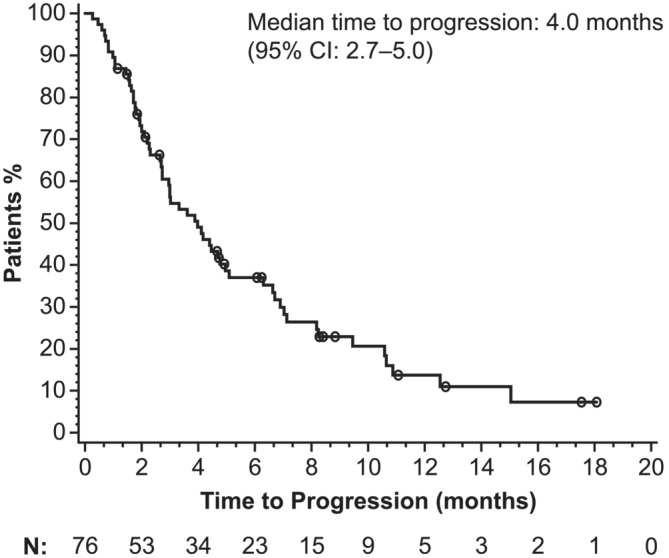
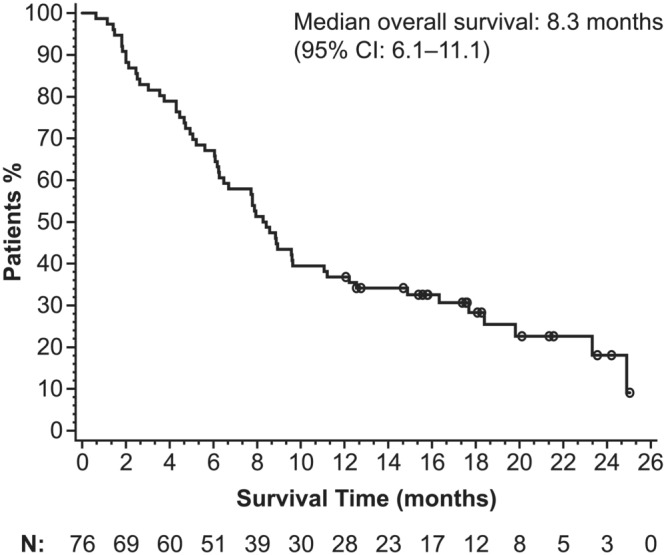
Results: AEs occurred in 98.7% of patients; 88.2% had eribulin-related AEs. The most common AEs were fatigue (64.5%), alopecia (36.8%), nausea (35.5%) and constipation (30.3%). Serious AEs occurred in 42.1% of patients. The most common grade 3/4 AEs were neutropenia (9.2%), febrile neutropenia (9.2%), dyspnoea (5.3%) and pleural effusion (5.3%). No fatal AEs occurred. Dose reductions occurred in 31.6% of patients, 42.1% experienced dose delays and 9.2% discontinued due to worsening condition. There were complete responses in 2.6% and partial responses in 15.8% of patients. Median time to progression and overall survival were 4.0 and 8.3 months, respectively.
Conclusion: Eribulin was well tolerated in real-world clinical practice, comparable to safety and effectiveness reported in other clinical trials.
Keywords: adverse events; effectiveness; eribulin; metastatic; real-world study.
© 2022 The Authors. European Journal of Cancer Care published by John Wiley & Sons Ltd.
Conflict of interest statement
Laura Kenny has served on advisory boards for Celgene and Novartis and given educational presentations sponsored by Lilly and Pfizer.
Mark Beresford has received honoraria and lecture fees from Eisai, Roche, Lilly, Pfizer and Novartis.
Ιan Brown is an employee of Eisai, Ltd.
Vivek Misra and Hartmut Kristeleit have received honoraria and consultancy fees from Eisai, Ltd, for educational lectures, presentation of audit findings and for attendance at Advisory Boards.
Figures
References
-
- Adamo, V. , Ricciardi, G. R. R. , Giuffrida, D. , Scandurra, G. , Russo, A. , Blasi, L. , Spadaro, P. , Iacono, C. , Soto Parra, H. J. , Savarino, A. , Ferraú, F. , Zerilli, F. , Verderame, F. , Butera, A. , Santangelo, C. , Franchina, V. , & Caruso, M. (2019). Eribulin mesylate use as third‐line therapy in patients with metastatic breast cancer (VESPRY): A prospective, multicentre, observational study. Therapeutic Advances in Medical Oncology, 11, 1758835919895755. 10.1177/1758835919895755 - DOI - PMC - PubMed
-
- Cardoso, F. , Costa, A. , Senkus, E. , Aapro, M. , André, F. , Barrios, C. H. , Bergh, J. , Bhattacharyya, G. , Biganzoli, L. , Cardoso, M. J. , Carey, L. , Corneliussen‐James, D. , Curigliano, G. , Dieras, V. , el Saghir, N. , Eniu, A. , Fallowfield, L. , Fenech, D. , Francis, P. , … Winer, E. (2017). 3rd ESO‐ESMO International Consensus Guidelines for Advanced Breast Cancer (ABC 3). Annals of Oncology, 28, 16–33. 10.1093/annonc/mdw544 - DOI - PMC - PubMed
-
- Cardoso, F. , Fallowfield, L. , Costa, A. , Castiglione, M. , Senkus, E. , & ESMO Guidelines Working Group . (2011). Locally recurrent or metastatic breast cancer: ESMO Clinical Practice Guidelines for diagnosis, treatment and follow‐up. Annals of Oncology, 22, vi25–vi30. 10.1093/annonc/mdr372 - DOI - PubMed
-
- Cortes, J. , O'Shaughnessy, J. , Loesch, D. , Blum, J. L. , Vahdat, L. T. , Petrakova, K. , Chollet, P. , Manikas, A. , Diéras, V. , Delozier, T. , Vladimirov, V. , Cardoso, F. , Koh, H. , Bougnoux, P. , Dutcus, C. E. , Seegobin, S. , Mir, D. , Meneses, N. , Wanders, J. , & Twelves, C. (2011). Eribulin monotherapy versus treatment of physician's choice in patients with metastatic breast cancer (EMBRACE): A phase 3 open‐label randomised study. Lancet, 377, 914–923. 10.1016/S0140-6736(11)60070-6 - DOI - PubMed
Publication types
MeSH terms
Substances
Grants and funding
LinkOut - more resources
Full Text Sources
Medical
