Review
. 2022 Nov 7;7(1):374.
doi: 10.1038/s41392-022-01211-8.

Epigenetic regulation of aging: implications for interventions of aging and diseases

Affiliations
Review

Epigenetic regulation of aging: implications for interventions of aging and diseases

Kang Wang et al. Signal Transduct Target Ther. .

Abstract

Aging is accompanied by the decline of organismal functions and a series of prominent hallmarks, including genetic and epigenetic alterations. These aging-associated epigenetic changes include DNA methylation, histone modification, chromatin remodeling, non-coding RNA (ncRNA) regulation, and RNA modification, all of which participate in the regulation of the aging process, and hence contribute to aging-related diseases. Therefore, understanding the epigenetic mechanisms in aging will provide new avenues to develop strategies to delay aging. Indeed, aging interventions based on manipulating epigenetic mechanisms have led to the alleviation of aging or the extension of the lifespan in animal models. Small molecule-based therapies and reprogramming strategies that enable epigenetic rejuvenation have been developed for ameliorating or reversing aging-related conditions. In addition, adopting health-promoting activities, such as caloric restriction, exercise, and calibrating circadian rhythm, has been demonstrated to delay aging. Furthermore, various clinical trials for aging intervention are ongoing, providing more evidence of the safety and efficacy of these therapies. Here, we review recent work on the epigenetic regulation of aging and outline the advances in intervention strategies for aging and age-associated diseases. A better understanding of the critical roles of epigenetics in the aging process will lead to more clinical advances in the prevention of human aging and therapy of aging-related diseases.


Conflict of interest statement

The authors declare no competing interests.

Figures
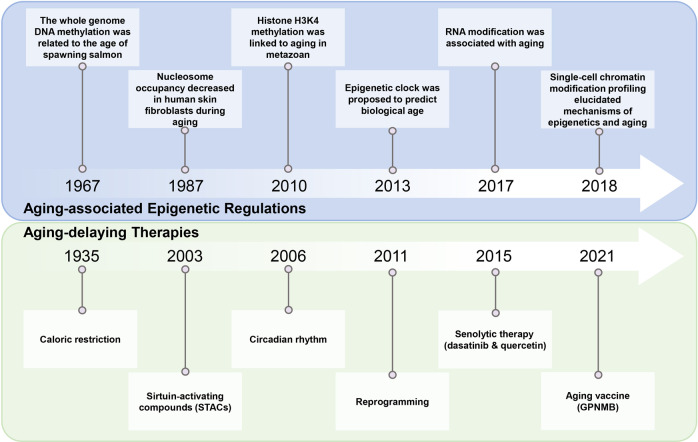
Fig. 1
Fig. 1
The history of studies on aging-associated epigenetic regulation and interventions
Fig. 2
Fig. 2
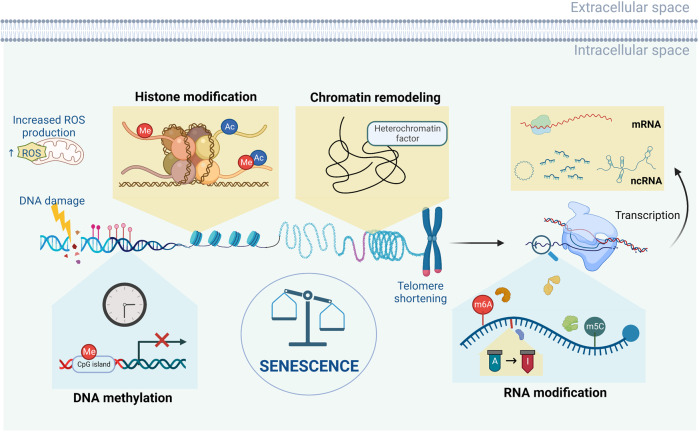
An overview of the aging epigenome. During aging and the emergence of cellular senescence, a series of epigenetic changes occur in cells, including alterations in DNA methylation, chromatin remodeling, histone modification, RNA modification, and ncRNA regulation
Fig. 3
Fig. 3
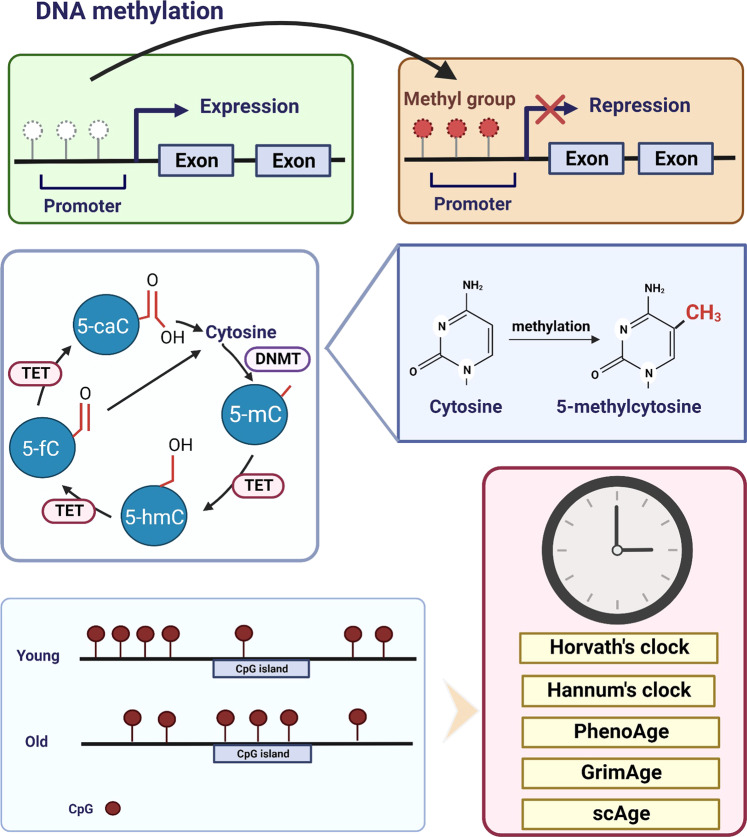
The mechanism of DNA methylation and the epigenetic clock theory of aging. Aging is often marked by global DNA hypomethylation, but hypermethylation also occurs at selective CpG islands. DNA methylation at the promoter of a gene often leads to silencing of that gene. DNA methylation at the 5ʹ cytosine of CpG results in 5-methylcytosine (5-mC). The methylation of DNA is mediated by DNMTs whereas the methyl group on DNA is removed by TET enzymes. TET enzymes oxidize 5-mC to generate 5-mC derivatives, including 5-hydroxymethylcytosine (5-hmC), 5-formylcytosine (5-fC), and 5-carboxylcytosine (5-caC), in mammalian cells. Age estimators, such as Horvath’s clock, Hannum’s clock, PhenoAge, GrimAge and single-cell age clock (scAge) are based on DNA methylation changes in the genome
Fig. 4
Fig. 4
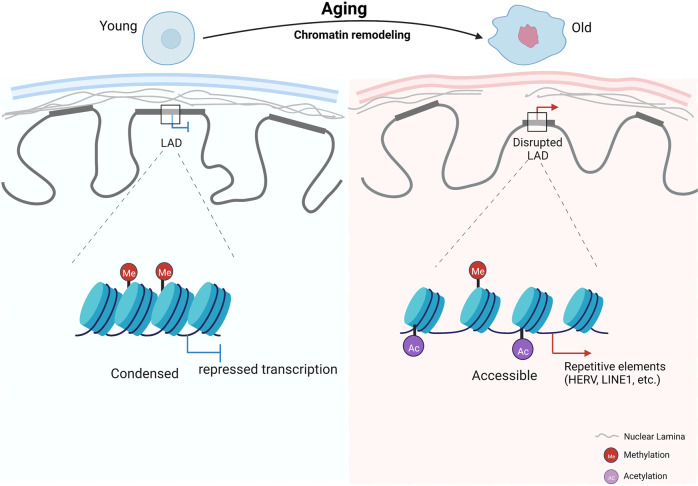
Chromatin structural remodeling during aging. A general loss of heterochromatin and detachment of lamina-associated domain (LAD) structures from the nuclear lamina occur during this process. Higher-order chromatin structure alterations during aging are accompanied by the redistribution of various histone modifications, including histone methylation (H3K4me3, H3K27me3, H3K36me3, H3K9me3) and acetylation (H3K9ac, H3K56ac, H4K16ac, H3K18ac). This leads to reactivation of repeating sequences and dysregulated gene expression due to aberrant chromatin accessibility
Fig. 5
Fig. 5
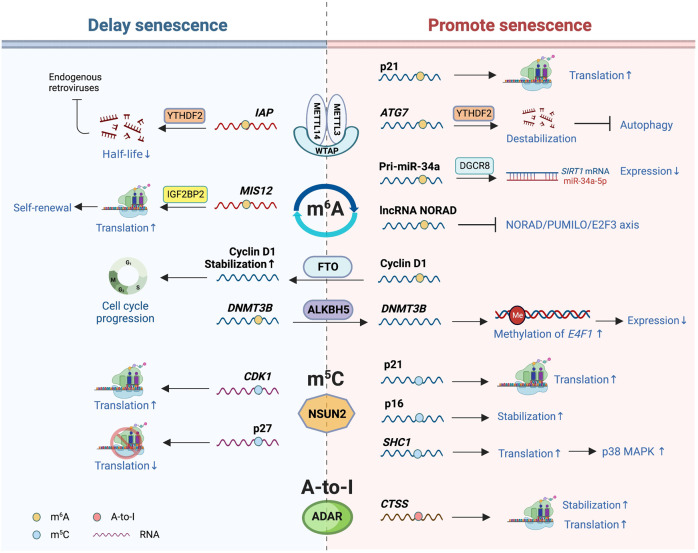
RNA modifications involved in senescence. RNA modifications that have been revealed to be associated with senescence or aging mainly include m6A modification, m5C modification, and adenosine-to-inosine (A-to-I) editing. The m6A modification is regulated by factors including the writer RNA methyltransferases complex, the erasers FTO and ALKBH5, and the reader YTHDF2, whose effects on senescence are complex based on different substrates. Under different stress conditions, m5C modification mediated by NSUN2 plays opposite roles in senescence, retarding replicative senescence and accelerating oxidative-induced senescence. The A-to-I RNA editing catalyzed by the ADAR family mainly exists in the central nervous system, and its relationship to neurodegenerative diseases has been demonstrated
Fig. 6
Fig. 6
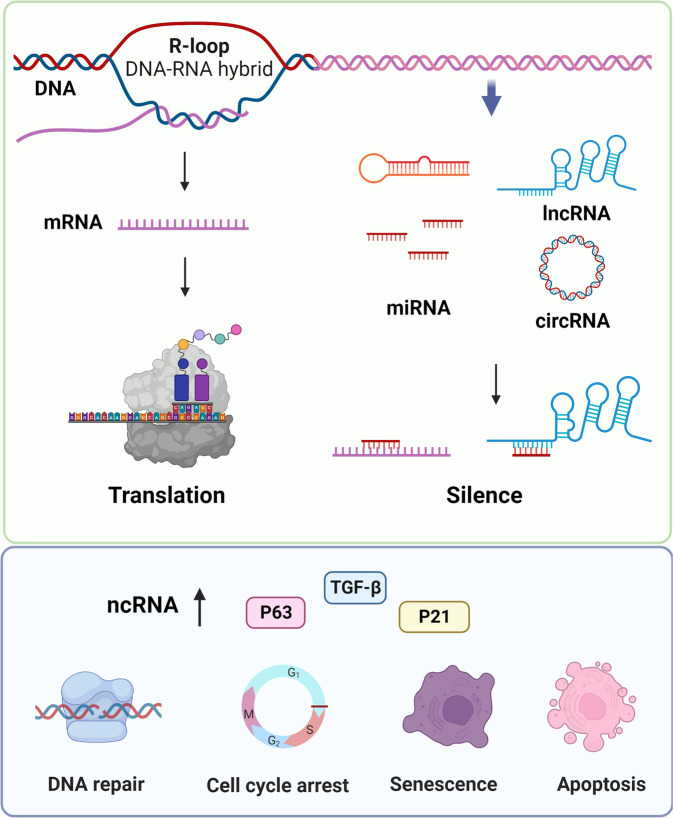
The mechanism of non-coding RNAs regulation during aging. Non-coding RNAs (ncRNAs) include microRNAs (miRNAs), long non-coding RNAs (lncRNAs), R-loop (DNA-RNA hybrids), and circular RNAs (circRNAs). miRNAs bind to mRNAs, lncRNAs or circRNAs to prevent their functions
Fig. 7
Fig. 7
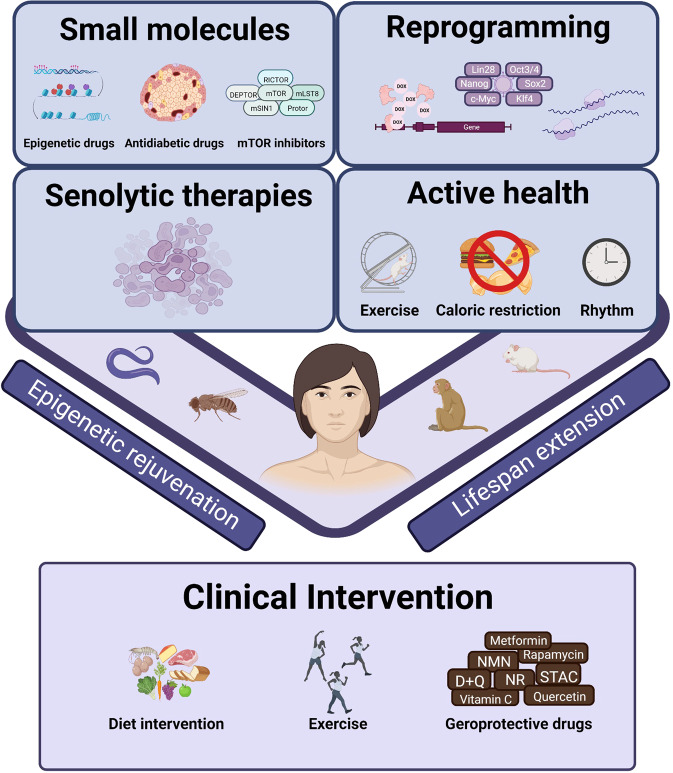
The intervention of aging. Existing intervention strategies aim to alleviate aging in various organisms
Fig. 8
Fig. 8
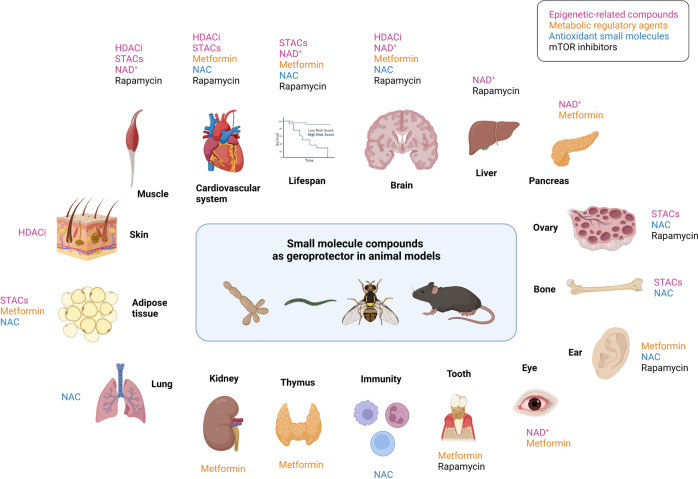
Small molecule compounds as geroprotectors in diverse animal models. A series of small molecule compounds can extend the lifespan or alleviate aging-related phenotypes in different organs. The interventions and corresponding target organs are shown in the diagram
Fig. 9
Fig. 9
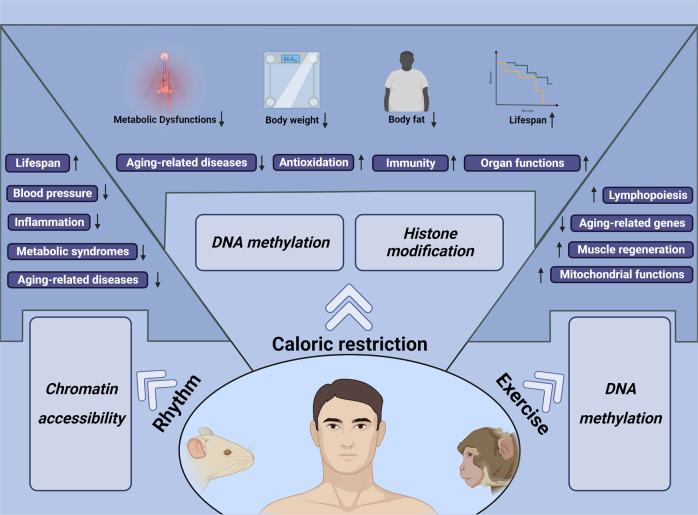
A healthy lifestyle to postpone aging. Active health, including caloric restriction, rhythm control and exercise, improves body function and affects the lifespan of various animals, suggesting that healthy lifestyles exert profound effects on aging intervention

References

    1. Catana CS, Atanasov AG, Berindan-Neagoe I. Natural products with anti-aging potential: affected targets and molecular mechanisms. Biotechnol. Adv. 2018;36:1649–1656. doi: 10.1016/j.biotechadv.2018.03.012. - DOI - PubMed
    1. Brunet A, Berger SL. Epigenetics of aging and aging-related disease. J. Gerontol. A Biol. Sci. Med. Sci. 2014;69:S17–S20. doi: 10.1093/gerona/glu042. - DOI - PMC - PubMed
    1. Lopez-Otin C, et al. The hallmarks of aging. Cell. 2013;153:1194–1217. doi: 10.1016/j.cell.2013.05.039. - DOI - PMC - PubMed
    1. Anderson KE, et al. The queen’s gut refines with age: longevity phenotypes in a social insect model. Microbiome. 2018;6:108. doi: 10.1186/s40168-018-0489-1. - DOI - PMC - PubMed
    1. Horvath S, et al. DNA methylation clocks tick in naked mole rats but queens age more slowly than nonbreeders. Nat. Aging. 2022;2:46–59. doi: 10.1038/s43587-021-00152-1. - DOI - PMC - PubMed

Publication types