


High-density lipoprotein revisited: biological functions and clinical relevance
- PMID: 36337032
- PMCID: PMC10119031
- DOI: 10.1093/eurheartj/ehac605
High-density lipoprotein revisited: biological functions and clinical relevance
Abstract
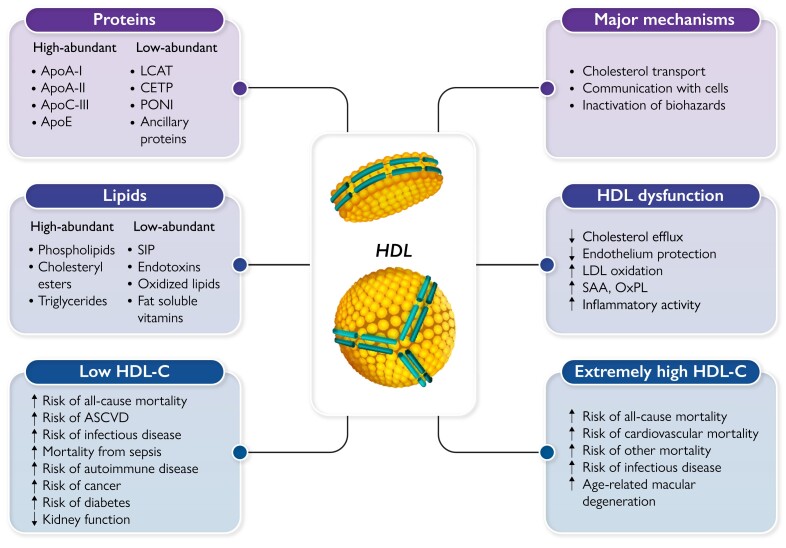
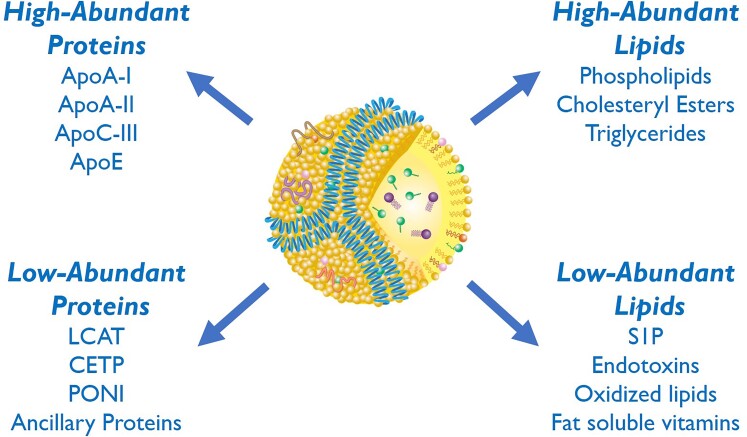
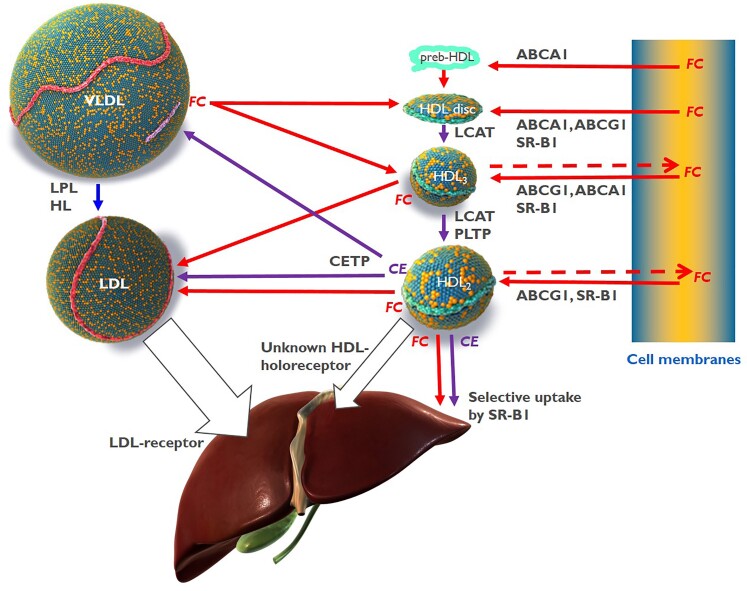
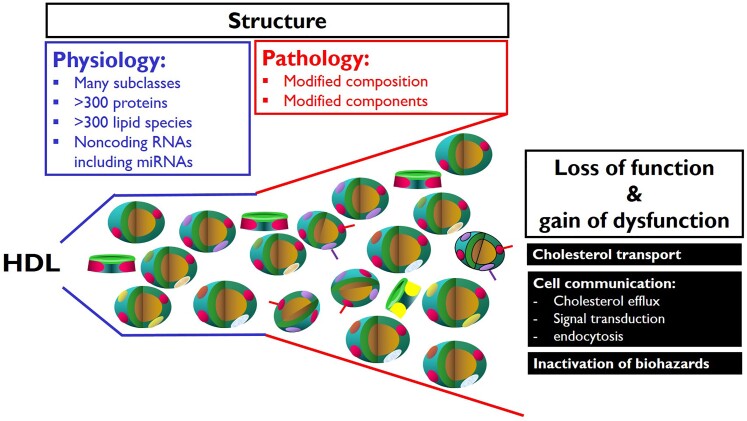
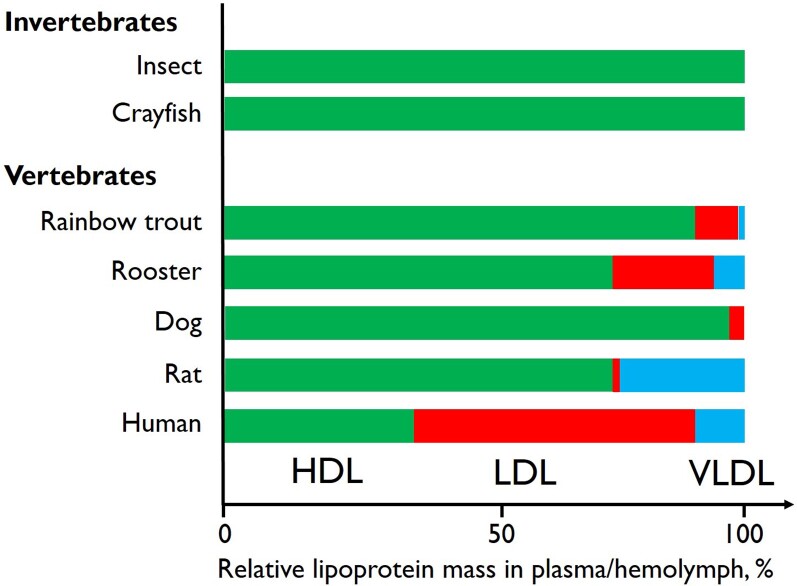
Previous interest in high-density lipoproteins (HDLs) focused on their possible protective role in atherosclerotic cardiovascular disease (ASCVD). Evidence from genetic studies and randomized trials, however, questioned that the inverse association of HDL-cholesterol (HDL-C) is causal. This review aims to provide an update on the role of HDL in health and disease, also beyond ASCVD. Through evolution from invertebrates, HDLs are the principal lipoproteins, while apolipoprotein B-containing lipoproteins first developed in vertebrates. HDLs transport cholesterol and other lipids between different cells like a reusable ferry, but serve many other functions including communication with cells and the inactivation of biohazards like bacterial lipopolysaccharides. These functions are exerted by entire HDL particles or distinct proteins or lipids carried by HDL rather than by its cholesterol cargo measured as HDL-C. Neither does HDL-C measurement reflect the efficiency of reverse cholesterol transport. Recent studies indicate that functional measures of HDL, notably cholesterol efflux capacity, numbers of HDL particles, or distinct HDL proteins are better predictors of ASCVD events than HDL-C. Low HDL-C levels are related observationally, but also genetically, to increased risks of infectious diseases, death during sepsis, diabetes mellitus, and chronic kidney disease. Additional, but only observational, data indicate associations of low HDL-C with various autoimmune diseases, and cancers, as well as all-cause mortality. Conversely, extremely high HDL-C levels are associated with an increased risk of age-related macular degeneration (also genetically), infectious disease, and all-cause mortality. HDL encompasses dynamic multimolecular and multifunctional lipoproteins that likely emerged during evolution to serve several physiological roles and prevent or heal pathologies beyond ASCVD. For any clinical exploitation of HDL, the indirect marker HDL-C must be replaced by direct biomarkers reflecting the causal role of HDL in the respective disease.
Keywords: Age-related macular degeneration; Autoimmune disease; Cancer; Cholesterol efflux; Evolution; Infectious disease; Remnants; Triglycerides.
© The Author(s) 2022. Published by Oxford University Press on behalf of the European Society of Cardiology.
Conflict of interest statement
Conflict of interest: B.G.N. reports consultancies and talks sponsored by AstraZeneca, Sanofi, Regeneron, Akcea, Amgen, Kowa, Denka, Amarin, Novartis, Novo Nordisk, Esperion, and Silence Therapeutics. A.v.E. and A.T.R. have nothing to disclose. A.L.C. reports grant(s)/support from Akcea, Amarin, Amgen, Menarini, Mylan, Sanofi, and Sanofi/Regeneron; consultant for Akcea, Amgen, Amarin, Daiichi-Sankyo, Eli Lilly, Esperion, Kowa, Ionis Pharmaceuticals, Menarini, MSD, Mylan, Novartis, Recordati, Regeneron, and Sanofi.
Figures
References
-
- Gofman JW, Glazier F, Tamplin A, Strisower B, De Lalla O. Lipoproteins, coronary heart disease, and atherosclerosis. Physiol Rev 1954;34:589–607. - PubMed
-
- Miller GJ, Miller NE. Plasma-high-density-lipoprotein concentration and development of ischaemic heart-disease. Lancet 1975;305:16–19. - PubMed
-
- Wilson PW, Abbott RD, Castelli WP. High density lipoprotein cholesterol and mortality. The framingham heart study. Arteriosclerosis 1988;8:737–741. - PubMed
-
- Gordon T, Castelli WP, Hjortland MC, Kannel WB, Dawber TR. High density lipoprotein as a protective factor against coronary heart disease. The framingham study. Am J Med 1977;62:707–714. - PubMed
Publication types
MeSH terms
Substances
LinkOut - more resources
Full Text Sources
Medical
