


Comparing noninvasive sampling techniques with standard cannula sampling method for ruminal microbial analysis
- PMID: 36337103
- PMCID: PMC9623630
- DOI: 10.3168/jdsc.2021-0094
Comparing noninvasive sampling techniques with standard cannula sampling method for ruminal microbial analysis
Abstract
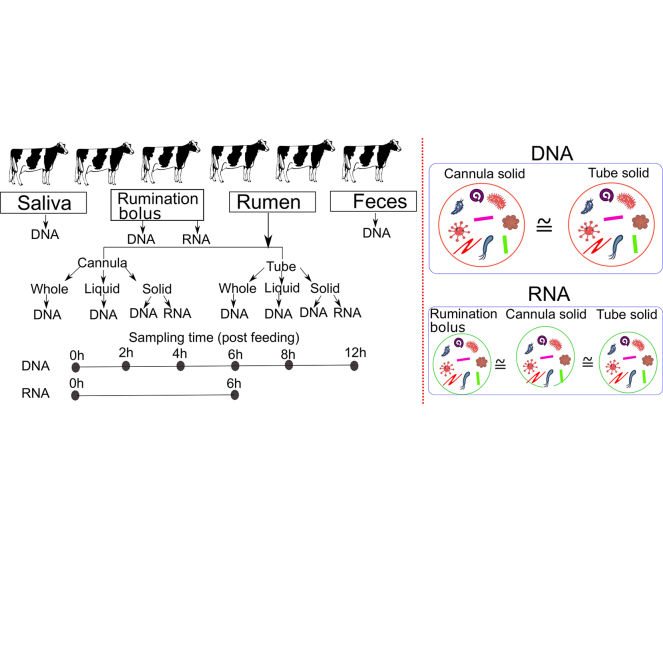
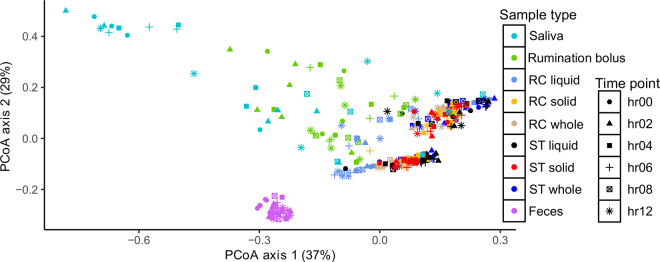
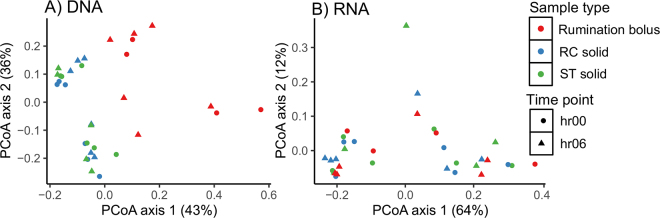
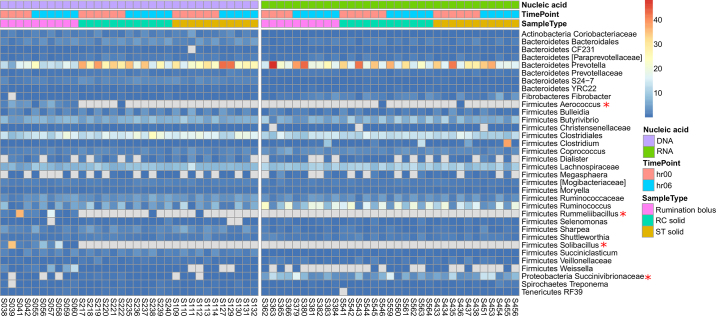
Rumen microbes play an important role in the conversion of indigestible plant material to energy and protein in dairy cows. Sampling for ruminal contents via cannula is considered the gold standard technique for microbial analysis, but the technique requires ruminally cannulated animals and specialized animal facilities. The purpose of this study was to determine whether other sampling methods and locations along the digestive tract may serve as noninvasive proxies to the cannula method for microbial analysis. Six ruminally cannulated lactating Holstein dairy cows were adapted to a standard total mixed ration for 2 wk and sampled during the third week. Sampling locations and methods included salivary content, rumination bolus (regurgitated digesta collected from the cow's mouth), feces, and rumen contents via stomach tube and cannula. Stomach tube and cannula samples differ in proportions of solid and liquid material and were therefore separated into whole (as collected), liquid, and solid fractions. Samples were collected at 0 (before feeding), 2, 4, 6, 8, and 12 h after feeding over 2 d. All samples were extracted for total genomic DNA and selected samples for metabolically active DNA (RNA), PCR-amplified for the V1-V2 region of the 16S rRNA bacterial gene, and analyzed for bacterial diversity using the QIIME2 pipeline followed by statistical analysis in R (https://www.R-project.org/). In DNA-based analysis, at the community level, saliva, rumination bolus, and fecal samples clustered in separate groups, whereas all fractions of stomach tube and cannula samples clustered together, indicating that microbial communities of stomach tube and cannula samples were homogeneous. Rumination bolus samples at 6, 8, and 12 h after feeding clustered with stomach tube and cannula samples, indicating that rumination bolus samples may be an alternative for cannula samples; however, time of sampling is critical for sampling of bolus digesta. Results of the RNA-based analysis of rumination bolus samples and solid samples from cannula and stomach tube at 0 and 6 h after feeding were similar. We concluded that the solid fraction of samples obtained via the stomach tube method may serve as a proxy for the solid fraction of whole ruminal contents obtained via cannula for DNA-based microbial investigations. Both rumination bolus and stomach tube solid samples may serve as proxies for cannula solid samples for RNA-based microbial analysis.
© 2021.
Figures
References
-
- de Assis Lage C.F., Räisänen S.E., Melgar A., Nedelkov K., Chen X., Oh J., Fetter M.E., Indugu N., Bender J.S., Vecchiarelli B., Hennessy M., Pitta D.W., Hristov A.N. Comparison of two sampling techniques for evaluating ruminal fermentation and microbiota in the ruminal planktonic phase of dairy cows. Front. Microbiol. 2020;11 doi: 10.3389/fmicb.2020.618032. 33424820. - DOI - PMC - PubMed
-
- de Boever J.L., Andries J.I., De Brabander D.L., Cottyn B.G., Buysse F.X. Chewing activity of ruminants as a measure of physical structure—A review of factors affecting it. Anim. Feed Sci. Technol. 1990;27:281–291. doi: 10.1016/0377-8401(90)90143-V. - DOI
-
- Frey J.C., Pell A.N., Berthiaume R., Lapierre H., Lee S., Ha J.K., Mendell J.E., Angert E.R. Comparative studies of microbial populations in the rumen, duodenum, ileum and faeces of lactating dairy cows. J. Appl. Microbiol. 2010;108:1982–1993. doi: 10.1111/j.1365-2672.2009.04602.x. 19863686. - DOI - PubMed
-
- Gregorini P., DelaRue B., McLeod K., Clark C.E., Glassey C.B., Jago J. Rumination behavior of grazing dairy cows in response to restricted time at pasture. Livest. Sci. 2012;146:95–98. doi: 10.1016/j.livsci.2012.02.020. - DOI
-
- Kamke J., Kittelmann S., Soni P., Li Y., Tavendale M., Ganesh S., Janssen P.H., Shi W., Froula J., Rubin E.M., Attwood G.T. Rumen metagenome and metatranscriptome analyses of low methane yield sheep reveals a Sharpea-enriched microbiome characterised by lactic acid formation and utilisation. Microbiome. 2016;4:56. doi: 10.1186/s40168-016-0201-2. 27760570. - DOI - PMC - PubMed
LinkOut - more resources
Full Text Sources
