


Impact of gut Microbiome alteration in Ulcerative Colitis patients on disease severity and outcome
- PMID: 36344781
- PMCID: PMC10460709
- DOI: 10.1007/s10238-022-00917-x
Impact of gut Microbiome alteration in Ulcerative Colitis patients on disease severity and outcome
Abstract
Background: Ulcerative colitis is a heterogeneous disease in terms of disease course, location, and therapeutic response. The current study was done to assess the alteration of the gut microbiome in UC patients and its relationship to severity, response to therapy, and outcome.
Patients and methods: The study included 96 participants who were divided into a case group (n = 48, recent onset, treatment naive ulcerative colitis patients who were subdivided into mild, moderate, and severe subgroups based on Truelove-Witts and endoscopic severity) and a healthy control group (n = 48). All were subjected to a thorough history, clinical examination, colonoscopy, routine laboratory tests, and quantitative real-time PCR to quantify Bacteroides, Lactobacilli, Faecalibacterium prausnitzii, Veillonella, and Hemophilus in fecal samples at baseline and 6 months after treatment.
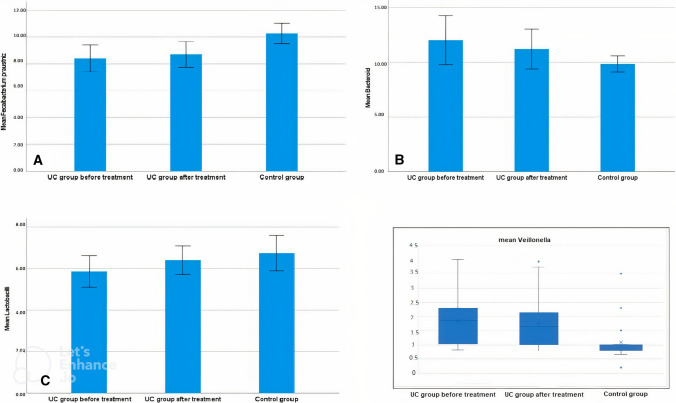
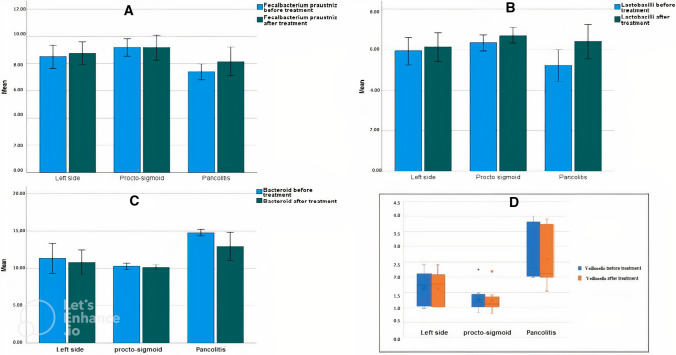
Results: Bacterial 16S rRNA gene sequencing revealed a significant reduction in the phylum Firmicutes in UC patients, with a significant predominance of the phylum Bacteriodetes. F. prausnitzii and lactobacilli were inversely proportional to disease severity, whereas Bacteroides, Hemophilus, and Veillonella were directly proportional to it. Six months after therapy, a statistically significant increase in F. prausnitzii and lactobacilli was observed, with a decrease in the levels of other bacteria. Lower baseline F. praustinizii (< 8.5) increased the risk of relapse; however, lower ESR (< 10), lower post-treatment CRP (< 6), lower Bacteroides (< 10.6) indefinitely protect against relapse.
Conclusion: The gut microbiome of recently diagnosed UC showed lower levels of Lactobacilli, Faecalibacterium, and higher levels of Bacteroides and Veillonella, and the change in their levels can be used to predict response to therapy.
Keywords: Outcome, microbiota; Severity; Ulcerative colitis.
© 2022. The Author(s).
Conflict of interest statement
The authors have no conflicts of interest to declare.
Figures
References
MeSH terms
Substances
LinkOut - more resources
Full Text Sources
Medical
Research Materials
Miscellaneous
