


SARS-CoV-2 seroepidemiology in paediatric population during Delta and Omicron predominance
- PMID: 36345855
- PMCID: PMC9671918
- DOI: 10.1017/S0950268822001601
SARS-CoV-2 seroepidemiology in paediatric population during Delta and Omicron predominance
Abstract
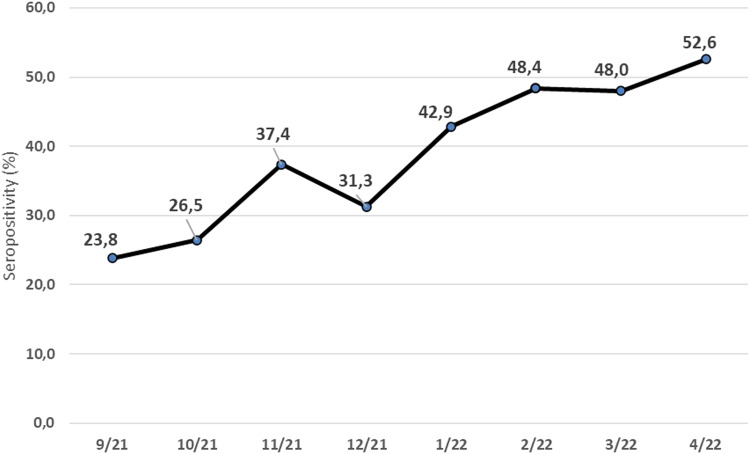
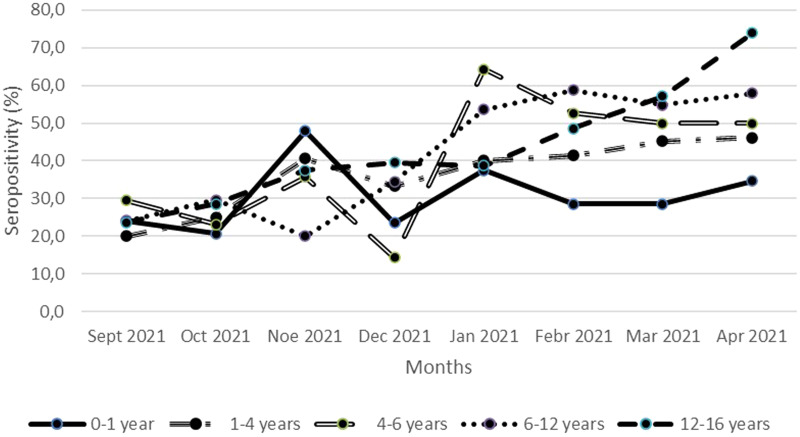
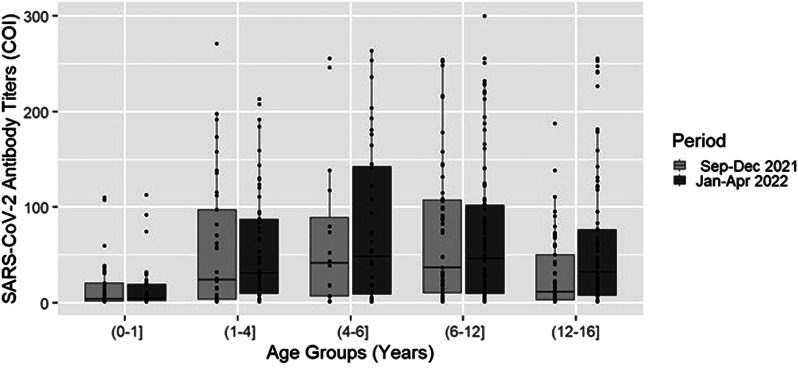
Limited prospective severe acute respiratory syndrome coronavirus 2 (SARS-CoV-2) data in children regarding the impact of Omicron variant in seropositivity have been reported. We investigated SARS-CoV-2 seropositivity in children between 1 September 2021 and 30 April 2022, representing Delta and Omicron predominance periods. Serum samples from children admitted to the major tertiary Greek paediatric hospital for any cause, except for COVID-19, were randomly collected and tested for SARS-CoV-2 natural infection antibodies against nucleocapsid antigen (Elecsys® Anti-SARS-CoV-2 reagent). A total of 506/1312 (38.6%) seropositive children (0-16 years) were detected (males: 261/506(51.6%); median age (IQR): 95.2 months(24-144)). Seropositivity rates (%) increased from Delta to Omicron period from 29.7% to 48.5% (P-value<0.0001). Seropositivity increased for all age groups, except for the age group of 0-1 year (P-value:0.914). The highest seropositivity rate was detected in April 2022 (52.6%) and reached 73.9% specifically for the age group 12-16 years. No significant differences were detected in seropositivity with respect to gender, origin, or hospitalisation status. Median (IQR) antibody titres were higher in the Omicron vs. Delta period in all age groups, especially in 12-16 years [32.2 COI (7-77.1) vs. 11.4 COI(2.8-50.2), P-value:0.009). During Omicron variant period increased SARS-CoV-2 seropositivity was detected in paediatric population, especially in adolescents, implicating either increased transmissibility or reinfection rates.
Keywords: COVID-19; Children; Omicron variant; SARS-CoV-2; seroepidemiology.
Figures
References
-
- CDC (2021) HAN Archive – 00442 | Health Alert Network (HAN). Health Alert Network.
-
- American Academy of Pediatrics (2021) Children and COVID-19: State-Level Data Report (10/7/21). American Academy of Pediatrics and the Children's Hospital Association. Available at https://www.aap.org/en/pages/2019-novel-coronavirus-covid-19-infections/....
Publication types
MeSH terms
Substances
Supplementary concepts
LinkOut - more resources
Full Text Sources
Medical
Miscellaneous
