


False certainty in the acquisition of anatomical and physiotherapeutic knowledge
- PMID: 36348330
- PMCID: PMC9641864
- DOI: 10.1186/s12909-022-03820-x
False certainty in the acquisition of anatomical and physiotherapeutic knowledge
Abstract
Background: Efficient metacognitive monitoring, that is the monitoring of one's own thought processes and specifically one's state of knowledge, is essential for effective clinical reasoning. Knowing what one does and does not know is a competency that students of health professions need to develop. Students often tend to develop false certainty in their own knowledge in the longer course of their education, but the time frame that is required for this effect to occur has remained unclear. We investigated whether students developed false certainty already after one course unit.
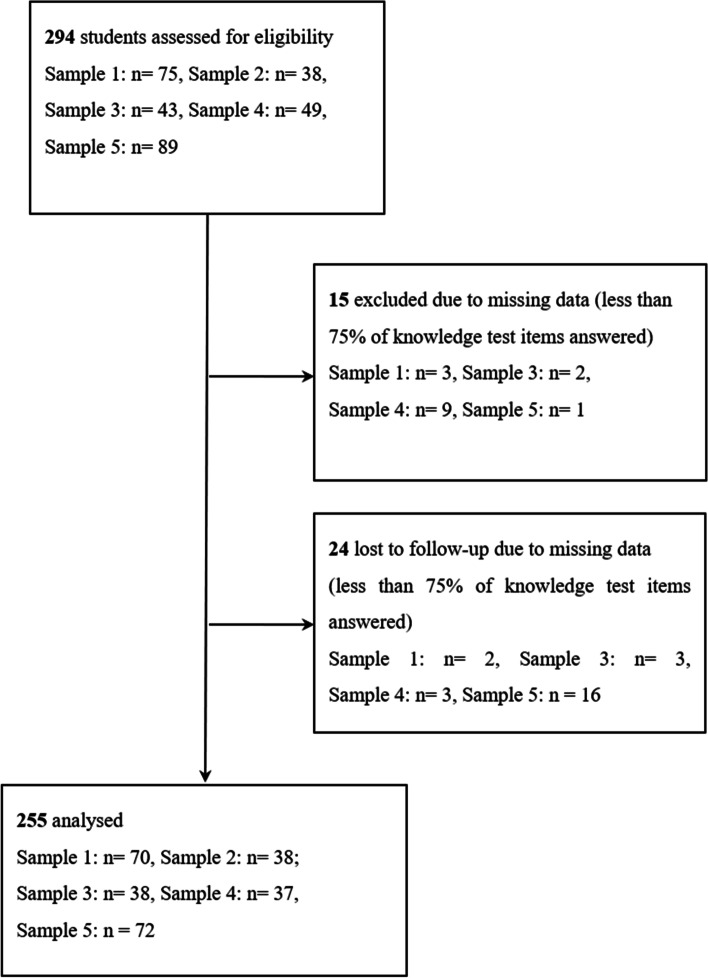
Methods: This study analysed data from one sample of medical students and four samples of physiotherapy students in two formal educational settings (total N = 255) who took knowledge tests before and after a course unit. We examined changes in students' confidence separately for correctly and incorrectly answered questions and analysed their ability to assign higher levels of confidence to correct answers than to incorrect answers (discrimination ability).
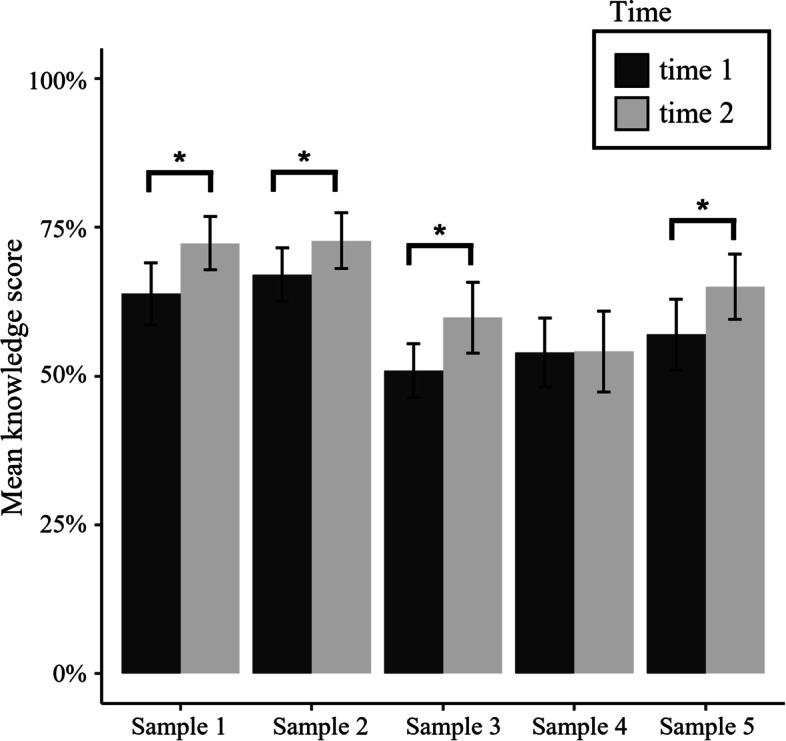
Results: Students' knowledge as well as confidence in their correct answers in knowledge tests increased after learning. However, consistently for all samples, confidence in incorrect answers increased as well. Students' discrimination ability improved only in two out of the five samples.
Conclusions: Our results are in line with recent research on confidence increase of health professions students during education. Extending those findings, our study demonstrated that learning in two different formal educational settings increased confidence not only in correct but also in incorrect answers to knowledge questions already after just one learning session. Our findings highlight the importance of improving metacognition in the education of health professionals-especially their ability to know what they do not know.
Keywords: False certainty; Medical Education; Metacognition; Testing/Assessment.
© 2022. The Author(s).
Conflict of interest statement
The authors declare that there are no conflicts of interest.
Figures


References
-
- Koriat A. Metacognition and consciousness. In: The Cambridge Handbook of Consciousness. 2012:289–326. 10.1017/cbo9780511816789.012
MeSH terms
LinkOut - more resources
Full Text Sources
