


Study on the impact of temperature, salts, sugars and pH on dilute solution properties of Lepidium perfoliatum seed gum
- PMID: 36348799
- PMCID: PMC9632227
- DOI: 10.1002/fsn3.2991
Study on the impact of temperature, salts, sugars and pH on dilute solution properties of Lepidium perfoliatum seed gum
Abstract
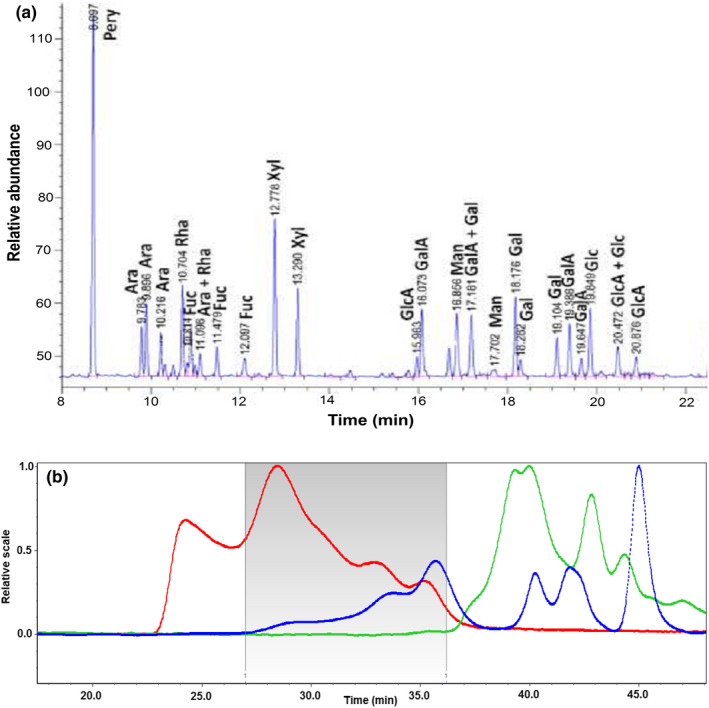
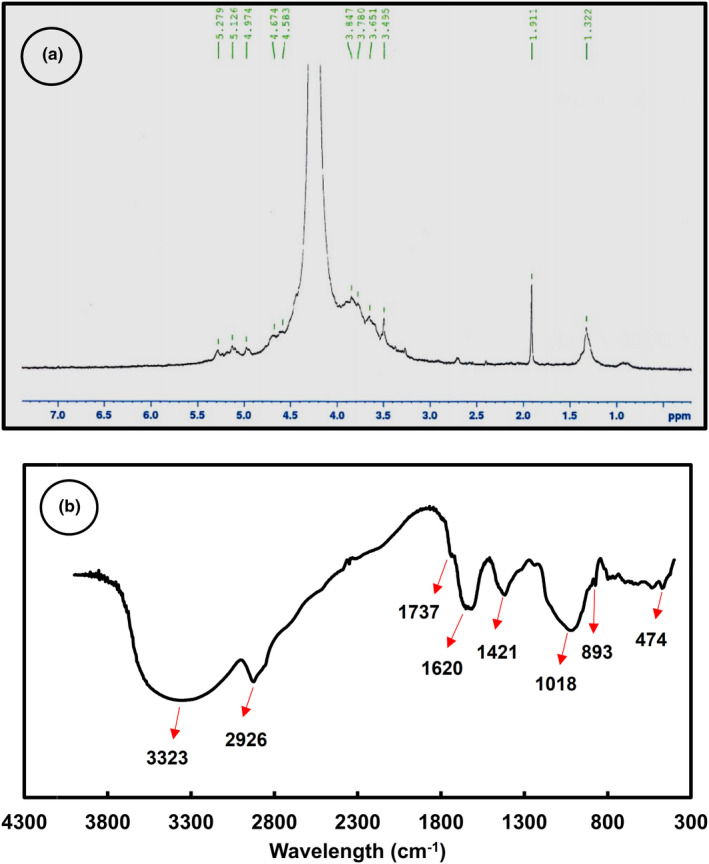
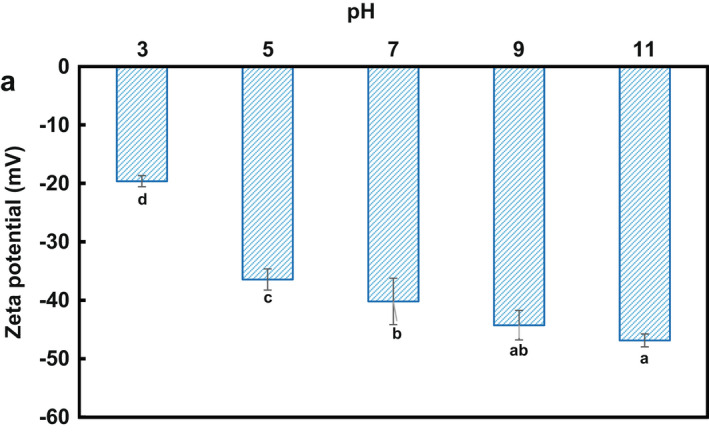
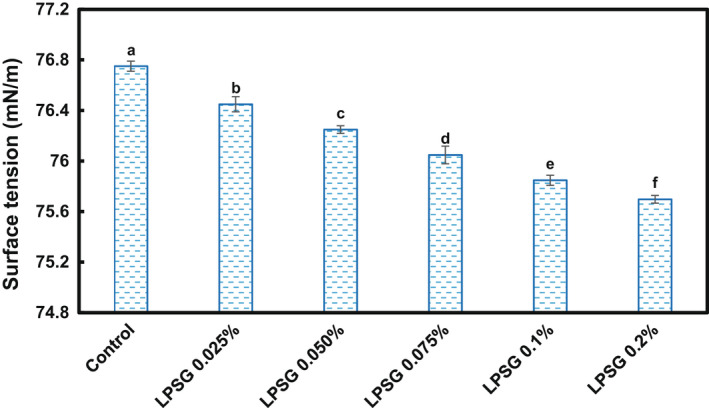
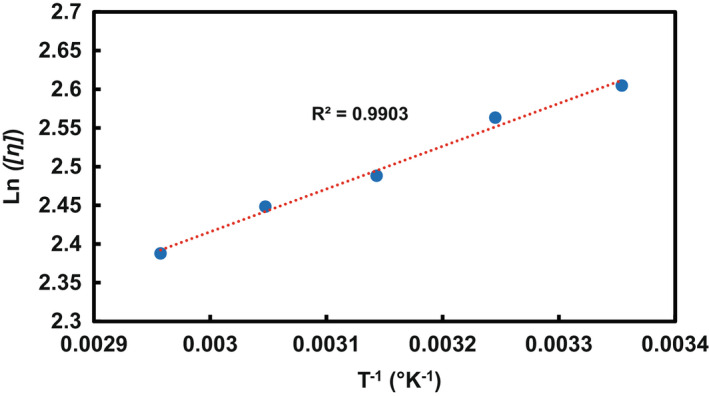
The functional properties of food gums are remarkably affected by the quality of solvent/cosolutes and temperature in a food system. In this work, for the first time, the chemical characterizations and dilute solution properties of Lepidium perfoliatum seed gum (LPSG), as an emerging carbohydrate polymer, were investigated. It was found that xylose (14.27%), galacturonic acid (10.70%), arabinose (9.07%) and galactose (8.80%) were the main monosaccharaide components in the LPSG samples. The uronic acid content of LPSG samples was obtained to be 14.83%. The average molecular weight and polydispersity index of LPSG were to be 2.34 × 10⁵ g/mol and 3.3, respectively. As the temperature was increased and the pH was decreased and the concentration of cosolutes (Na+, Ca2+, sucrose and lactose) presented in the LPSG solutions was enhanced, the intrinsic viscosity [η] and coil dimension (R coil , V coil , υ s ) of LPSG molecular chains decreased. Activation energy and chain flexibility of LPSG were estimated to be 0.46 × 10⁷ J/kg.mol and 553.08 K, respectively. The relative stiffness parameter (B) of LPSG in the presence of Ca2+ (0.079) was more than that of Na+ (0.032). Incorporation of LPSG into deionized water (0.2%, w/v) diminished the surface activity from 76.75 mN/m to 75.70 mN/m. Zeta potential (ζ) values (-46.85 mV--19.63 mV) demonstrated that dilute solutions of LPSG had strong anionic nature in the pH range of 3-11. The molecular conformation of LPSG was random coil in all the selected solution conditions. It can be concluded that temperature and presence of cosolutes can significantly influence on the LPSG properties in the dilute systems.
Keywords: Lepidium perfoliatum seed gum; intrinsic viscosity; salt; sugar; surface activity; zeta potential.
© 2022 University of Bonab. Food Science & Nutrition published by Wiley Periodicals LLC.
Conflict of interest statement
The authors declare that they have no conflict of interest.
Figures
References
-
- Amini, A. M. , & Razavi, S. M. (2012). Dilute solution properties of Balangu (Lallemantia royleana) seed gum: Effect of temperature, salt, and sugar. International Journal of Biological Macromolecules, 51(3), 235–243. - PubMed
-
- Antoniou, E. , Themistou, E. , Sarkar, B. , Tsianou, M. , & Alexandridis, P. (2010). Structure and dynamics of dextran in binary mixtures of a good and a bad solvent. Colloid and Polymer Science, 288(12–13), 1301–1312.
-
- Bak, J. , & Yoo, B. (2018). Intrinsic viscosity of binary gum mixtures with xanthan gum and guar gum: Effect of NaCl, sucrose, and pH. International Journal of Biological Macromolecules, 111, 77–81. - PubMed
-
- Behrouzian, F. , Razavi, S. M. , & Karazhiyan, H. (2014). Intrinsic viscosity of cress (Lepidium sativum) seed gum: Effect of salts and sugars. Food Hydrocolloids, 35, 100–105.
-
- Busch, V. M. , Kolender, A. A. , Santagapita, P. R. , & Buera, M. P. (2015). Vinal gum, a galactomannan from Prosopis ruscifolia seeds: Physicochemical characterization. Food Hydrocolloids, 51, 495–502.
LinkOut - more resources
Full Text Sources
Research Materials
Miscellaneous
