


Role of protein phosphorylation in cell signaling, disease, and the intervention therapy
- PMID: 36349142
- PMCID: PMC9632491
- DOI: 10.1002/mco2.175
Role of protein phosphorylation in cell signaling, disease, and the intervention therapy
Abstract
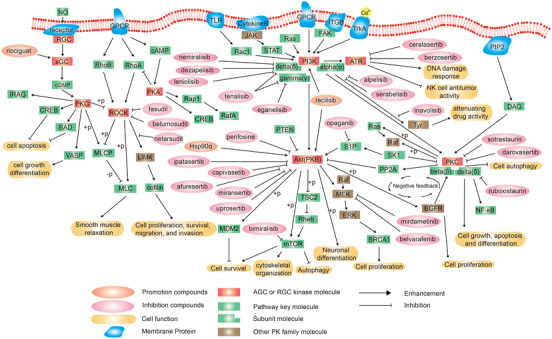
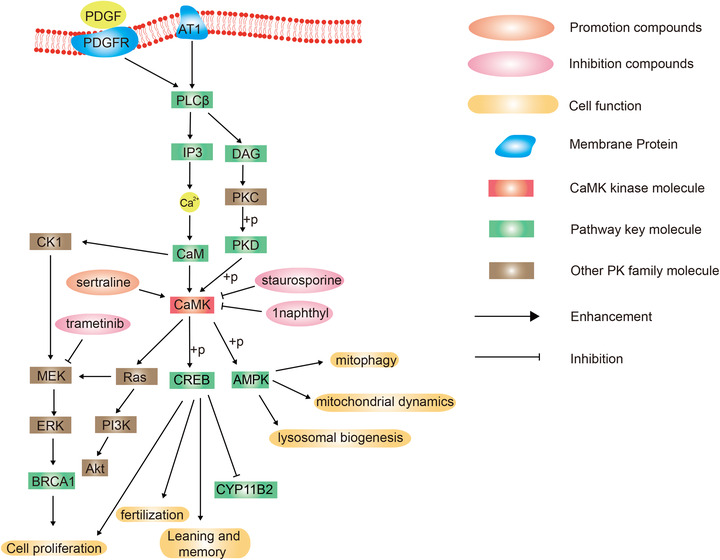
Protein phosphorylation is an important post-transcriptional modification involving an extremely wide range of intracellular signaling transduction pathways, making it an important therapeutic target for disease intervention. At present, numerous drugs targeting protein phosphorylation have been developed for the treatment of various diseases including malignant tumors, neurological diseases, infectious diseases, and immune diseases. In this review article, we analyzed 303 small-molecule protein phosphorylation kinase inhibitors (PKIs) registered and participated in clinical research obtained in a database named Protein Kinase Inhibitor Database (PKIDB), including 68 drugs approved by the Food and Drug Administration of the United States. Based on previous classifications of kinases, we divided these human protein phosphorylation kinases into eight groups and nearly 50 families, and delineated their main regulatory pathways, upstream and downstream targets. These groups include: protein kinase A, G, and C (AGC) and receptor guanylate cyclase (RGC) group, calmodulin-dependent protein kinase (CaMK) group, CMGC [Cyclin-dependent kinases (CDKs), Mitogen-activated protein kinases (MAPKs), Glycogen synthase kinases (GSKs), and Cdc2-like kinases (CLKs)] group, sterile (STE)-MAPKs group, tyrosine kinases (TK) group, tyrosine kinase-like (TKL) group, atypical group, and other groups. Different groups and families of inhibitors stimulate or inhibit others, forming an intricate molecular signaling regulatory network. This review takes newly developed new PKIs as breakthrough point, aiming to clarify the regulatory network and relationship of each pathway, as well as their roles in disease intervention, and provide a direction for future drug development.
Keywords: cell signaling; diseases; intervention therapy; protein kinases; protein phosphorylation.
© 2022 The Authors. MedComm published by Sichuan International Medical Exchange & Promotion Association (SCIMEA) and John Wiley & Sons Australia, Ltd.
Conflict of interest statement
Author Zhe‐Sheng Chen is an editorial board member of MedComm. Author Zhe‐Sheng Chen was not involved in the journal's review of, or decisions related to, this manuscript. The other authors declared no conflicts of interest.
Figures


References
Publication types
LinkOut - more resources
Full Text Sources
Research Materials
Miscellaneous