


GWAS Central: an expanding resource for finding and visualising genotype and phenotype data from genome-wide association studies
- PMID: 36350644
- PMCID: PMC9825503
- DOI: 10.1093/nar/gkac1017
GWAS Central: an expanding resource for finding and visualising genotype and phenotype data from genome-wide association studies
Abstract
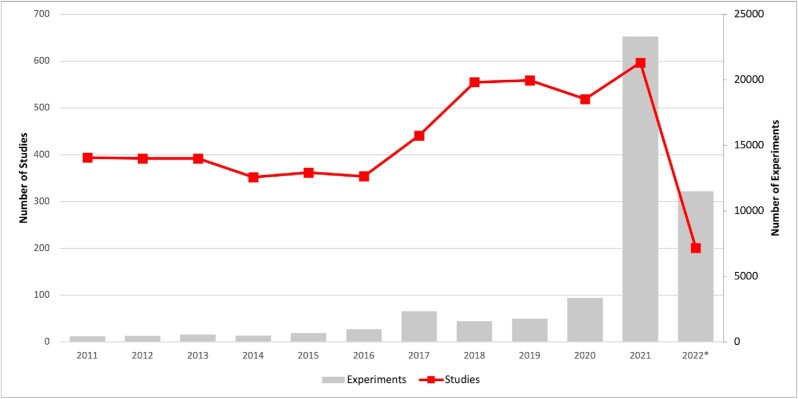
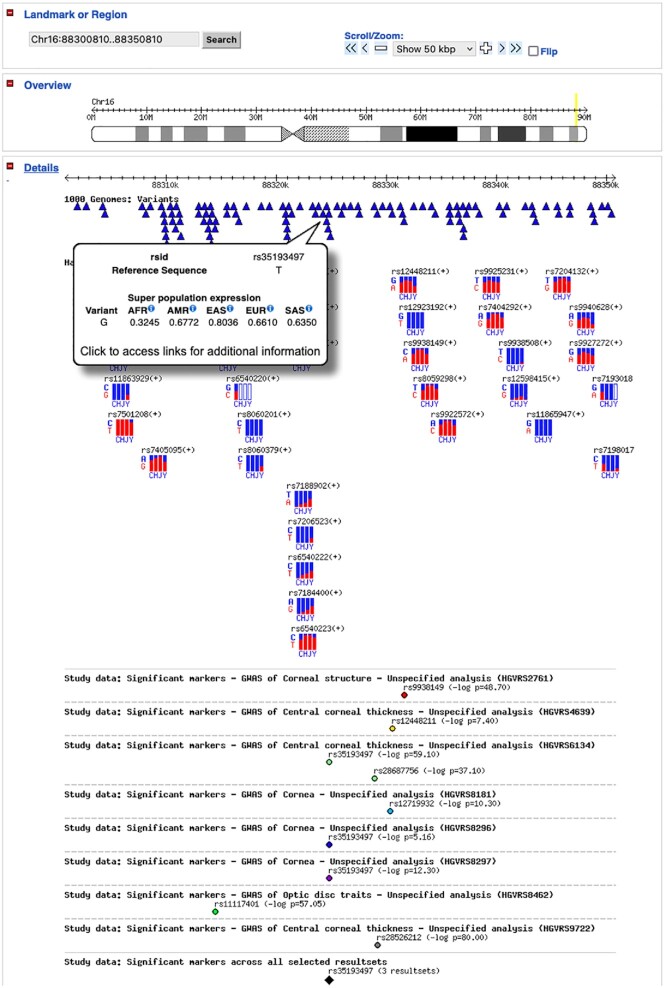
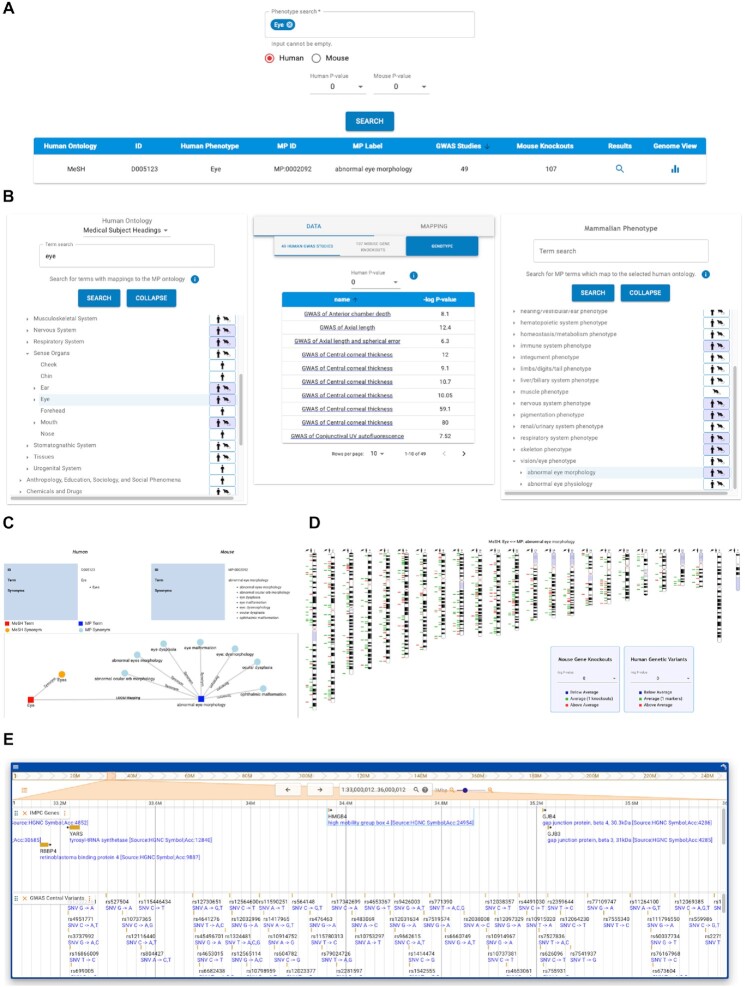
The GWAS Central resource gathers and curates extensive summary-level genome-wide association study (GWAS) data and puts a range of user-friendly but powerful website tools for the comparison and visualisation of GWAS data at the fingertips of researchers. Through our continued efforts to harmonise and import data received from GWAS authors and consortia, and data sets actively collected from public sources, the database now contains over 72.5 million P-values for over 5000 studies testing over 7.4 million unique genetic markers investigating over 1700 unique phenotypes. Here, we describe an update to integrate this extensive data collection with mouse disease model data to support insights into the functional impact of human genetic variation. GWAS Central has expanded to include mouse gene-phenotype associations observed during mouse gene knockout screens. To allow similar cross-species phenotypes to be compared, terms from mammalian and human phenotype ontologies have been mapped. New interactive interfaces to find, correlate and view human and mouse genotype-phenotype associations are included in the website toolkit. Additionally, the integrated browser for interrogating multiple association data sets has been updated and a GA4GH Beacon API endpoint has been added for discovering variants tested in GWAS. The GWAS Central resource is accessible at https://www.gwascentral.org/.
© The Author(s) 2022. Published by Oxford University Press on behalf of Nucleic Acids Research.
Figures
References
-
- Uffelmann E., Huang Q.Q., Munung N.S., de Vries J., Okada Y., Martin A.R., Martin H.C., Lappalainen T., Posthuma D.. Genome-wide association studies. Nat. Rev. Methods Primers. 2021; 1:59.
-
- Cook D., Brown D., Alexander R., March R., Morgan P., Satterthwaite G., Pangalos M.N.. Lessons learned from the fate of Astrazeneca's drug pipeline: a five-dimensional framework. Nat. Rev. Drug Discov. 2014; 13:419–431. - PubMed
-
- Plenge R.M., Scolnick E.M., Altshuler D.. Validating therapeutic targets through human genetics. Nat. Rev. Drug Discov. 2013; 12:581–594. - PubMed
Publication types
MeSH terms
Grants and funding
LinkOut - more resources
Full Text Sources
