


Microbial effects of prebiotics, probiotics and synbiotics after Caesarean section or exposure to antibiotics in the first week of life: A systematic review
- PMID: 36350926
- PMCID: PMC9645654
- DOI: 10.1371/journal.pone.0277405
Microbial effects of prebiotics, probiotics and synbiotics after Caesarean section or exposure to antibiotics in the first week of life: A systematic review
Abstract
Background and aims: Disruption of the developing microbiota by Caesarean birth or early exposure to antibiotics may impact long-term health outcomes, which can potentially be prevented by nutritional supplements. This systematic review aimed to summarise the evidence regarding the effects of prebiotics, probiotics and synbiotics on the intestinal microbiota composition of term infants born by Caesarean section or exposed to antibiotics in the first week of life.
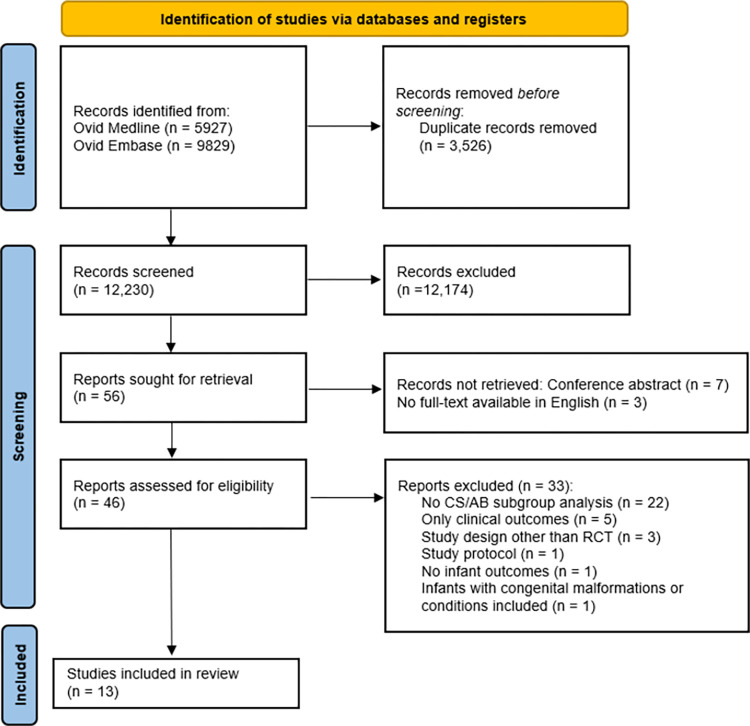
Methods: A systematic search was performed from inception to August 2022 in Medline and Embase. Two researchers independently performed title and abstract screening (n = 12,230), full-text screening (n = 46) and critical appraisal. We included randomised controlled trials which included term-born infants who were born following Caesarean section or who were exposed to postpartum antibiotics in the first week of life, pre-, pro- or synbiotics were administered <6 weeks after birth and outcome(s) consisted of microbiota analyses.
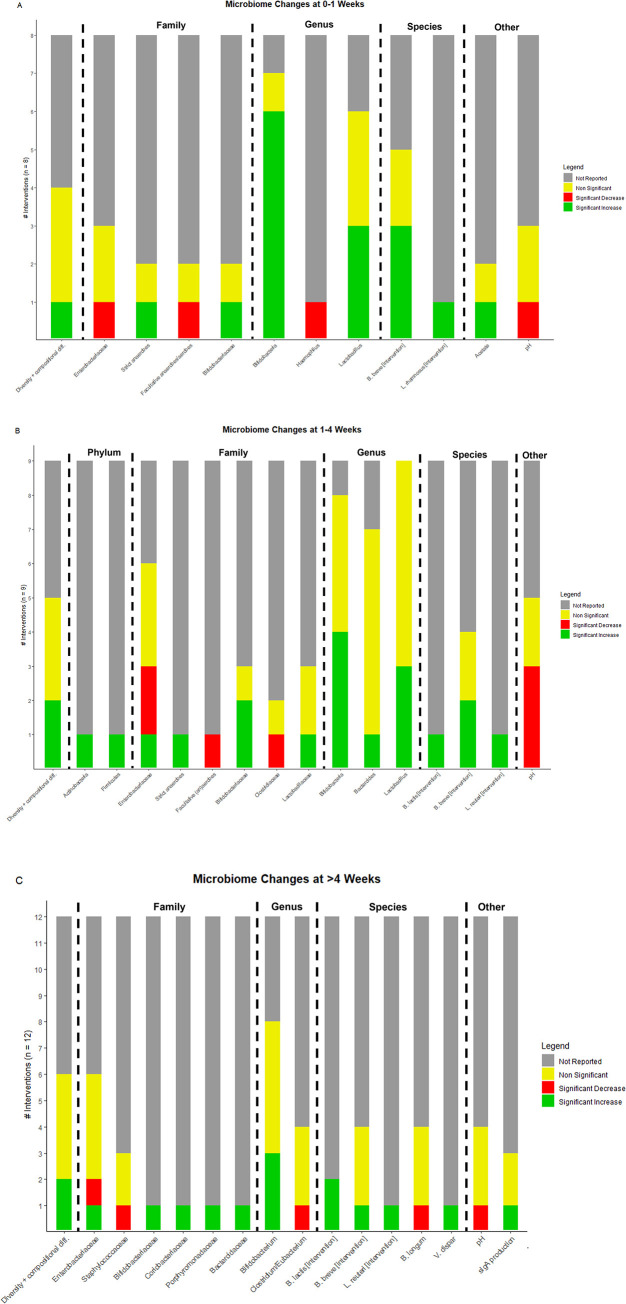
Results: Twelve randomised controlled trials investigating Caesarean born infants and one randomised controlled trial including infants exposed to antibiotics were included. Group sizes varied from 11 to 230 with 1193 infants in total. Probiotic (n = 7) or synbiotic (n = 3) supplementation significantly increased the abundance of the supplemented bacterial species (of the Bifidobacterium and Lactobacillus genus), and there was a decrease in Enterobacteriaceae, especially <4 weeks of age. At phylum level, Actinobacteria (two studies), Proteobacteria (one study) and Firmicutes (one study) increased after probiotic supplementation. In three studies on prebiotics, two studies reported a significant increase in Bifidobacteria and one study found a significant increase in Enterobacteriaceae.
Discussion: Prebiotic, probiotic and synbiotic supplements seem to restore dysbiosis after Caesarean section towards a microbial signature of vaginally born infants by increasing the abundance of beneficial bacteria. However, given the variety in study products and study procedures, it is yet too early to advocate specific products in clinical settings.
Copyright: © 2022 Carpay et al. This is an open access article distributed under the terms of the Creative Commons Attribution License, which permits unrestricted use, distribution, and reproduction in any medium, provided the original author and source are credited.
Conflict of interest statement
The authors have declared that no competing interests exist.
Figures
References
-
- Dierikx T, Berkhout D, Eck A, Tims S, van Limbergen J, Visser D, et al.. Influence of timing of maternal antibiotic administration during caesarean section on infant microbial colonisation: a randomised controlled trial. Gut. 2022;71(9):1803–11. Epub 2021/11/23. doi: 10.1136/gutjnl-2021-324767 - DOI - PMC - PubMed
Publication types
MeSH terms
Substances
LinkOut - more resources
Full Text Sources
