


Formulation of Cinnamon (Cinnamomum verum) oil loaded solid lipid nanoparticles and evaluation of its antibacterial activity against Multi-drug Resistant Escherichia coli
- PMID: 36352402
- PMCID: PMC9647953
- DOI: 10.1186/s12906-022-03775-y
Formulation of Cinnamon (Cinnamomum verum) oil loaded solid lipid nanoparticles and evaluation of its antibacterial activity against Multi-drug Resistant Escherichia coli
Abstract
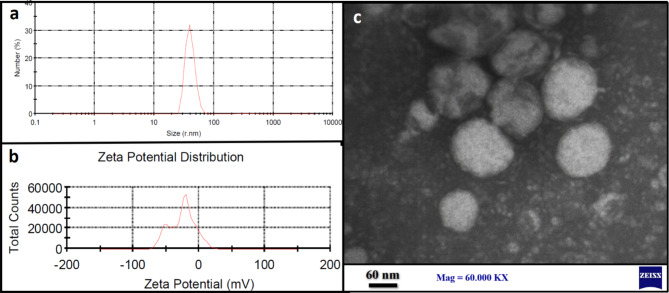
Today, the increment in microbial resistance has guided the researches focus into new antimicrobial compounds or transmission systems. Escherichia coli (E. coli) is an opportunistic pathogen, producing a biofilm responsible for a wide range of nosocomial infections which are often difficult to eradicate with available antibiotics. On the other hand, Cinnamomum verum (cinnamon oil) (CO) is widely used as a natural antibacterial agent and Solid lipid nanoparticles (SLNs) are promising carriers for antibacterial compounds due to their lipophilic nature and ease of transmission through the bacterial cell wall. In this study, nanoparticles containing cinnamon oil (CO-SLN) were prepared by dual emulsion method and evaluated in terms of particle size, shape, entrapment efficiency (EE), transmission electron microscopy (TEM), oil release kinetics, and cell compatibility. The antibacterial activity of CO-SLN and CO against 10 drug-resistant E. coli strains was investigated. The anti-biofilm activity of CO-SLN on the selected pathogen was also investigated. Nanoparticles with an average size of 337.6 nm, and zeta potential of -26.6 mV were fabricated and their round shape was confirmed by TEM images. The antibacterial effects of CO-SLN and CO were reported with MIC Value of 60-75 µg/mL and 155-165 µg/mL and MBC value of 220-235 µg/ml and 540-560 µg/ml, respectively. On the other hand, CO-SLN with 1/2 MIC concentration had the greatest inhibition of biofilm formation in 24 h of incubation (55.25%). The data presented indicate that the MIC of CO-SLN has significantly reduced and it seems that SLN has facilitated and promoted CO transmission through the cell membrane.
Keywords: Anti-biofilm activity; Cinnamon Oil; Escherichia coli; Minimum inhibitory concentration; Solid lipid nanoparticles.
© 2022. The Author(s).
Conflict of interest statement
None.
Figures


References
-
- Lencova S, Zdenkova K, Demnerova K, Stiborova H. Short communication: Antibacterial and antibiofilm effect of natural substances and their mixtures over Listeria monocytogenes, Staphylococcus aureus and Escherichia coli. LWT. 2022;154:112777.
-
- Bhardwaj DK, Taneja NK, Dp S, Chakotiya A, Patel P, Taneja P, et al. Phenotypic and genotypic characterization of biofilm forming, antimicrobial resistant, pathogenic Escherichia coli isolated from Indian dairy and meat products. Int J Food Microbiol. 2021;336:108899. - PubMed
-
- Denamur E, Clermont O, Bonacorsi S, Gordon D. The population genetics of pathogenic Escherichia coli. Nat Rev Microbiol. 2021;19(1):37–54. - PubMed
MeSH terms
Substances
LinkOut - more resources
Full Text Sources
Medical
