Review
. 2022 Nov 2;12(11):959.
doi: 10.3390/bios12110959.

Review of Electrochemical Biosensors for Food Safety Detection

Affiliations
Review

Review of Electrochemical Biosensors for Food Safety Detection

Ke Wang et al. Biosensors (Basel). .

Abstract

Food safety issues are directly related to people's quality of life, so there is a need to develop efficient and reliable food contaminants' detection devices to ensure the safety and quality of food. Electrochemical biosensors have the significant advantages of miniaturization, low cost, high sensitivity, high selectivity, rapid detection, and low detection limits using small amounts of samples, which are expected to enable on-site analysis of food products. In this paper, the latest electrochemical biosensors for the detection of biological contaminants, chemical contaminants, and genetically modified crops are reviewed based on the analytes of interest, electrode materials and modification methods, electrochemical methods, and detection limits. This review shows that electrochemical biosensors are poised to provide miniaturized, specific, selective, fast detection, and high-sensitivity sensor platforms for food safety.

Keywords: biosensor; electrochemistry; food safety; high selectivity; high sensitivity.


Conflict of interest statement

The authors declare no conflict of interest. The funders had no role in the design of the study; in the collection, analyses, or interpretation of data; in the writing of the manuscript; or in the decision to publish the results.

Figures
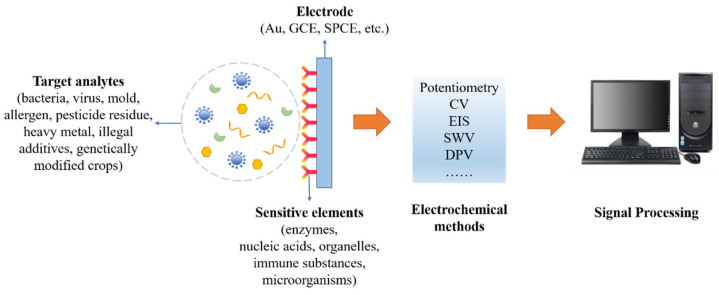
Figure 1
Figure 1
Schematic diagram of an electrochemical biosensor for food contaminants detection.
Figure 2
Figure 2
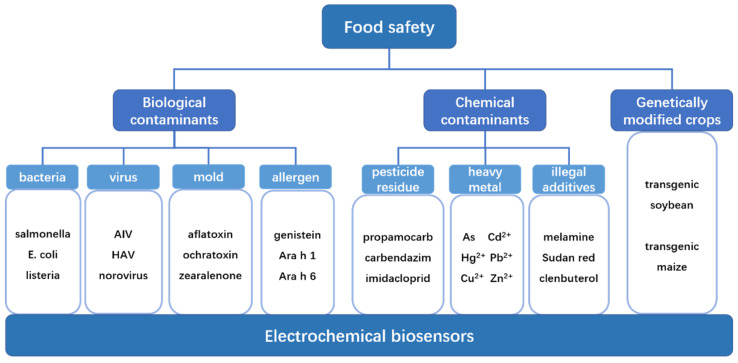
Diagram of the factors affecting food safety.
Figure 3
Figure 3
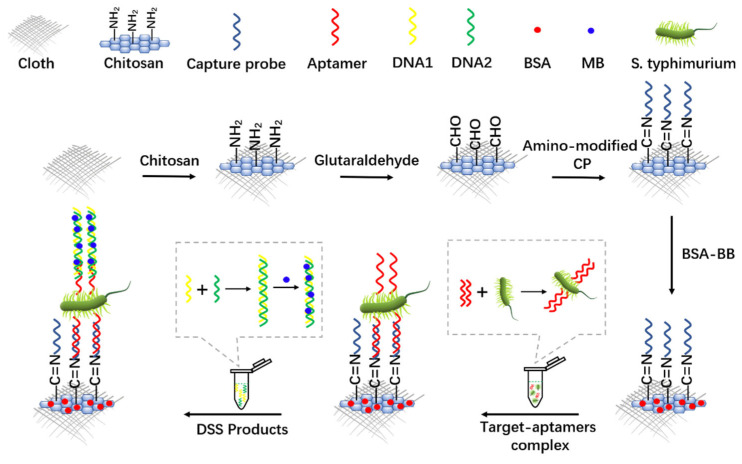
CSEA schematic for direct detection of Salmonella typhimurium (Adapted with permission from Ref. [14]. 2021, Li et al.).
Figure 4
Figure 4
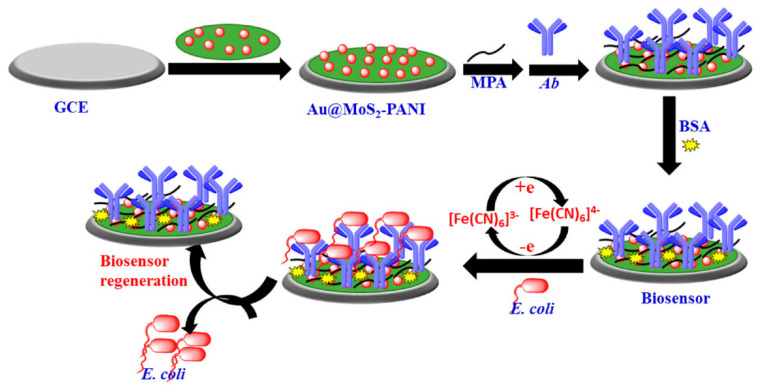
Schematic diagram of electrochemical biosensor for E. coli (Reprinted with permission from Ref. [18]. 2021, Raj et al.).
Figure 5
Figure 5
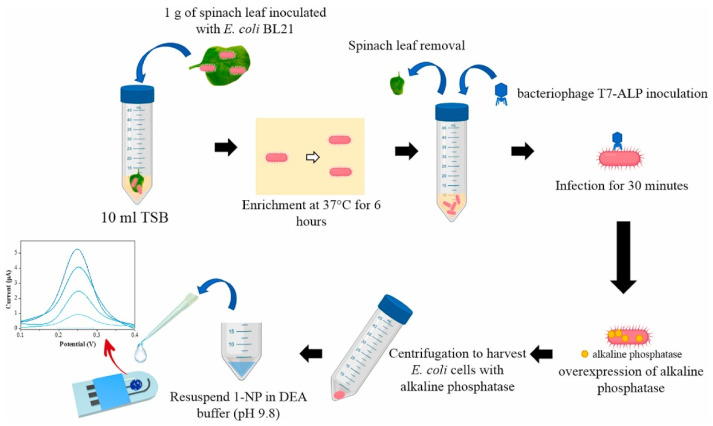
Schematic diagram of a phage electrochemical biosensor for the detection of E. coli on spinach leaves (Reprinted with permission from Ref. [19]. 2022, El-Moghazy et al.).
Figure 6
Figure 6
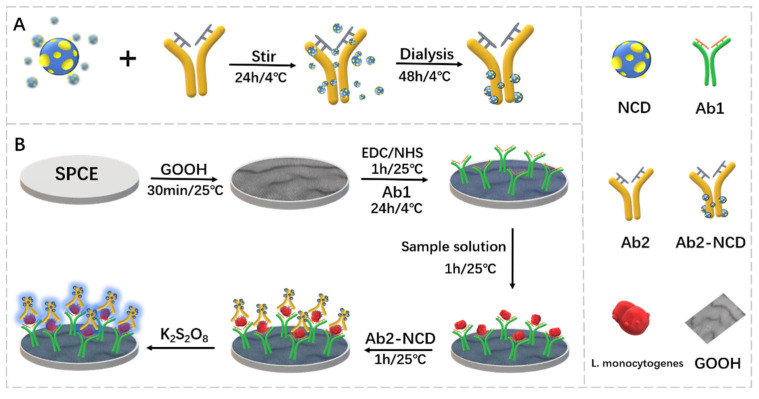
Schematic of (A) NCD conjugated with secondary antibody and (B) the developed ECL sensor for monocytic bacteria (Adapted with permission from Ref. [24]. 2021, Jampasa et al.).
Figure 7
Figure 7
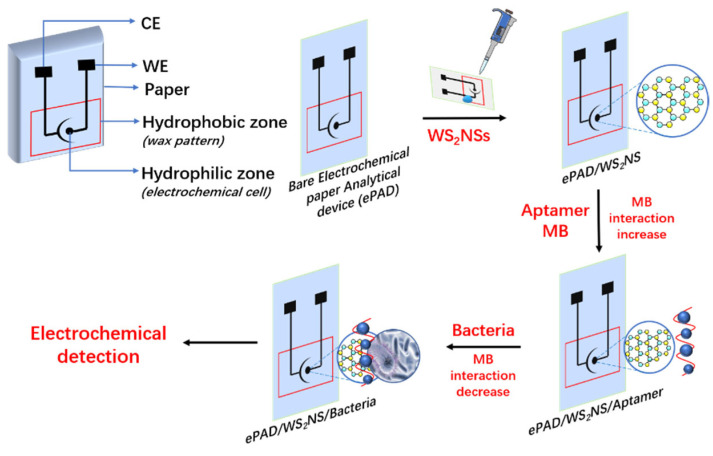
Schematic of a screen-printed paper-based aptamer sensor for the detection of Listeria monocytogenes (Adapted with permission from Ref. [25]. 2022, Mishra et al.).
Figure 8
Figure 8
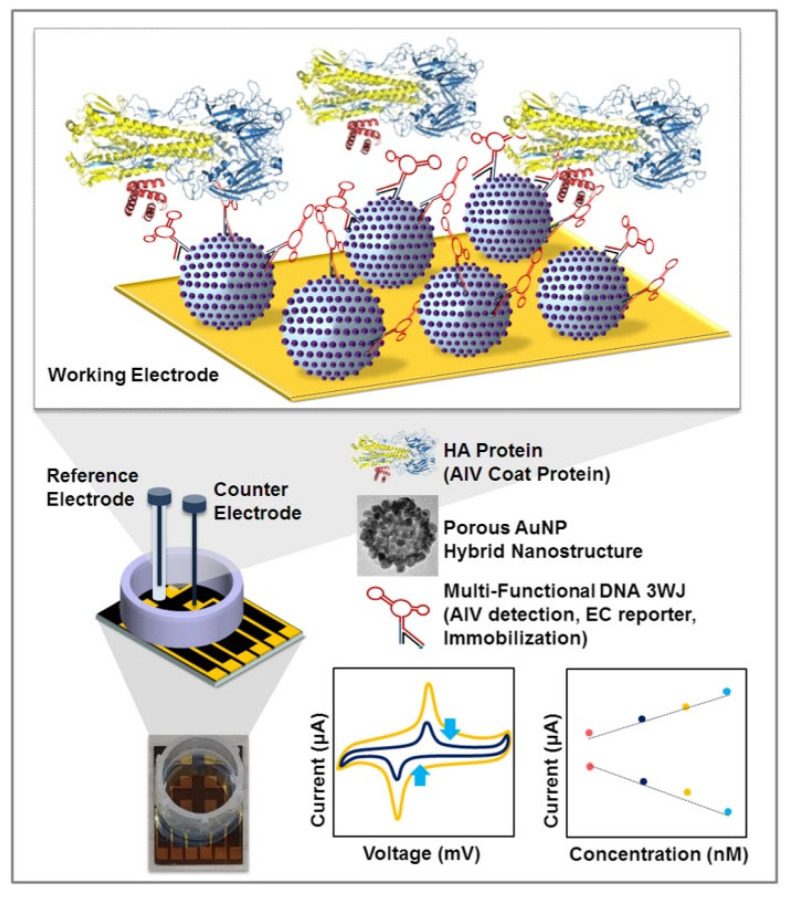
Schematic diagram of a biosensor for detection of avian influenza virus (Reprinted with permission from Ref. [28]. 2019, Lee et al.).
Figure 9
Figure 9
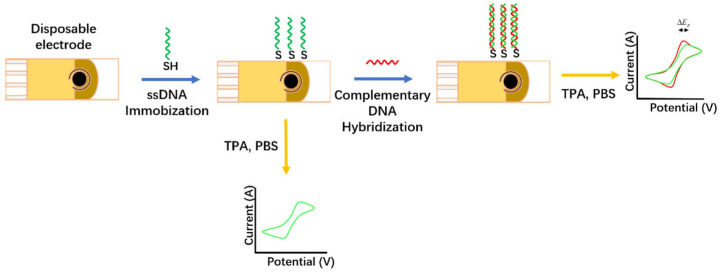
Disposable DNA biosensor constructed by thiol gold coupling of thiolated single-stranded DNA probes (Adapted with permission from Ref. [30]. 2018, Manzano et al.).
Figure 10
Figure 10
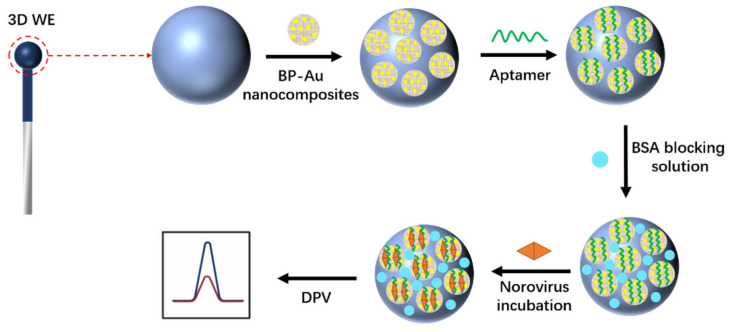
Schematic of a 3D electrochemical aptamer sensor for the detection of norovirus (Adapted with permission from Ref. [32]. 2022, Jiang et al.).
Figure 11
Figure 11
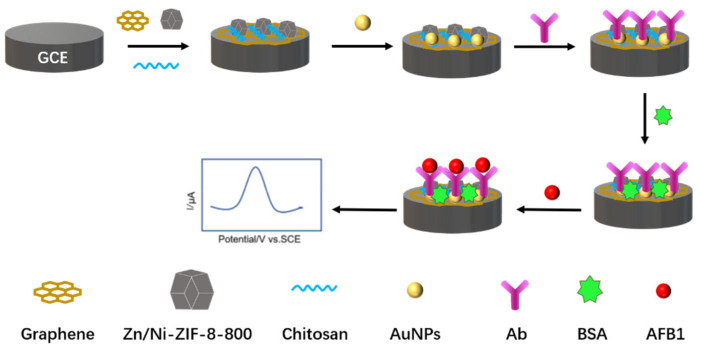
Schematic of an electrochemical immunosensor for the detection of aflatoxin B1 (Adapted with permission from Ref. [35]. 2022, Wang et al.).
Figure 12
Figure 12
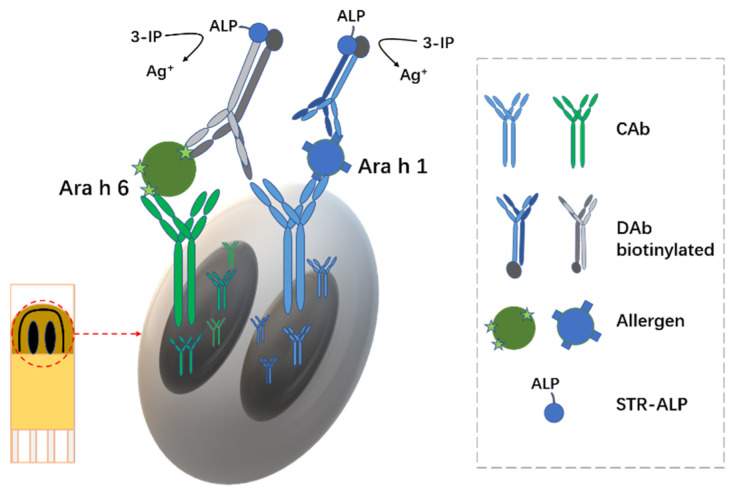
Schematic diagram of the immune sensor configuration and structure (Adapted with permission from Ref. [42]. 2021, Freitas et al.).
Figure 13
Figure 13
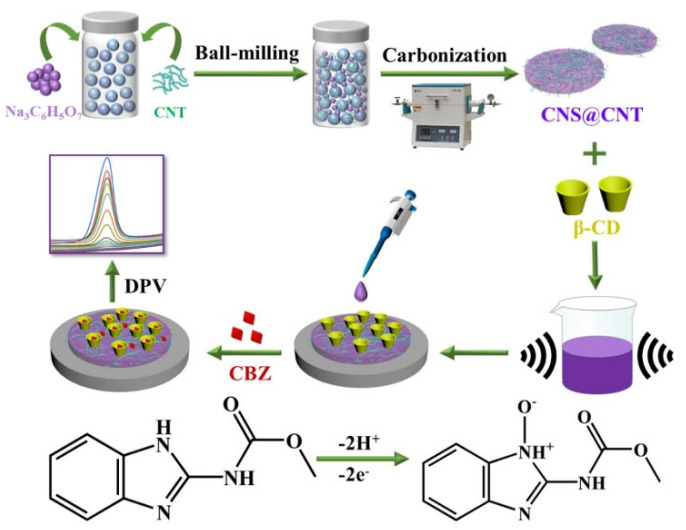
Fabrication schematic of β-CD/CNS@CNT/GCE sensor (Reprinted with permission from Ref. [48]. 2022, Liu et al.).
Figure 14
Figure 14
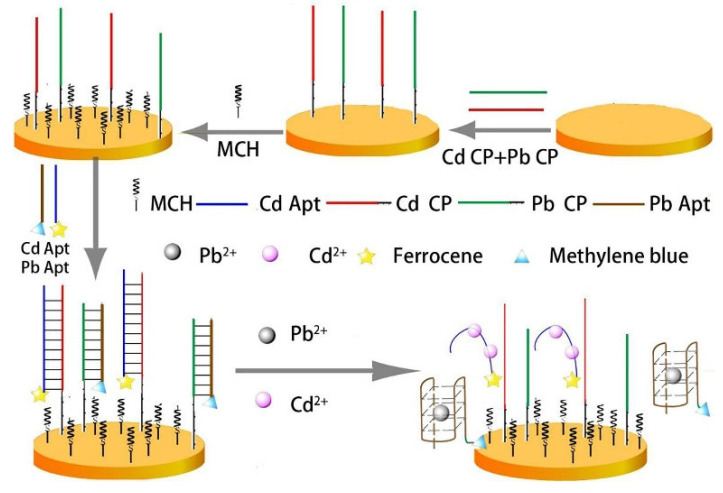
Schematic diagram of electrochemical aptamer sensor for Cd2+ and Pb2+ detection (Reprinted with permission from Ref. [57]. 2022, Yuan et al.).
Figure 15
Figure 15
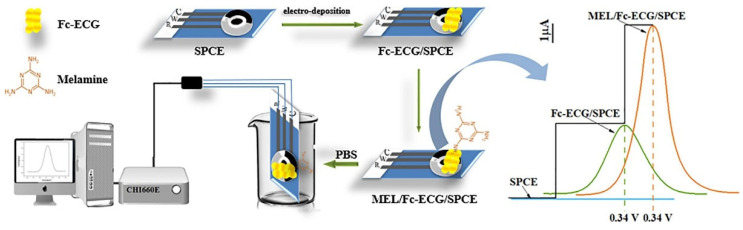
The process of making an Fc-ECG/SPCE sensor for MEL detection (Reprinted with permission from Ref. [63]. 2022, An et al.).
Figure 16
Figure 16
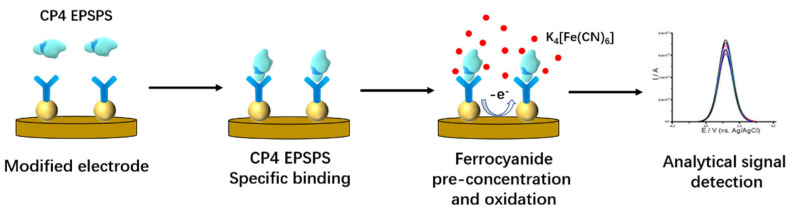
Schematic diagram of the electrochemical immunosensor for the detection of CP4 EPSPS (Adapted with permission from Ref. [71]. 2022, Marcos et al.).
Figure 17
Figure 17
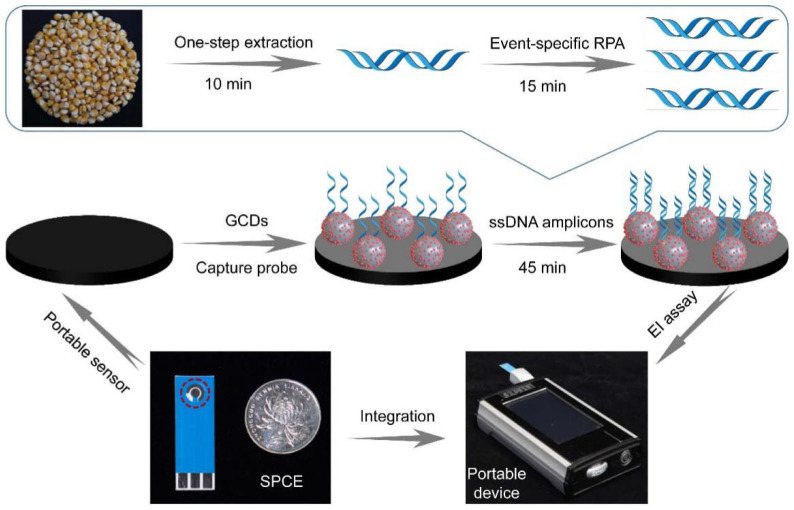
Fabrication process of EI gene sensor based on GCD (Reprinted with permission from Ref. [73]. 2022, Cui et al.).

References

    1. Fukuda K. Food safety in a globalized world. Bull. World Health Organ. 2015;93:212. doi: 10.2471/BLT.15.154831. - DOI - PMC - PubMed
    1. World Health Organization . Food Safety. WHO; Geneva, Switzerland: 2022.
    1. Jia M., Zhongbo E., Zhai F., Bing X. Rapid Multi-Residue Detection Methods for Pesticides and Veterinary Drugs. Molecules. 2020;25:3590. doi: 10.3390/molecules25163590. - DOI - PMC - PubMed
    1. Pang G. Sequence “Food safety testing” album. J. Mass Spectrom. 2019;40:3–4.
    1. Lv M., Liu Y., Geng J.H., Kou X.H., Xin Z.H., Yang D.Y. Engineering nanomaterials-based biosensors for food safety detection. Biosens. Bioelectron. 2018;106:122–128. doi: 10.1016/j.bios.2018.01.049. - DOI - PubMed

LinkOut - more resources