PTP10D-mediated cell competition is not obligately required for elimination of polarity-deficient clones
- PMID: 36355597
- PMCID: PMC9672856
- DOI: 10.1242/bio.059525
PTP10D-mediated cell competition is not obligately required for elimination of polarity-deficient clones
Abstract
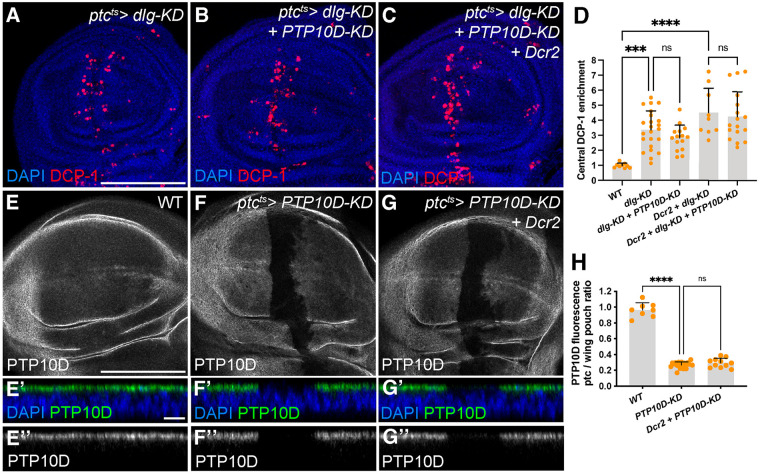
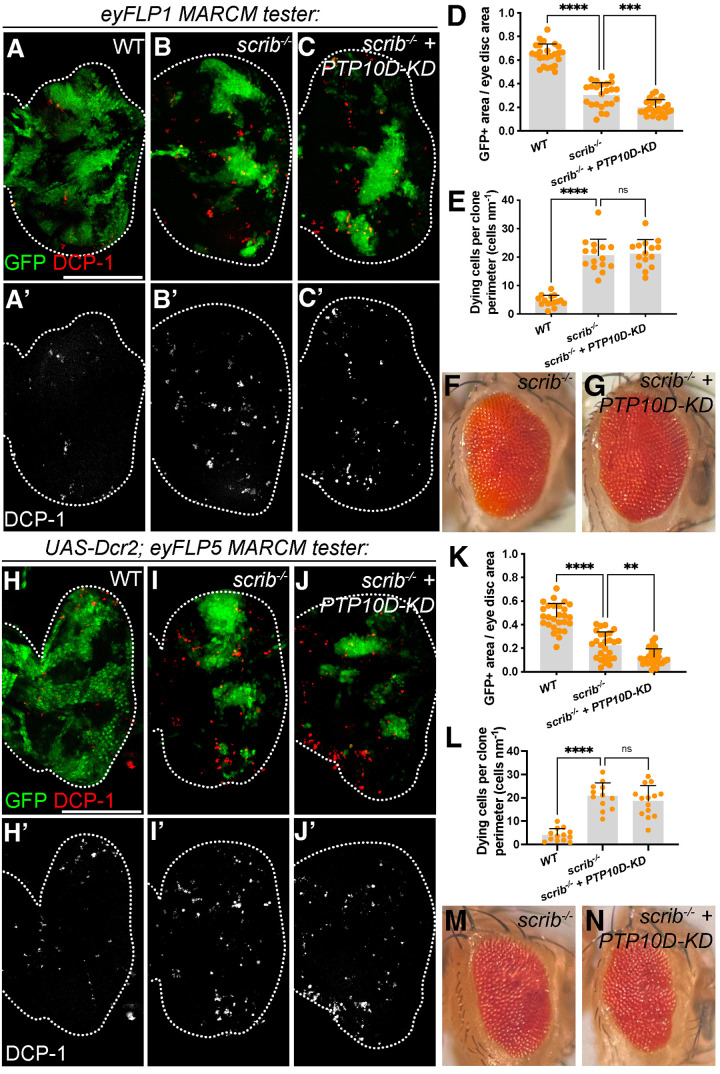
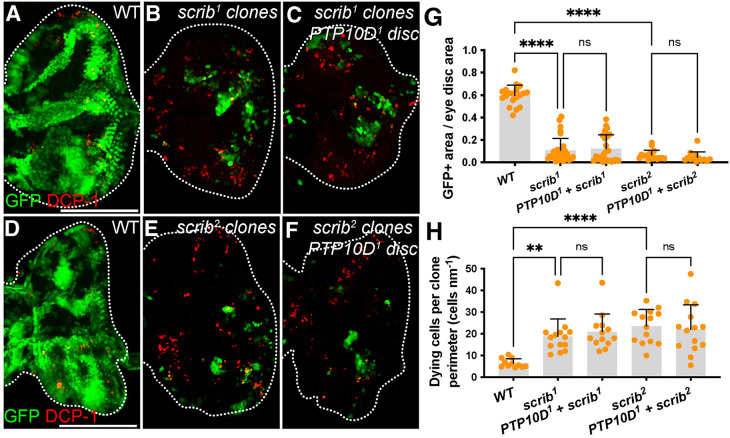
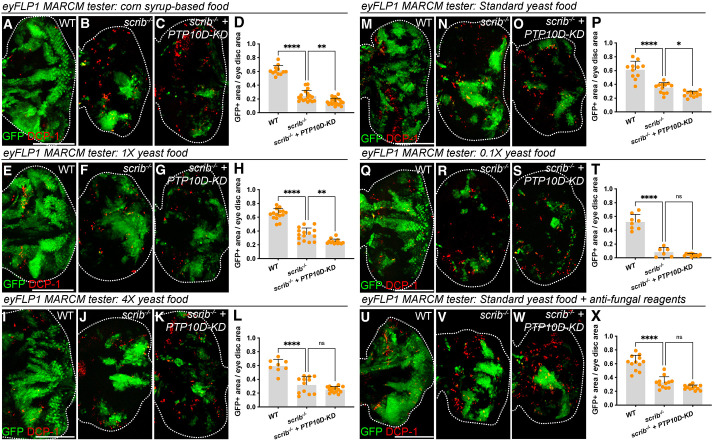
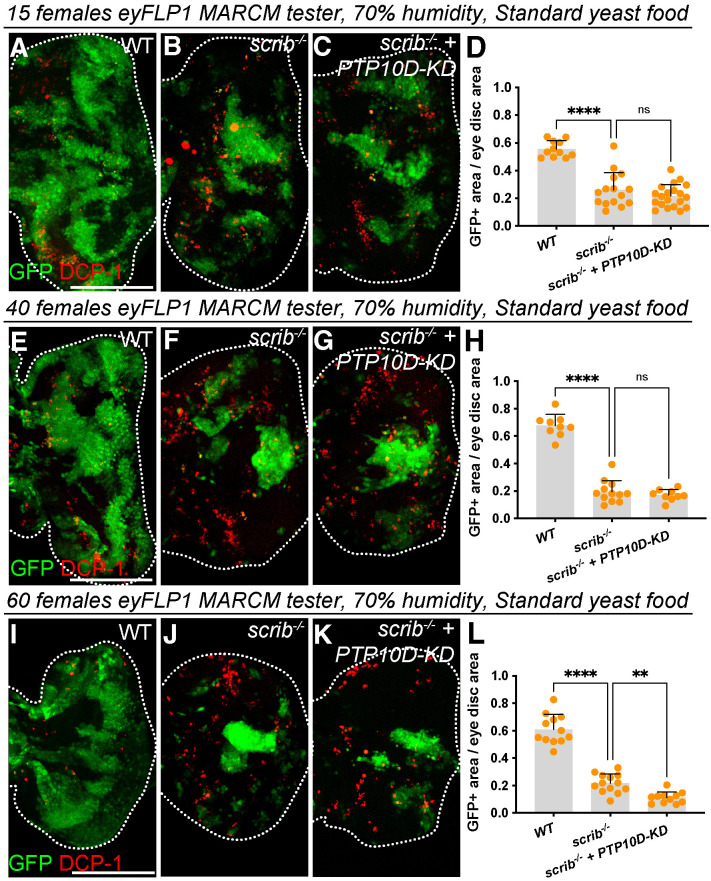
Animal organs maintain tissue integrity and ensure removal of aberrant cells through several types of surveillance mechanisms. One prominent example is the elimination of polarity-deficient mutant cells within developing Drosophila imaginal discs. This has been proposed to require heterotypic cell competition dependent on the receptor tyrosine phosphatase PTP10D within the mutant cells. We report here experiments to test this requirement in various contexts and find that PTP10D is not obligately required for the removal of scribble (scrib) mutant and similar polarity-deficient cells. Our experiments used identical stocks with which another group can detect the PTP10D requirement, and our results do not vary under several husbandry conditions including high and low protein food diets. Although we are unable to identify the source of the discrepant results, we suggest that the role of PTP10D in polarity-deficient cell elimination may not be absolute.
Keywords: Drosophila; Cell competition; Dlg; Epithelial polarity; PTP10D; Scrib.
© 2022. Published by The Company of Biologists Ltd.
Conflict of interest statement
Competing interests The authors declare no competing or financial interests.
Figures
References
-
- Andersen, D. S., Colombani, J., Palmerini, V., Chakrabandhu, K., Boone, E., Röthlisberger, M., Toggweiler, J., Basler, K., Mapelli, M., Hueber, A.-O. >et al. (2015). The Drosophila TNF receptor Grindelwald couples loss of cell polarity and neoplastic growth. Nature 522, 482-486. 10.1038/nature14298 - DOI - PubMed
Publication types
MeSH terms
Substances
Grants and funding
LinkOut - more resources
Full Text Sources
Molecular Biology Databases