


Comparative analysis of Adsorption-Extraction (AE) and Nanotrap® Magnetic Virus Particles (NMVP) workflows for the recovery of endogenous enveloped and non-enveloped viruses in wastewater
- PMID: 36356768
- PMCID: PMC10823496
- DOI: 10.1016/j.scitotenv.2022.160072
Comparative analysis of Adsorption-Extraction (AE) and Nanotrap® Magnetic Virus Particles (NMVP) workflows for the recovery of endogenous enveloped and non-enveloped viruses in wastewater
Abstract
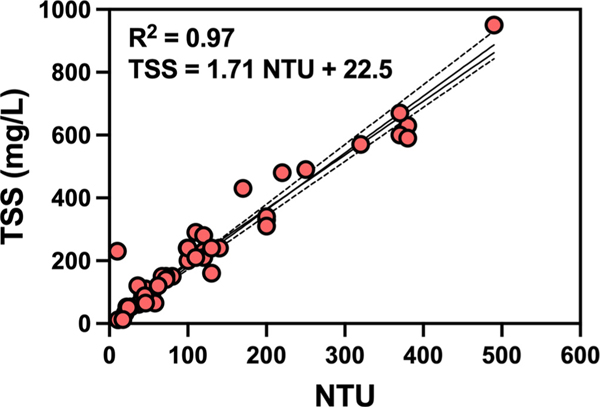
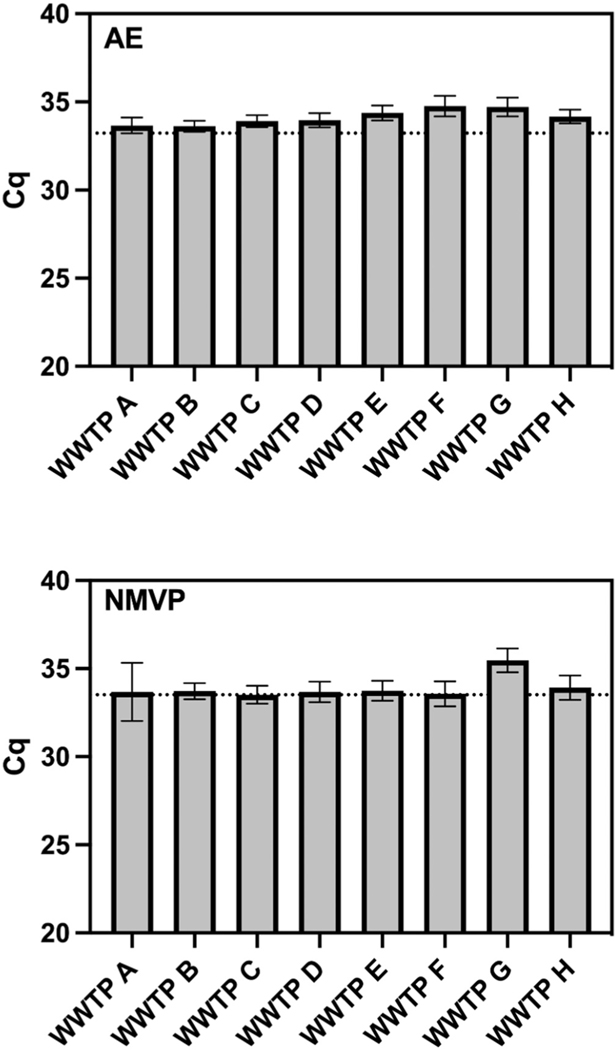
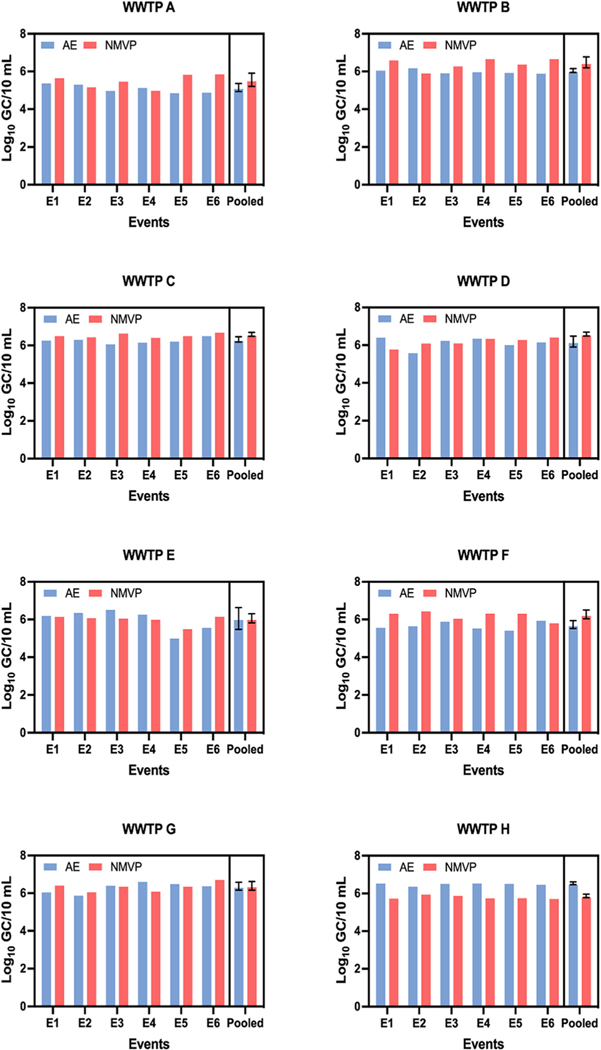
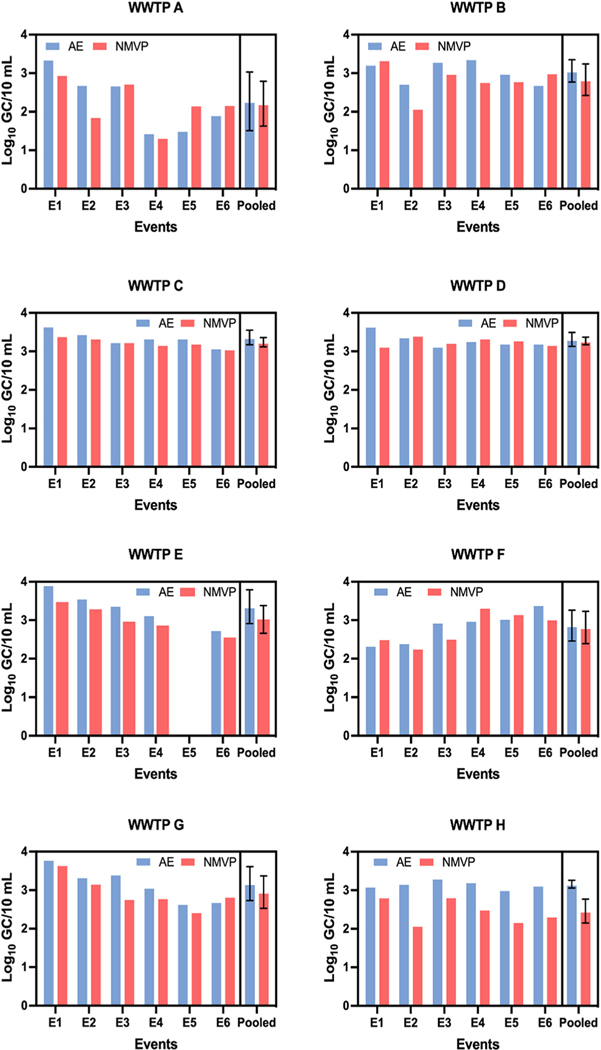
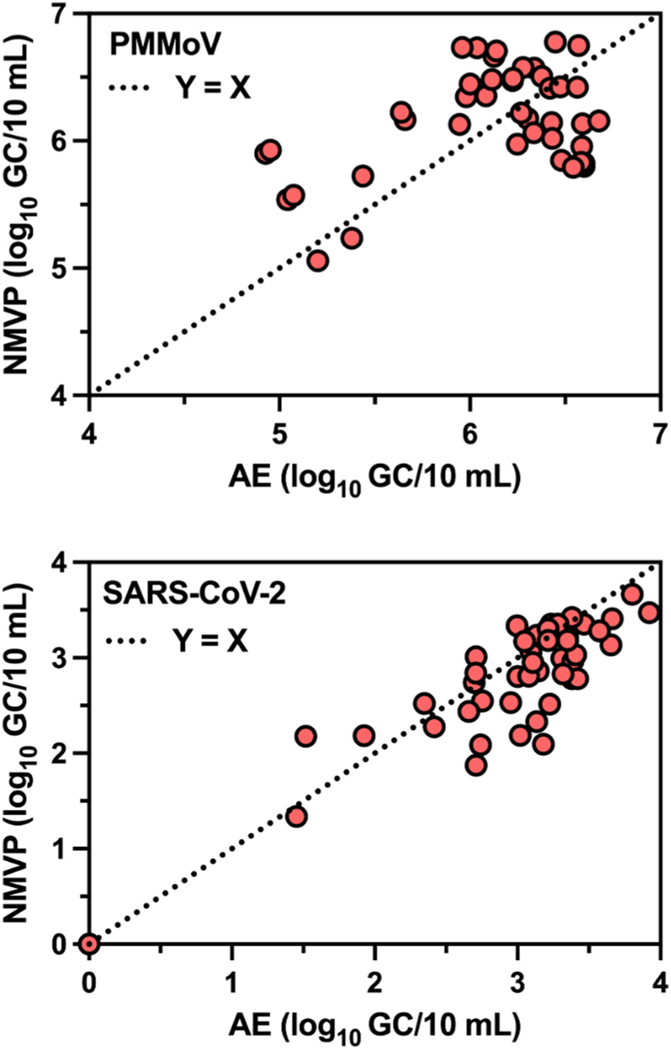
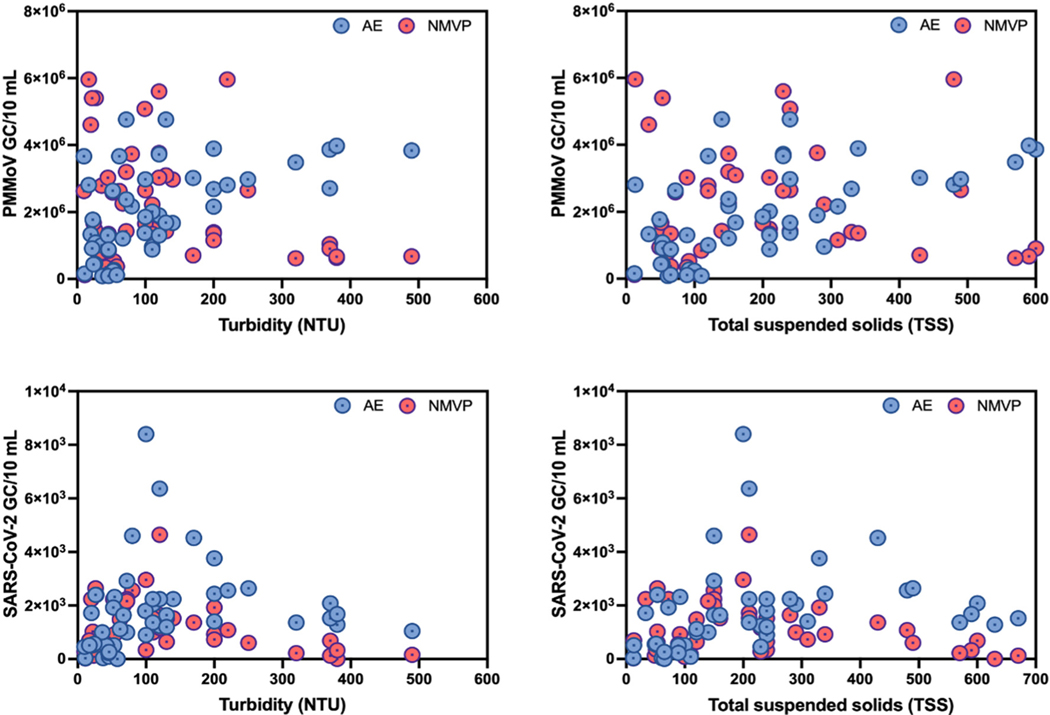
In this study, two virus concentration methods, namely Adsorption-Extraction (AE) and Nanotrap® Magnetic Virus Particles (NMVP) along with commercially available extraction kits were used to quantify endogenous pepper mild mottle virus (PMMoV) and severe acute respiratory syndrome coronavirus-2 (SARS-CoV-2) in nucleic acid extracted from 48 wastewater samples collected over six events from eight wastewater treatment plants (WWTPs). The main aim was to determine which workflow (i.e., concentration and extraction methods) produces greater concentrations of endogenous PMMoV and SARS-CoV-2 gene copies (GC) in comparison with each other. Turbidity and total suspended solids (TSS) of wastewater samples within and among the eight WWTPs were highly variable (41-385 NTU and 77-668 mg/L TSS). In 58 % of individual wastewater samples, the log10 GC concentrations of PMMoV were greater by NMVP workflow compared to AE workflow. Paired measurements of PMMoV GC/10 mL from AE and NMVP across all 48 wastewater samples were weakly correlated (r = 0.455, p = 0.001) and demonstrated a poor linear relationship (r2 = 0.207). The log10 GC concentrations of SARS-CoV-2 in 69 % of individual samples were greater by AE workflow compared to NMVP workflow. In contrast to PMMoV, the AE and NMVP derived SARS-CoV-2 GC counts were strongly correlated (r = 0.859, p < 0.001) and demonstrated a strong linear relationship (r2 = 0.738). In general, the PMMoV GC achieved by the NMVP workflow decreased with increasing turbidity, but the PMMoV GC by the AE workflow did not appear to be as sensitive to either turbidity or TSS levels. These findings suggest that wastewater sample turbidity or suspended solids concentration, and the intended target for analysis should be considered when validating an optimal workflow for wastewater surveillance of viruses.
Keywords: Concentration methods; Health risks; PMMoV; SARS-CoV-2; Wastewater.
Copyright © 2022 The Authors. Published by Elsevier B.V. All rights reserved.
Conflict of interest statement
Declaration of competing interest The authors declare that they have no known competing financial interests or personal relationships that could have appeared to influence the work reported in this paper.
Figures
References
-
- Ahmed W, Bivins A, Wendy JM, Metcalfe S, Stephens M, Jennison AV, Moore FAJ, Bourke J, Schlebusch S, McMahon, Hewitson JG, Nguyen S, Barcelon J, Jackson G, Mueller JF, Ehret J, Hosegood I, Tian W, Wang H, Yang L, Bertsch PM, Tynan J, Thomas KV, Bibby K, Graber TE, Ziels R, Simpson SL, 2022b. Detection of the Omicron (B.1.1.529) variant of SARS-CoV-2 in aircraft wastewater. Sci. Total Environ 820, 153171. - PMC - PubMed
-
- Ahmed W, Bertsch PM, Bivins A, Bibby K, Farkas K, Gathercole A, Haramoto E, Gyawali P, Korajkic A, McMinn BR, Mueller JF, Simpson SL, Smith W, Symonds EM, Thomas KV, Verhagen R, Kitajima M, 2020. Comparison of virus concentration methods for the RT-qPCR-based recovery of murine hepatitis virus, a surrogate for SARS-CoV-2 from untreated wastewater. Sci. Total Environ 739, 139960. - PMC - PubMed
-
- Ahmed W, Payyappat S, Cassidy M, Harrison N, Besley C, 2020b. Sewage-associated marker genes illustrate the impact of wet weather overflows and dry weather leakage in urban estuarine waters of Sydney, Australia. Sci. Total Environ 705, 135390. - PubMed
MeSH terms
Substances
Supplementary concepts
Grants and funding
LinkOut - more resources
Full Text Sources
Medical
Miscellaneous
