


Kombucha: Production and Microbiological Research
- PMID: 36360067
- PMCID: PMC9658962
- DOI: 10.3390/foods11213456
Kombucha: Production and Microbiological Research
Abstract
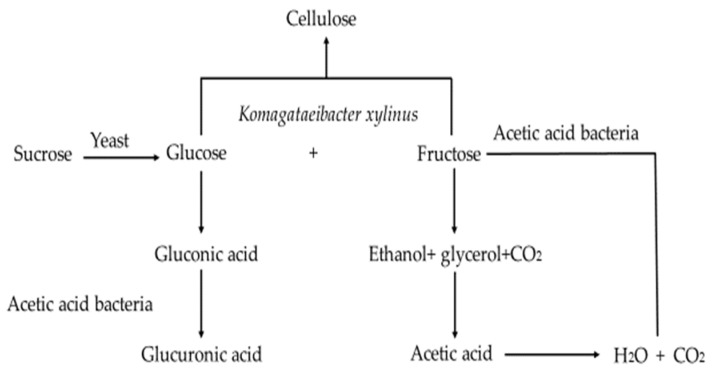
Kombucha is a sparkling sugared tea commonly prepared using a sugared tea infusion and fermented at ambient temperature for several days using a cellulose pellicle also called tea fungus that is comprised of acetic acid bacteria and yeast. Consumption of Kombucha has been reported as early as 220 B.C. with various reported potential health benefits and appealing sensory properties. During Kombucha fermentation, sucrose is hydrolysed by yeast cells into fructose and glucose, which are then metabolised to ethanol. The ethanol is then oxidised by acetic acid bacteria (AAB) to produce acetic acid which is responsible for the reduction of the pH and also contributes to the sour taste of Kombucha. Characterisation of the AAB and yeast in the Kombucha starter culture can provide a better understanding of the fermentation process. This knowledge can potentially aid in the production of higher quality products as these microorganisms affect the production of metabolites such as organic acids which are associated with potential health benefits, as well as sensory properties. This review presents recent advances in the isolation, enumeration, biochemical characteristics, conventional phenotypic identification system, and modern genetic identification techniques of AAB and yeast present in Kombucha to gain a better understanding of the microbial diversity of the beverage.
Keywords: Kombucha; acetic acid bacteria; fermentation; microbial identification; yeast.
Conflict of interest statement
The authors declare no conflict of interest.
Figures
References
-
- Dufresne C., Farnworth E. Tea, Kombucha, and health: A review. Food Res. Int. 2000;33:409–421. doi: 10.1016/S0963-9969(00)00067-3. - DOI
-
- Kumar V., Joshi V. Kombucha: Technology, microbiology, production, composition and therapeutic value. Int. J. Food Ferment. Technol. 2016;6:13–24. doi: 10.5958/2277-9396.2016.00022.2. - DOI
-
- Kim J., Adhikari K. Current trends in kombucha: Marketing perspectives and the need for improved sensory research. Beverages. 2020;6:15. doi: 10.3390/beverages6010015. - DOI
Publication types
LinkOut - more resources
Full Text Sources
