


The Cost-Effectiveness Analysis of Gamiguibi-Tang versus Hwangryunhaedok-Tang for Patients with Insomnia Disorder Based on a Randomized Controlled Trial
- PMID: 36360498
- PMCID: PMC9690131
- DOI: 10.3390/healthcare10112157
The Cost-Effectiveness Analysis of Gamiguibi-Tang versus Hwangryunhaedok-Tang for Patients with Insomnia Disorder Based on a Randomized Controlled Trial
Abstract
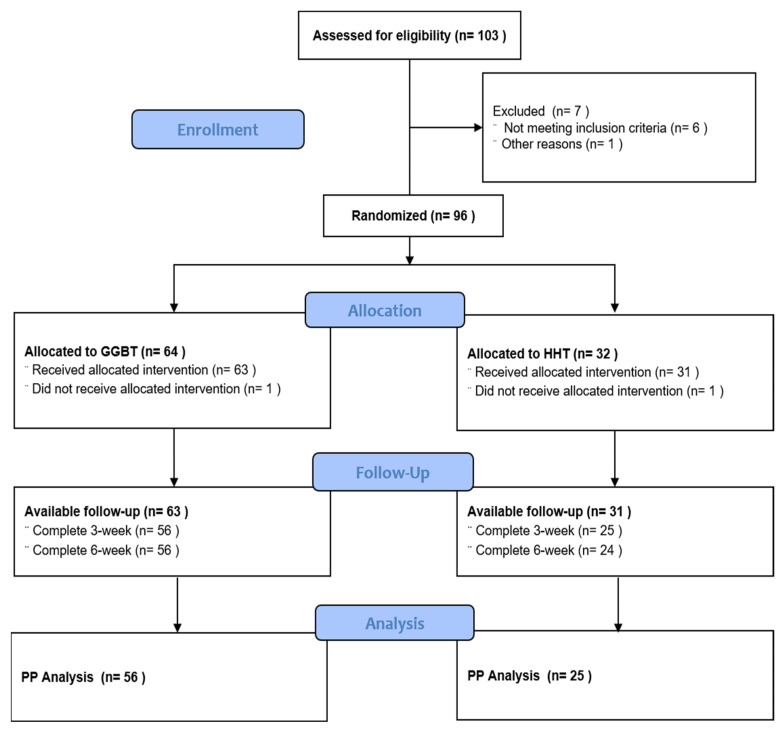
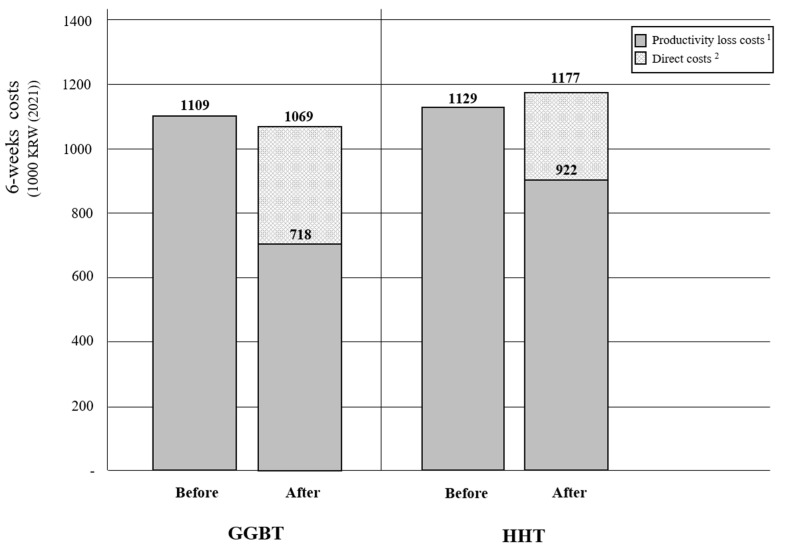
(1) Insomnia is associated with poor quality of life and loss of productivity, and is a significant economic burden on society. Gamiguibi-tang (GGBT) is the most frequently prescribed herbal medicine for insomnia treatment. Hwangryunhaedok-tang (HHT) is used as an insured herbal medicine for insomnia in the Korean National Health Insurance (NHI) system. This study aims to evaluate the cost-effectiveness of GGBT versus HHT in patients with insomnia disorders based on clinical trial data; (2) Methods: The EuroQol five-dimension scale (EQ-5D) was used to estimate quality-adjusted life-years (QALY). Direct and non-direct medical costs and lost productivity costs were estimated. The cost-effectiveness of GGBT was compared with HHT treatments over six weeks from a societal perspective; (3) Results: A total of 81 patients who underwent GGBT (n = 56) and HHT (n = 25) treatment completed the clinical trial. The EQ-5D score improved significantly more in the GGBT than in the HHT group (0.02 vs. −0.03, p < 0.05). The QALYs for six weeks were slightly greater in GGBT (0.0997) than in the HHT group (0.0987); however, the total costs incurred were approximately 9% less in GGBT ($934) than in the HHT group ($1029). GGBT was found to be a more economically dominant treatment option compared to HHT for treating insomnia; (4) Conclusions: Among herbal medicines, GGBT may be a cost-effective option for treating insomnia from a societal perspective in Korea.
Keywords: Gamiguibi-tang; cost-effectiveness analysis; herbal medicine; insomnia disorder; productivity loss.
Conflict of interest statement
The authors declare no conflict of interest.
Figures
References
-
- Roth T. Prevalence, associated risks, and treatment patterns of insomnia. J. Clin. Psychiatry. 2005;66((Suppl. 9)):10–13. - PubMed
-
- American Psychiatric Association . Diagnostic and Statistical Manual of Mental Disorders. 5th ed. American Psychiatric Association; Washington, DC, USA: 2013.
-
- Ancoli-Israel S., Roth T. Characteristics of insomnia in the United States: Results of the 1991 National Sleep Foundation Survey. I. Sleep. 1999;22((Suppl. 2)):S347–S353. - PubMed
Grants and funding
LinkOut - more resources
Full Text Sources
