. 2022 Nov 9;58(11):1617.
doi: 10.3390/medicina58111617.

Breast Cancer Incidence Patterns in the Saudi Female Population: A 17-Year Retrospective Analysis

Affiliations

Breast Cancer Incidence Patterns in the Saudi Female Population: A 17-Year Retrospective Analysis

Ahmed M Basudan. Medicina (Kaunas). .

Abstract

Background and Objectives: Breast cancer is considered the most commonly diagnosed type of cancer among women globally and in Saudi Arabia. This study aimed to assess breast cancer incidence patterns and trends among the Saudi female population. Materials and Methods: Breast cancer incidence parameters were obtained from the Saudi Cancer Registry (SCR). The data were retrospectively analyzed for the period from 2001 to 2017 to investigate changes in incidence rates. Temporal trends were also analyzed through joinpoint regression analysis and were dissected by age groups and administrative regions. Results: During the specified period, breast cancer jumped by 55% to constitute 30.9% of all cancer cases among Saudi females. The median age at diagnosis increased to reach 51 years at the end of that period, with an overall increase of 6.3%. The overall Age-Standardized Incidence Rate (ASR) escalated by 151.7% from 11.8/100,000 to 29.7/100,000 population for that period. The Eastern region noticeably had the highest ASR and peaked at 52.2/100,000 population. The joinpoint analysis of the ASR showed increased trends, with an annual percent change (APC) of 5.13% (p < 0.05, [95% CI 4−6.3]). An age-specific analysis was also performed and showed that the age group 70−74 years had the highest trend (APC 10.2%, [95% CI 7.2−13.4], p < 0.05). Region-specific analysis revealed that the Jouf region had the highest trend among the regions (APC 8.8%, [95% CI 3.7−14.2], p < 0.05). Conclusions: Our analysis indicates increased breast cancer incidence in Saudi Arabia with an alarming pace. With the existing trend, it is expected that Saudi Arabia will continue to display an increase in breast cancer incidence. Long-term preventive measures and more effective screening strategies are warranted to alleviate the burden of the disease.

Keywords: Saudi Arabia; breast cancer; cancer registry; cancer trends; incidence; patterns.


Conflict of interest statement

The author declares no conflict of interest.

Figures
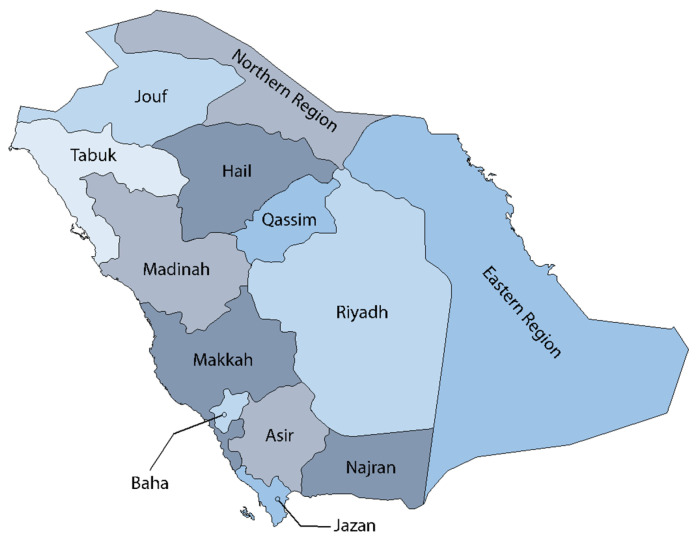
Figure 1
Figure 1
Administrative regions of Saudi Arabia. All of the 13 administrative regions are labeled in their location within the map (map modified from Vemaps.com).
Figure 2
Figure 2
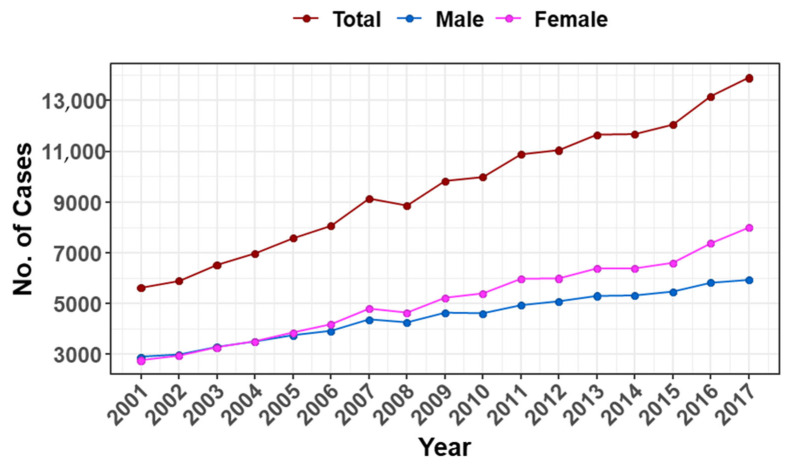
Distribution of cancer cases among the Saudi population by year. Shown are the number of all cancer cases (y-axis) for both genders (brown), males (blue), and females (pink) from 2001 to 2017, as indicated in the x-axis.
Figure 3
Figure 3
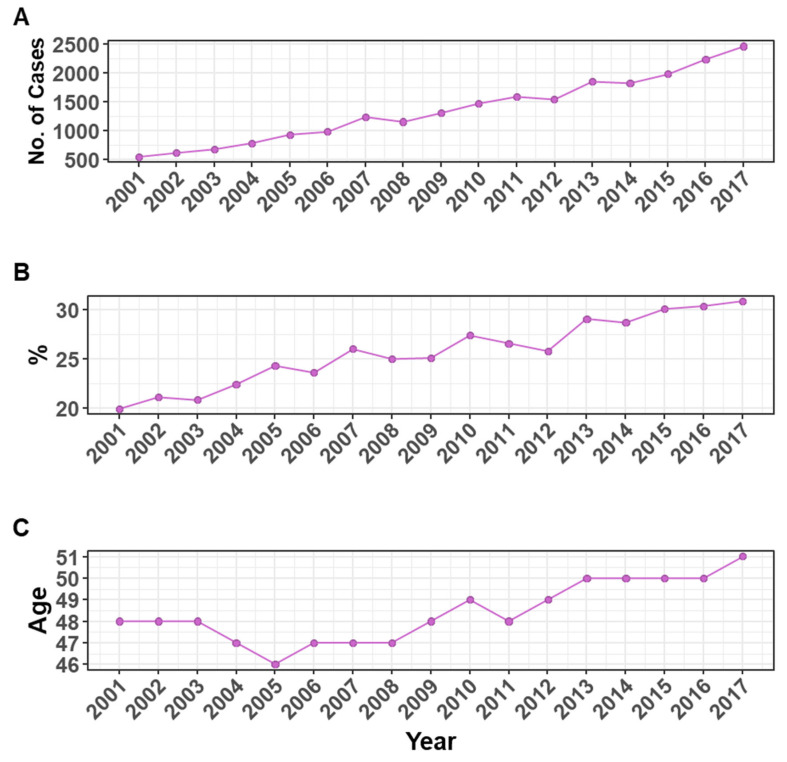
Breast cancer cases and age at diagnosis in the Saudi female population. (A) The number (y-axis) of breast cancer cases among the Saudi female population. (B) Percentage (y-axis) of breast cancer cases of all Saudi female cancers. (C) Median age at diagnosis indicated in the y-axis (for the years 2001–2003, only the mean was reported). The x-axis represents the years for the period of 2001–2017.
Figure 4
Figure 4
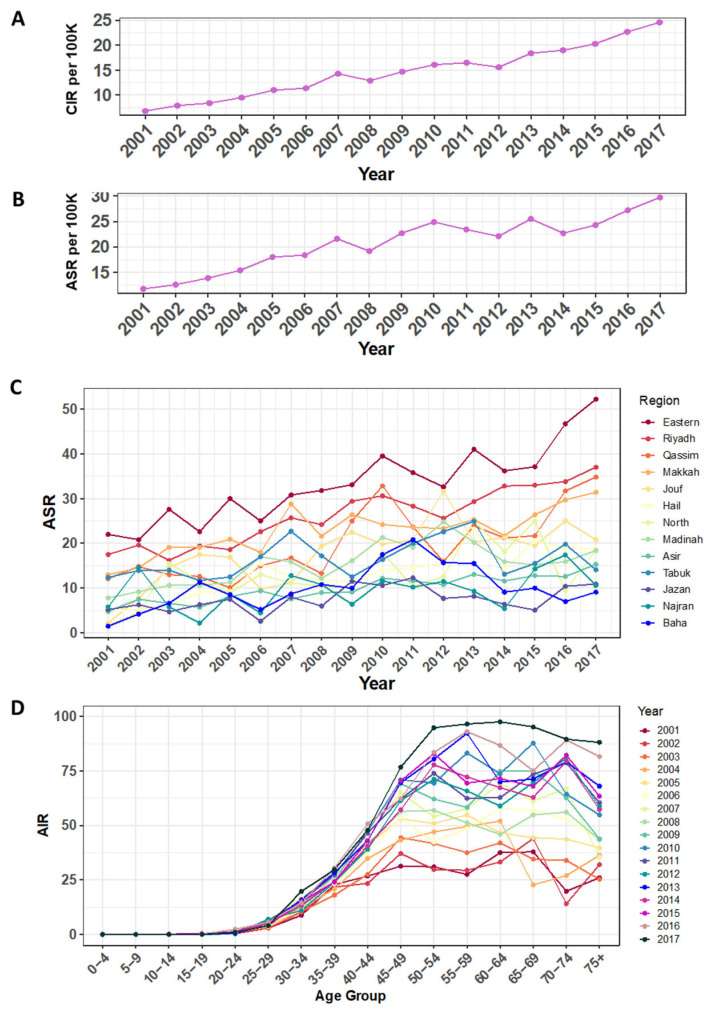
Incidence rates for breast cancer among the Saudi female population. (A) Breast cancer Crude Incidence Rate (CIR). (B) Overall Age-Standardized Incidence Rate (ASR). (C) Age-Standardized Incidence Rate (ASR) stratified by administrative regions in Saudi Arabia. The years for the period of 2001–2017 are indicated in the x-axes. (D) Age-Specific Incidence Rate (AIR) shown for each age group (x-axis). All rates are per 100,000 population, as indicated in the y-axes.
Figure 5
Figure 5
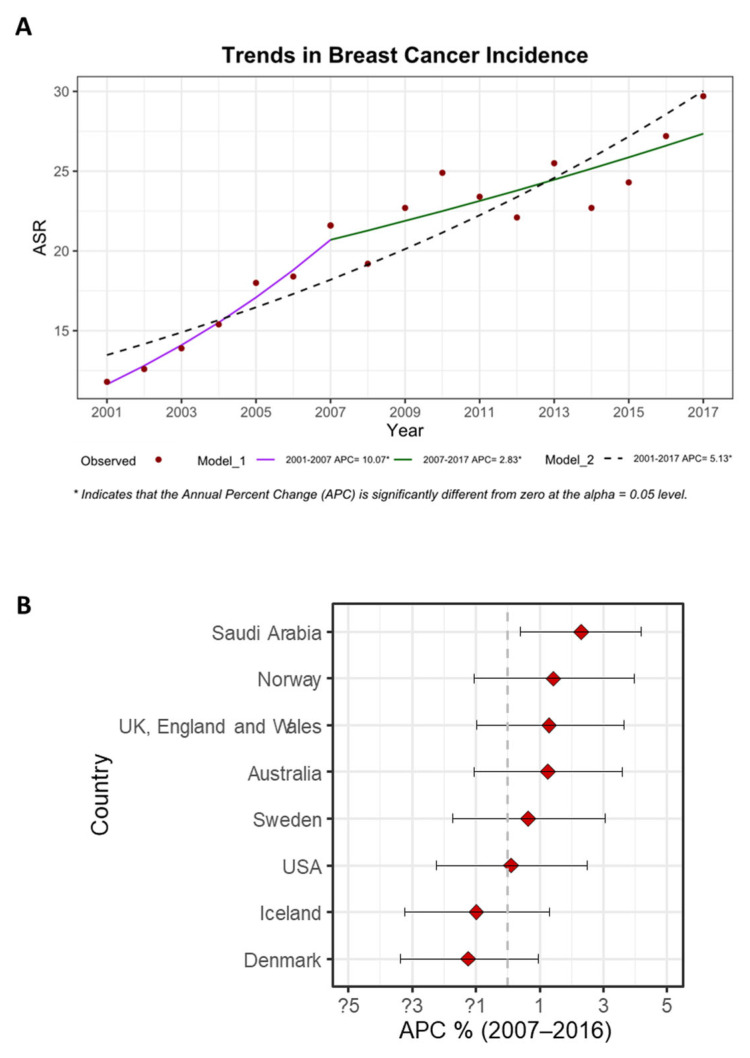
Trends in breast cancer incidence. (A) Jointpoint regression analysis of breast cancer Overall Age-Standardized Incidence Rate (ASR) in the Saudi female population for the period of 2001–2017. The estimated Annual Percent Change (APC) for two modules (Module_1 and Module_2) is displayed at the bottom of the figure, (* indicates p < 0.05). (B) Estimated Annual Percent Change (APC) of Overall Age-Standardized Incidence Rate (ASR) for selected countries in comparison to Saudi Arabia (2007–2016). Data for other countries were acquired from the International Agency for Research on Cancer (IARC) [17].

References

    1. Houghton S.C., Hankinson S.E. Cancer progress and priorities: Breast cancer, cancer epidemiol. Biomark. Prev. 2021;30:822–844. doi: 10.1158/1055-9965.EPI-20-1193. - DOI - PMC - PubMed
    1. Sung H., Ferlay J., Siegel R.L., Laversanne M., Soerjomataram I., Jemal A., Bray F. Global cancer statistics 2020: GLOBOCAN Estimates of incidence and mortality worldwide for 36 cancers in 185 countries. CA Cancer J. Clin. 2021;71:209–249. doi: 10.3322/caac.21660. - DOI - PubMed
    1. Siegel R.L., Miller K.D., Fuchs H.E., Jemal A. Cancer statistics, 2022. CA: A Cancer J. Clin. 2022;72:7–33. doi: 10.3322/caac.21708. - DOI - PubMed
    1. Rabbani S.A., Mazar A.P. Evaluating distant metastases in breast cancer: From biology to outcomes. Cancer Metastasis Rev. 2007;26:663–674. doi: 10.1007/s10555-007-9085-8. - DOI - PubMed
    1. Valastyan S., Weinberg R.A. Tumor metastasis: Molecular insights and evolving paradigms. Cell. 2011;147:275–292. doi: 10.1016/j.cell.2011.09.024. - DOI - PMC - PubMed