


The Role of Diet and Dietary Patterns in Parkinson's Disease
- PMID: 36364733
- PMCID: PMC9654624
- DOI: 10.3390/nu14214472
The Role of Diet and Dietary Patterns in Parkinson's Disease
Abstract
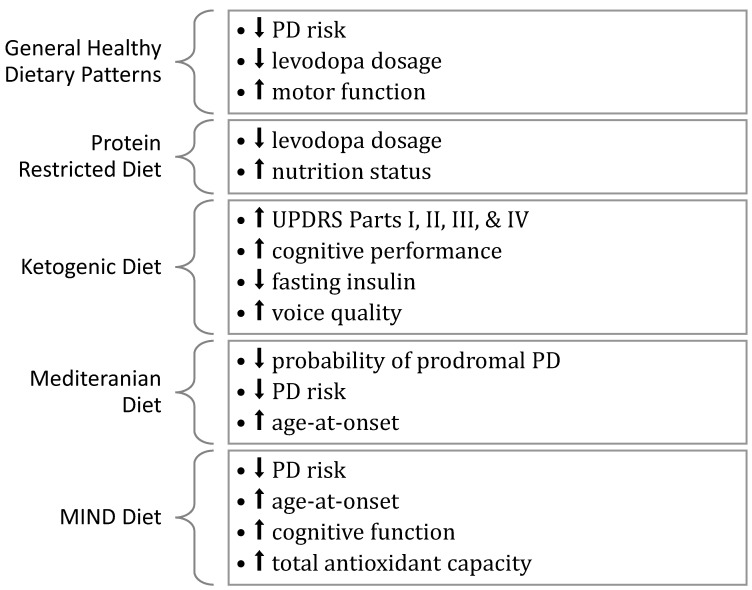
Parkinson's Disease (PD) is a neurodegenerative disorder associated with diminished nutrition status and decreased quality of life. While the prevalence of PD is expected to increase, no preventative or curative therapy for PD exists at this time. Although nutrition and diet represent modifiable risk factors for reducing chronic disease risk, research on the impact of single nutrients on PD has yielded mixed results. As a result, this single-nutrient approach may be the driving force behind the inconsistency, and a holistic dietary approach may overcome this inconsistency by accounting for the interactions between nutrients. The following review aims to examine the impact of a generally healthy dietary pattern, the protein-restricted diet (PRD), the ketogenic diet (KD), the Mediterranean diet (MD), and the Mediterranean-DASH Intervention for Neurodegenerative Delay (MIND) diet on PD risk, progression, and severity. While most of the included studies support the role of diet and dietary patterns in reducing the risk of PD or alleviating PD severity, the inconsistent results and need for further evidence necessitate more research being conducted before making dietary recommendations. Research on the potential beneficial effects of dietary patterns on PD should also investigate potential risks.
Keywords: MIND diet; Mediterranean diet; Parkinson’s Disease; diet; dietary patterns; ketogenic diet; protein-restricted diet.
Conflict of interest statement
The authors declare that they have no known competing interest regarding the publication of this article.
Figures
References
Publication types
MeSH terms
LinkOut - more resources
Full Text Sources
Medical
Research Materials
Miscellaneous
