


The Role of the Gut Microbiome in Cow's Milk Allergy: A Clinical Approach
- PMID: 36364799
- PMCID: PMC9656688
- DOI: 10.3390/nu14214537
The Role of the Gut Microbiome in Cow's Milk Allergy: A Clinical Approach
Abstract
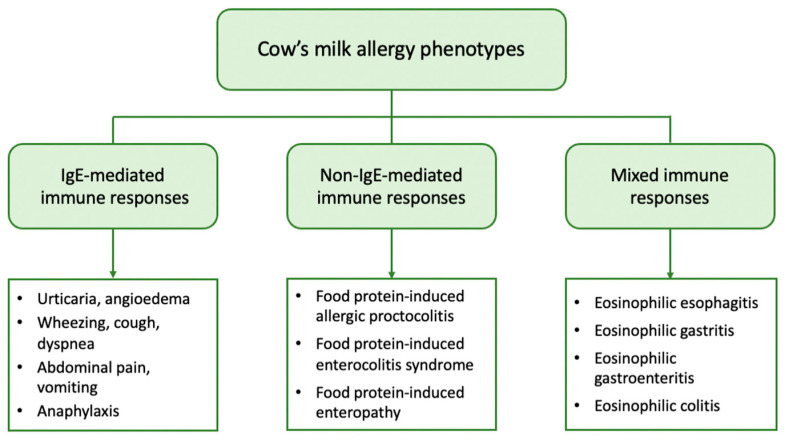
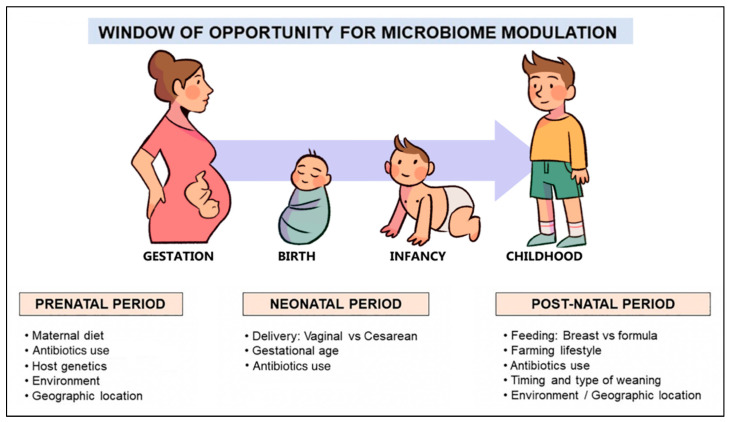
Cow's milk allergy (CMA) is the most prevalent food allergy (FA) in infancy and early childhood and can be present with various clinical phenotypes. The significant increase in FA rates recorded in recent decades has been associated with environmental and lifestyle changes that limit microbial exposure in early life and induce changes in gut microbiome composition. Gut microbiome is a diverse community of microbes that colonize the gastrointestinal tract (GIT) and perform beneficial functions for the host. This complex ecosystem interacts with the immune system and has a pivotal role in the development of oral tolerance to food antigens. Emerging evidence indicates that alterations of the gut microbiome (dysbiosis) in early life cause immune dysregulation and render the host susceptible to immune-mediated diseases later in life. Therefore, the colonization of the gut by "healthy" microbes that occurs in the first years of life determines the lifelong health of the host. Here, we present current data on the possible role of the gut microbiome in the development of CMA. Furthermore, we discuss how gut microbiome modification might be a potential strategy for CMA prevention and treatment.
Keywords: cow’s milk allergy; dysbiosis; food allergy; gut microbiome; prebiotics; probiotics.
Conflict of interest statement
The authors declare no conflict of interest.
Figures
References
-
- Schoemaker A.A., Sprikkelman A.B., Grimshaw K.E., Roberts G., Grabenhenrich L., Rosenfeld L., Siegert S., Dubakiene R., Rudzeviciene O., Reche M., et al. Incidence and natural history of challenge-proven cow’s milk allergy in European children--EuroPrevall birth cohort. Allergy. 2015;70:963–972. doi: 10.1111/all.12630. - DOI - PubMed
