


The Immunological Role of Milk Fat Globule Membrane
- PMID: 36364836
- PMCID: PMC9655658
- DOI: 10.3390/nu14214574
The Immunological Role of Milk Fat Globule Membrane
Abstract
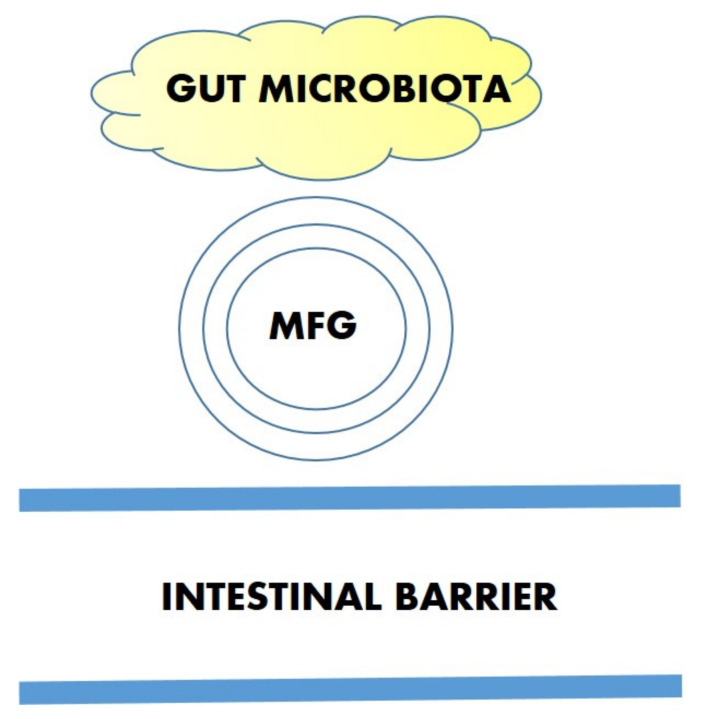
Human milk is the ideal food for newborns until the age of six months. Human milk can be defined as a dynamic living tissue, containing immunological molecules, such as immunoglobulins, supra-molecular structures, such as the milk fat globule membrane (MFGM), and even entire cells, such as the milk microbiota. The milk composition changes throughout lactation to fulfill the infant's requirements and reflect the healthy/disease status of the lactating mother. Many bioactive milk components are either soluble or bound to the MFGM. In this work, we focus on the peculiar role of the MFGM components, from their structural organization in fat globules to their route into the gastrointestinal tract. Immunometabolic differences between human and bovine MFGM components are reported and the advantages of supplementing infant formula with the MFGM are highlighted.
Keywords: MFGM; breastfeeding; human milk; immunometabolism; milk fat globule membrane.
Conflict of interest statement
The authors declare no conflict of interest.
Figures
References
-
- World Health Organization . Recommendations on Post-Natal Care of the Mother and Newborn. World Health Organization; Geneva, Switzerland: 2013.
-
- Noel G., In J.G., Lemme-Dumit J.M., DeVine L.R., Cole R.N., Guerrerio A.L., Campbell J.D., Kovbasnjuk O., Pasetti M.F. Human Breast Milk Enhances Intestinal Mucosal Barrier Function and Innate Immunity in a Healthy Pediatric Human Enteroid Model. Front. Cell Dev. Biol. 2021;9:685171. doi: 10.3389/fcell.2021.685171. - DOI - PMC - PubMed
Publication types
MeSH terms
Substances
LinkOut - more resources
Full Text Sources
