


Is the lipochaperone activity of sHSP a key to the stress response encoded in its primary sequence?
- PMID: 36367671
- PMCID: PMC9877275
- DOI: 10.1007/s12192-022-01308-7
Is the lipochaperone activity of sHSP a key to the stress response encoded in its primary sequence?
Abstract
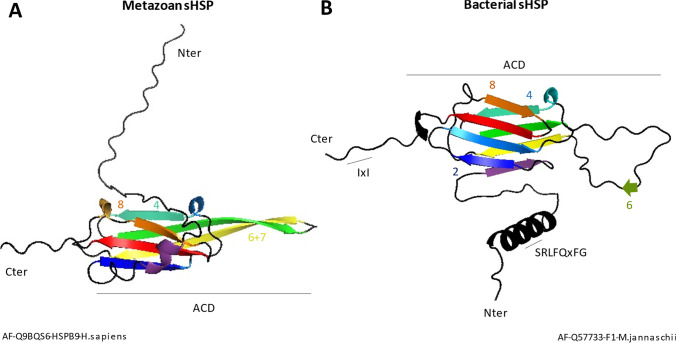
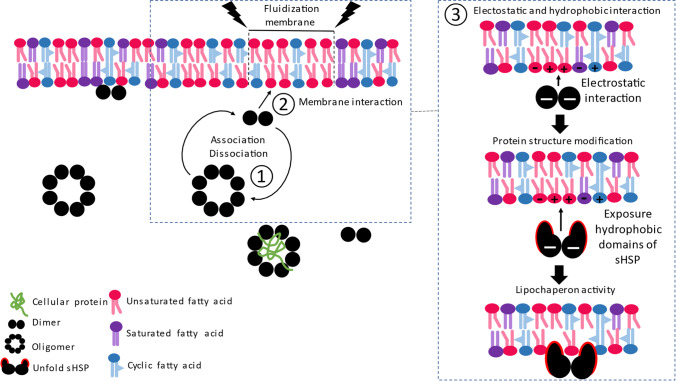
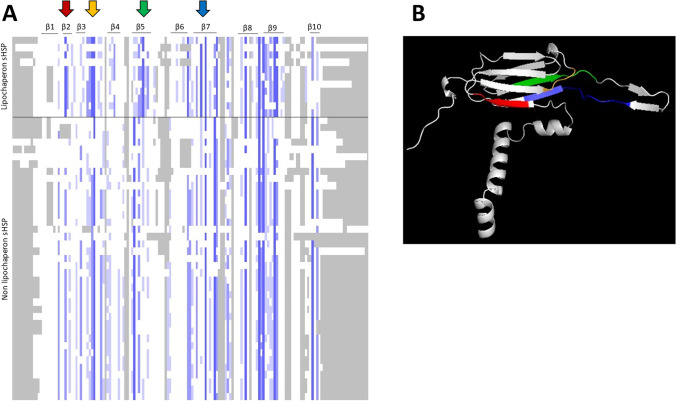
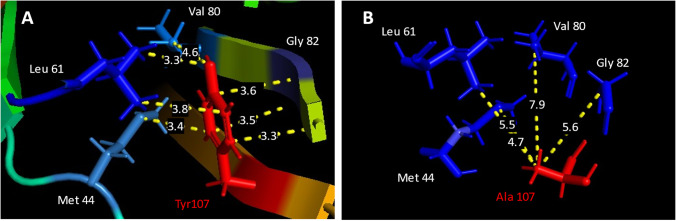
Several strategies have been put in place by organisms to adapt to their environment. One of these strategies is the production of stress proteins such as sHSPs, which have been widely described over the last 30 years for their role as molecular chaperones. Some sHSPs have, in addition, the particularity to exert a lipochaperone role by interacting with membrane lipids to maintain an optimal membrane fluidity. However, the mechanisms involved in this sHSP-lipid interaction remain poorly understood and described rather sporadically in the literature. This review gathers the information concerning the structure and function of these proteins available in the literature in order to highlight the mechanism involved in this interaction. In addition, analysis of primary sequence data of sHSPs available in database shows that sHSPs can interact with lipids via certain amino acid residues present on some β sheets of these proteins. These residues could have a key role in the structure and/or oligomerization dynamics of sHPSs, which is certainly essential for interaction with membrane lipids and consequently for maintaining optimal cell membrane fluidity.
Keywords: Lipochaperone activity; Protein structure; Small heat shock protein; Stress response.
© 2022. The Author(s), under exclusive licence to Cell Stress Society International.
Conflict of interest statement
The authors declare no competing interests.
Figures

References
Publication types
MeSH terms
Substances
LinkOut - more resources
Full Text Sources
