. 2022 Dec 2;21(12):2936-2946.
doi: 10.1021/acs.jproteome.2c00371. Epub 2022 Nov 11.

Alignment and Analysis of a Disparately Acquired Multibatch Metabolomics Study of Maternal Pregnancy Samples

Affiliations

Alignment and Analysis of a Disparately Acquired Multibatch Metabolomics Study of Maternal Pregnancy Samples

Hani Habra et al. J Proteome Res. .

Abstract

Untargeted liquid chromatography-mass spectrometry metabolomics studies are typically performed under roughly identical experimental settings. Measurements acquired with different LC-MS protocols or following extended time intervals harbor significant variation in retention times and spectral abundances due to altered chromatographic, spectrometric, and other factors, raising many data analysis challenges. We developed a computational workflow for merging and harmonizing metabolomics data acquired under disparate LC-MS conditions. Plasma metabolite profiles were collected from two sets of maternal subjects three years apart using distinct instruments and LC-MS procedures. Metabolomics features were aligned using metabCombiner to generate lists of compounds detected across all experimental batches. We applied data set-specific normalization methods to remove interbatch and interexperimental variation in spectral intensities, enabling statistical analysis on the assembled data matrix. Bioinformatics analyses revealed large-scale metabolic changes in maternal plasma between the first and third trimesters of pregnancy and between maternal plasma and umbilical cord blood. We observed increases in steroid hormones and free fatty acids from the first trimester to term of gestation, along with decreases in amino acids coupled to increased levels in cord blood. This work demonstrates the viability of integrating nonidentically acquired LC-MS metabolomics data and its utility in unconventional metabolomics study designs.

Keywords: LC-HRMS; alignment; metabolomics; normalization; partial correlation; plasma; pregnancy.


Conflict of interest statement

The authors declare no competing financial interest.

Figures
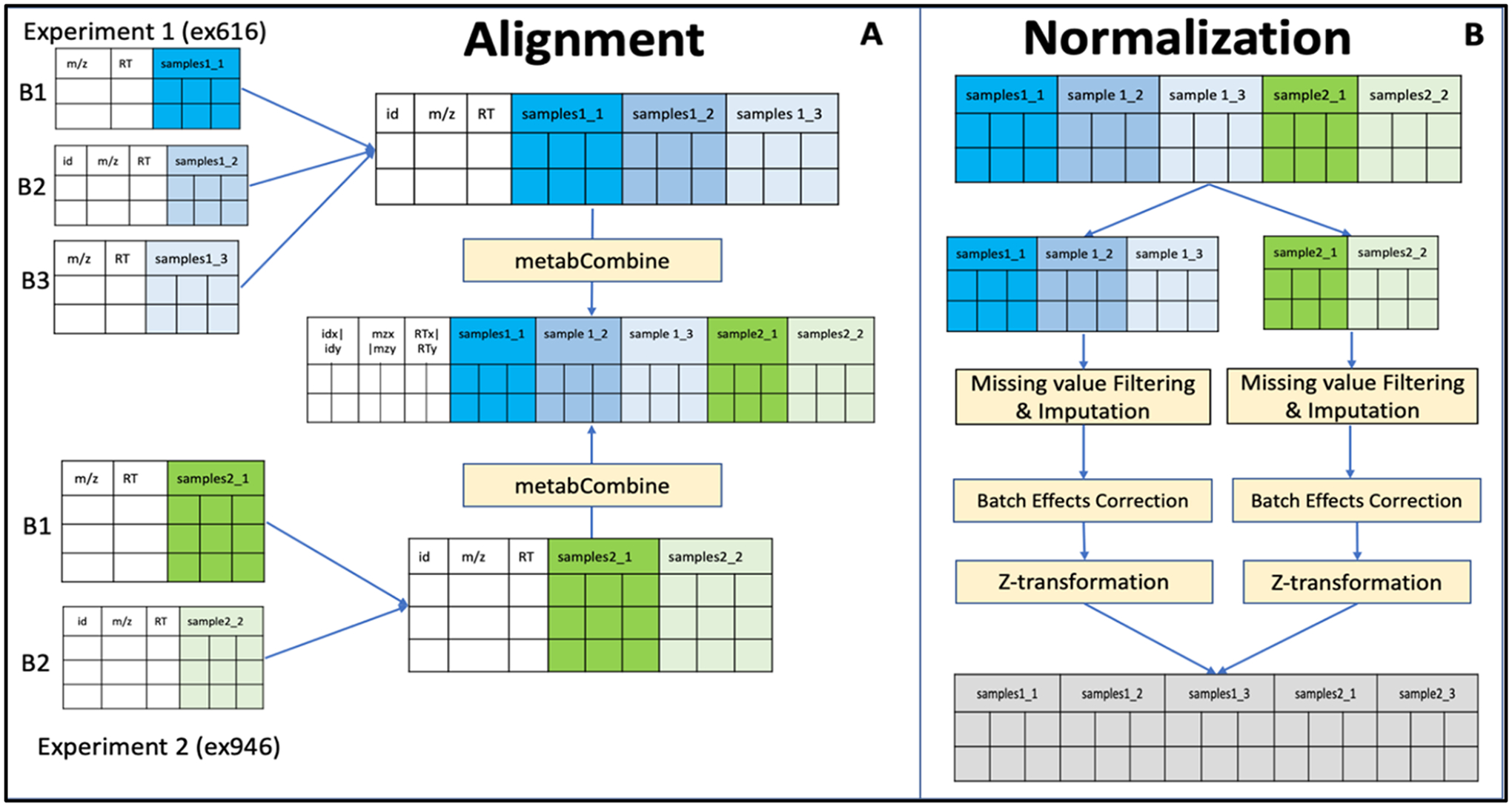
Figure 1.
Figure 1.
Analytical workflow. Two experiments, ex616 and ex946, consist of three and two batches, respectively. (A) Alignment steps necessary to concatenate the LC-MS measurements, first between batches of the same experiment followed by between experiments (using metabCombiner). (B) Normalization steps necessary to eliminate unwanted sources of variation consist of missing value handling, batch effects correction, and Z-transformation on separate experimental sample sets, followed by reassembly.
Figure 2.
Figure 2.
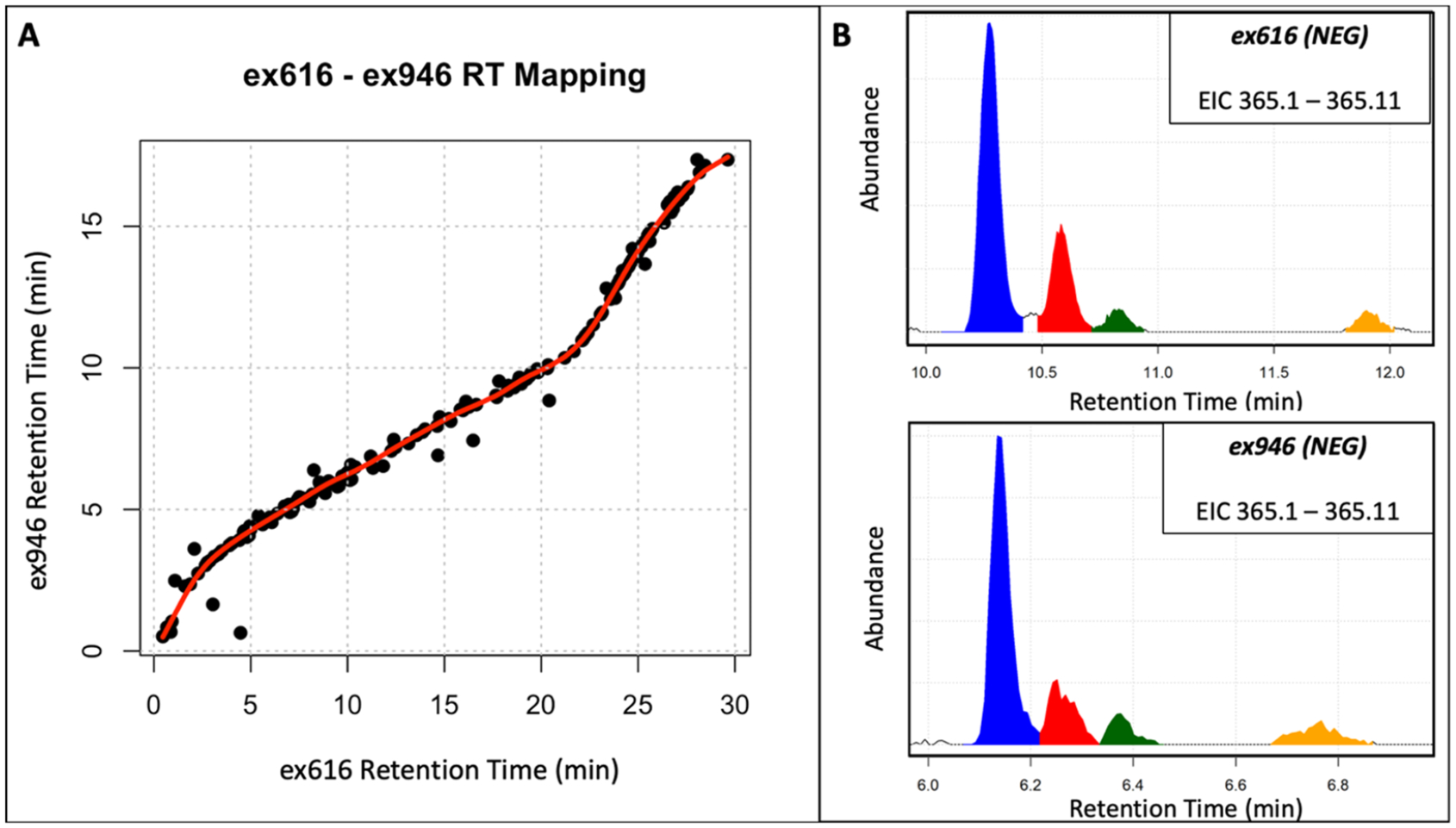
Retention time mapping and feature matching. (A) Plotted spline fit generated by metabCombiner based on m/z and abundance quantile-matched feature pair anchors between ex616 (30 min total chromatography) and ex946 (20 min). (B) Selected peaks for the two experiments in m/z range 365.1–365.11 (negative mode), with matching colors for identical compounds, as assigned by metabCombiner.
Figure 3.
Figure 3.
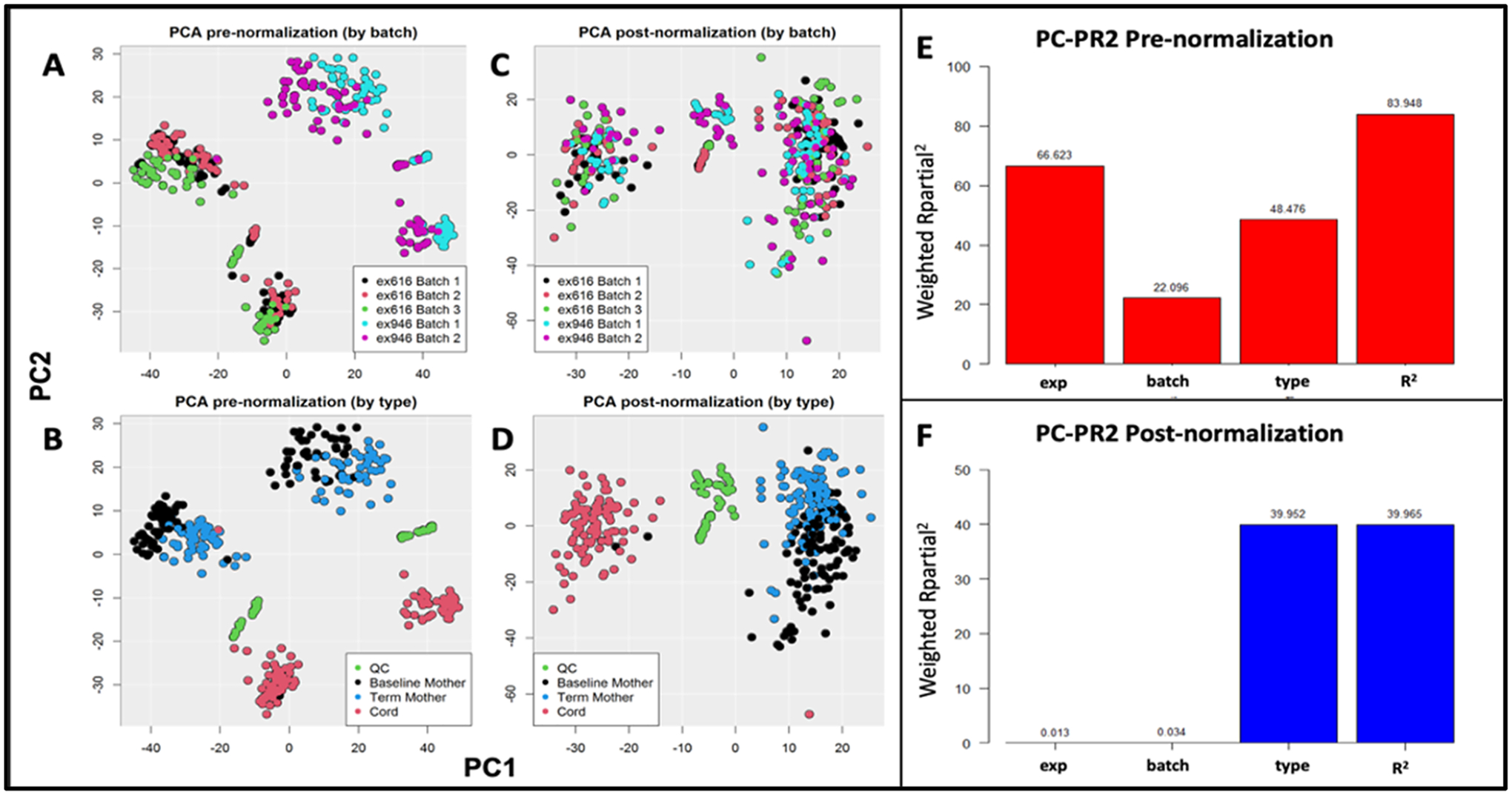
Pre- and postnormalization plots. (A,B) Prenormalized aligned data projected onto the first two principal components, colored by (A) experimental batch and (B) sample type. Initially, interexperiment and interbatch technical variability overshadow differences between sample types. (C,D) PCA plot of the postnormalized data set colored by (C) experimental batch and (D) sample type, showing the elimination of interexperimental and interbatch effects as a significant factor while biological variability between sample types remains prevalent. (E,F) PC–PR2 plots generated (E) before and (F) after normalization, showing the amount of metabolomics variation by experiment, batch, sample type, and the total variation explained by the covariates (R2).
Figure 4.
Figure 4.
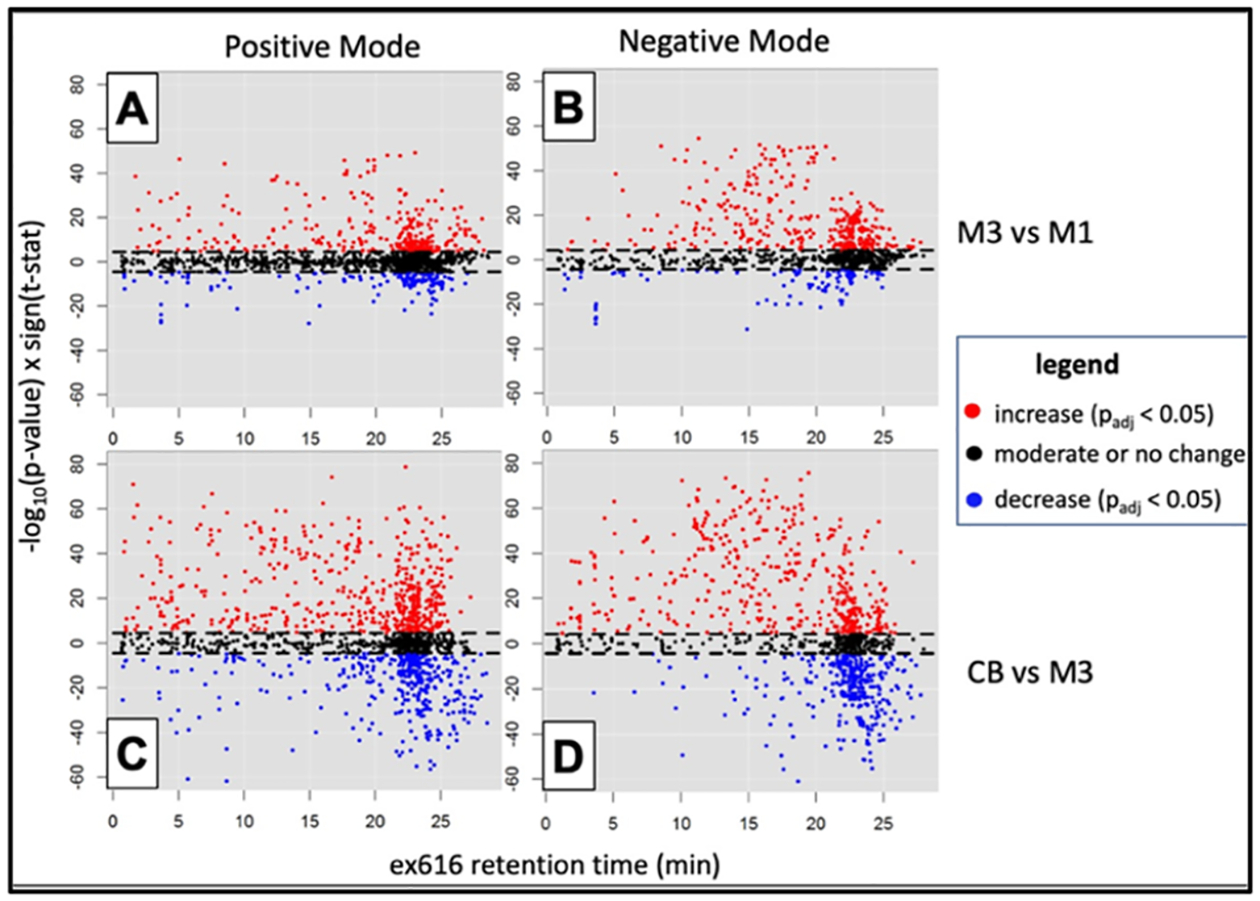
Differential analysis vs retention time. Negative log-transformed p-values multiplied by the sign of the t statistic indicate direction and significance of changes between time points. M3 vs M1 (A) positive and (B) negative mode data sets, CB vs M3 (C) positive and (D) negative mode data sets represent greater differences between these sample types. The black dotted line indicates the Bonferroni significance cutoff (q = 0.05).
Figure 5.
Figure 5.
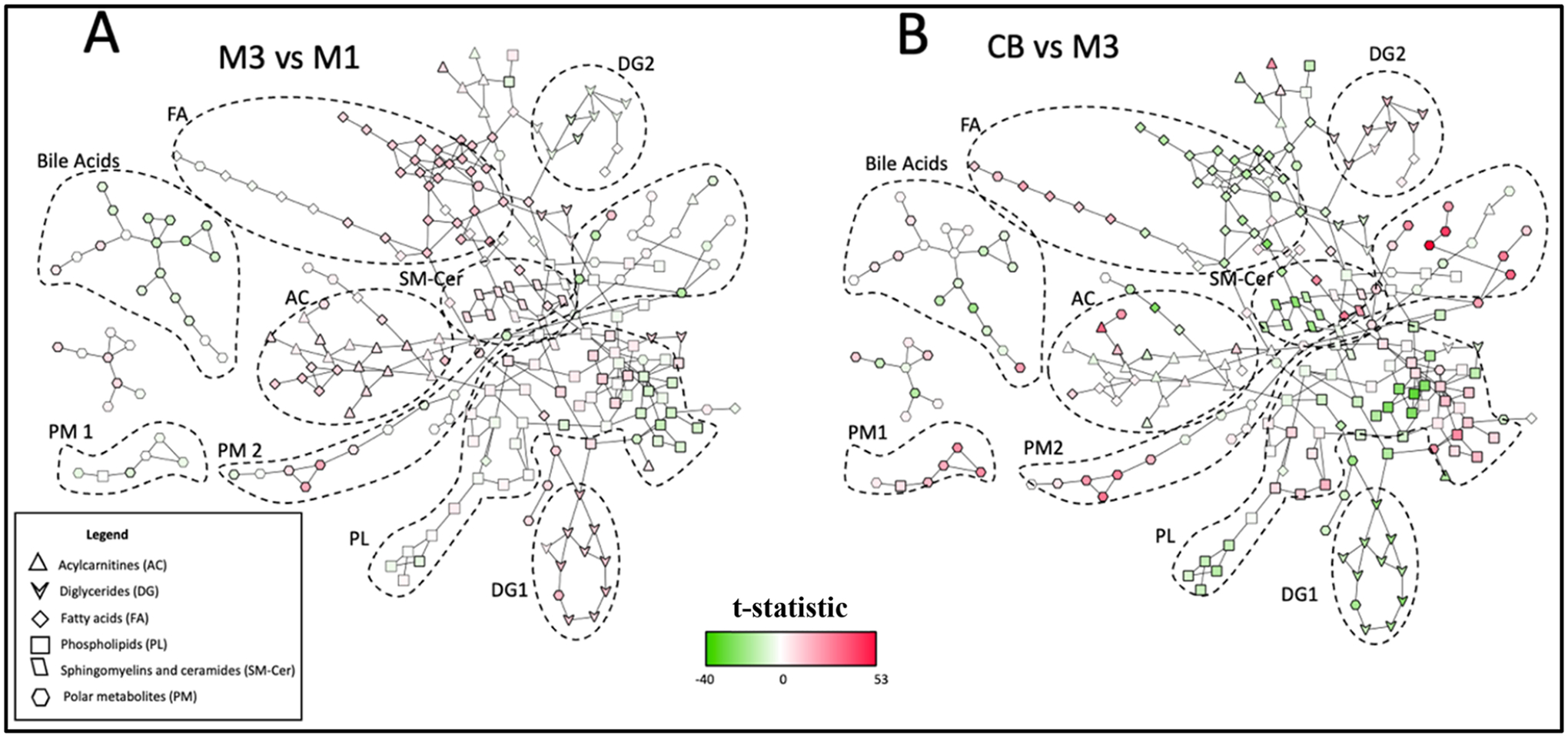
Partial correlation network constructed from metabolomics data. Nodes represent metabolites and edges represent partial correlations computed from the experimental data. Nodes representing significant metabolites (q-value < 0.05) have bold borders and node colors are based on t statistics. (A) M3 vs M1; (B) CB vs M3. The dotted lines outline subnetworks that include metabolites from different chemical classes. See Figure S1 for a detailed view of each subnetwork.

References

    1. Castillo S; Gopalacharyulu P; Yetukuri L; Orešič M Algorithms and Tools for the Preprocessing of LC–MS Metabolomics Data. Chemometrics and Intelligent Laboratory Systems 2011, 108 (1), 23–32.
    1. Computational Methods and Data Analysis for Metabolomics; Li S, Ed.; Methods in Molecular Biology; Humana Press: New York, NY, 2020.
    1. da Silva RR; Dorrestein PC; Quinn RA Illuminating the Dark Matter in Metabolomics. Proc. Natl. Acad. Sci. U. S. A 2015, 112 (41), 12549–12550. - PMC - PubMed
    1. Jones OAH Illuminating the Dark Metabolome to Advance the Molecular Characterisation of Biological Systems. Metabolomics 2018, 14 (8), 101. - PubMed
    1. Brunius C; Shi L; Landberg R Large-Scale Untargeted LC-MS Metabolomics Data Correction Using between-Batch Feature Alignment and Cluster-Based within-Batch Signal Intensity Drift Correction. Metabolomics 2016, 12 (11), 173. - PMC - PubMed

Publication types

LinkOut - more resources