


Global, regional, national burden and gender disparity of cataract: findings from the global burden of disease study 2019
- PMID: 36369026
- PMCID: PMC9652134
- DOI: 10.1186/s12889-022-14491-0
Global, regional, national burden and gender disparity of cataract: findings from the global burden of disease study 2019
Abstract
Background: To evaluate the global burden of cataracts by year, age, region, gender, and socioeconomic status using disability-adjusted life years (DALYs) and prevalence from the Global Burden of Disease (GBD) study 2019.
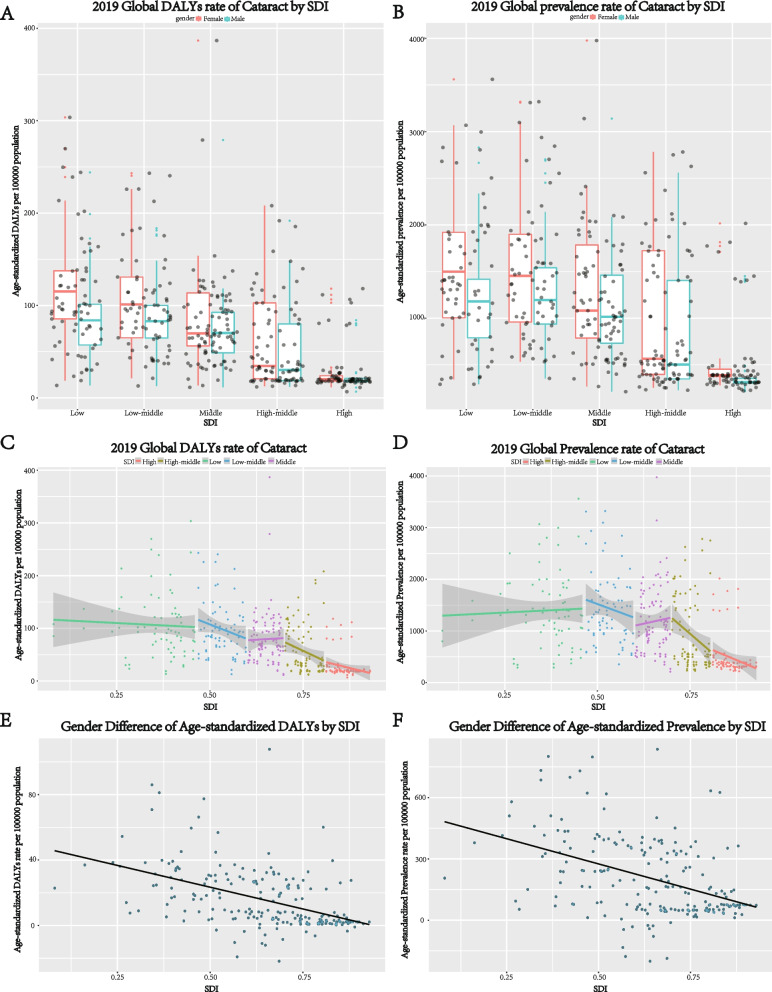
Methods: Global, regional, or national DALY numbers, crude DALY rates, and age-standardized DALY rates caused by cataracts, by year, age, and gender, were obtained from the Global Burden of Disease Study 2019. Socio-demographic Index (SDI) as a comprehensive indicator of the national or regional development status of GBD countries in 2019 was obtained from the GBD official website. Kruskal-Wallis test, linear regression, and Pearson correlation analysis were performed to explore the associations between the health burden with socioeconomic levels, Wilcoxon Signed-Rank Test was used to investigate the gender disparity.
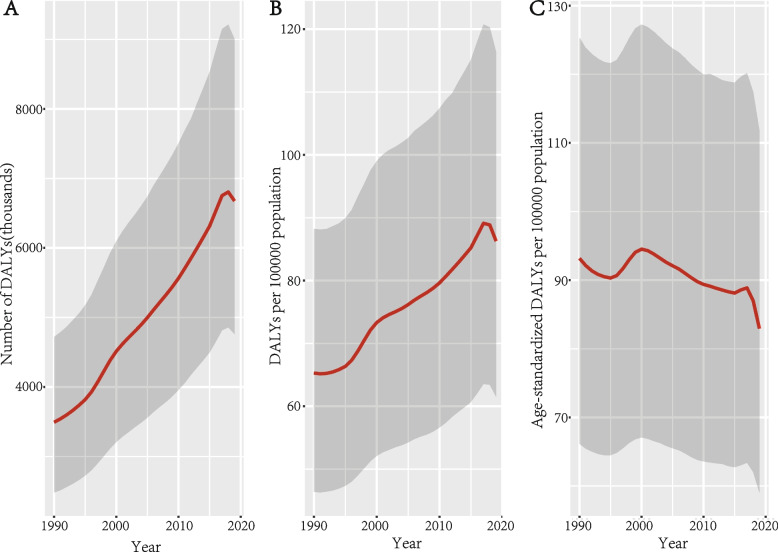
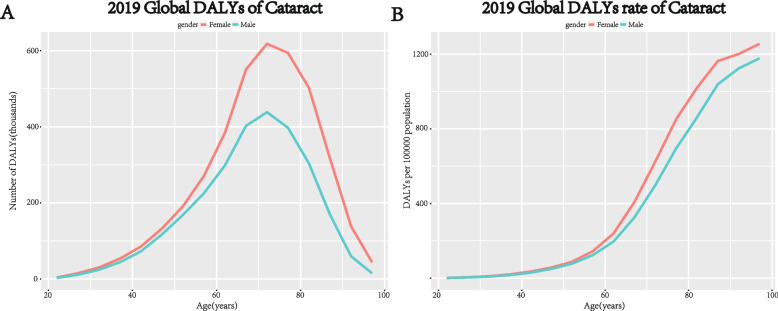
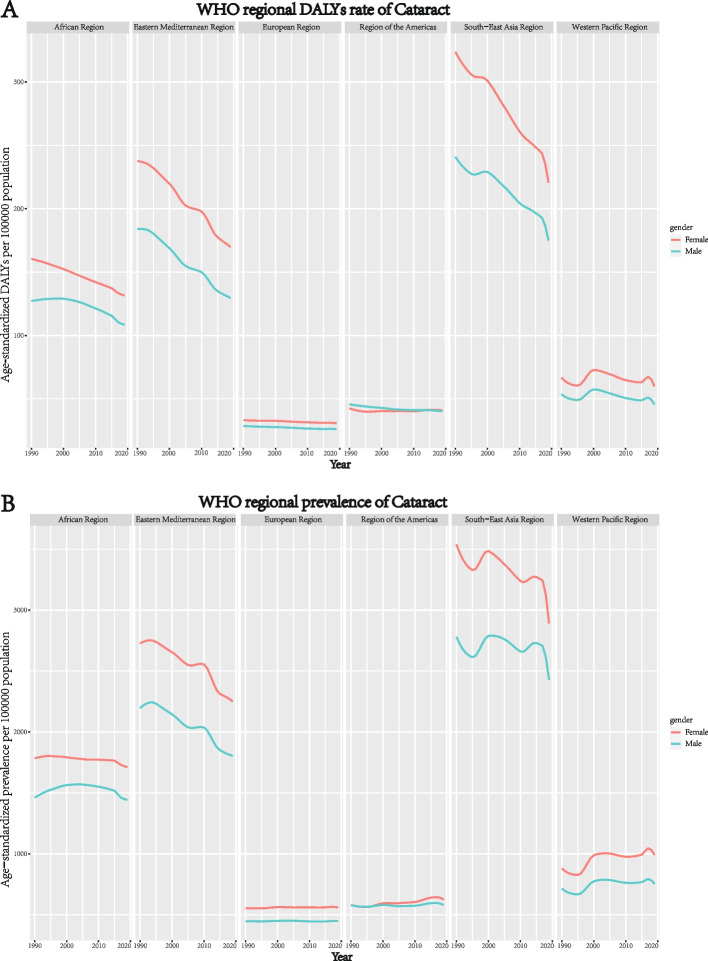
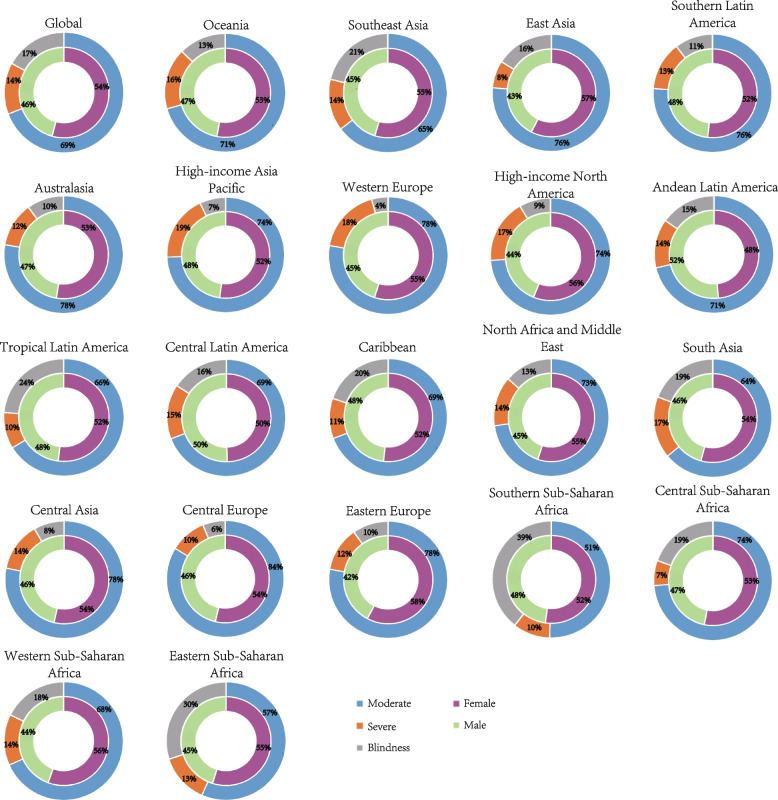
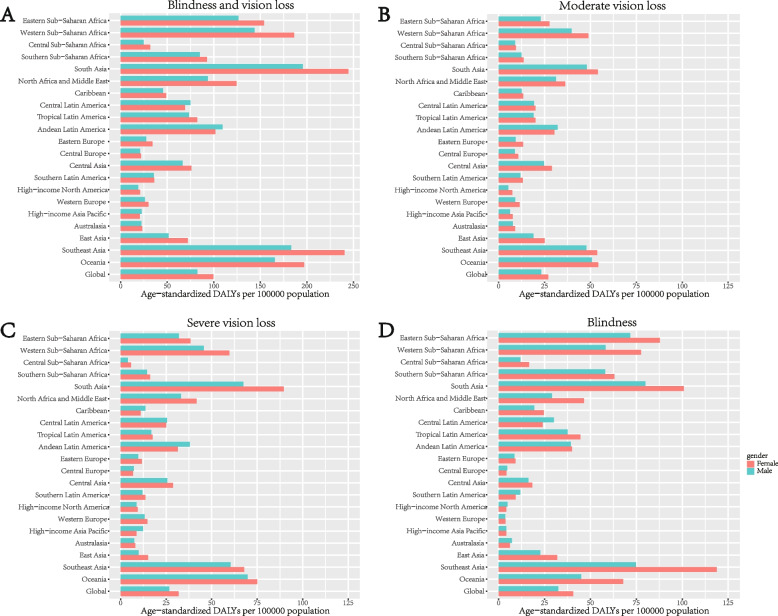
Results: From 1990 to 2019, global DALY numbers caused by cataracts rose by 91.2%, crude rates increased by 32.2%, while age-standardized rates fell by 11.0%. Globally, age-standardized prevalence and DALYs rates of cataracts peaked in 2017 and 2000, with the prevalence rate of 1283.53 [95% uncertainty interval (UI) 1134.46-1442.93] and DALYs rate of 94.52 (95% UI 67.09-127.24) per 100,000 population, respectively. The burden was expected to decrease to 1232.33 (95% UI 942.33-1522.33) and 91.52 (95% UI 87.11-95.94) by 2050. Southeast Asia had the highest blindness rate caused by cataracts in terms of age-standardized DALY rates (99.87, 95% UI: 67.18-144.25) in 2019. Gender disparity has existed since 1990, with the female being more heavily impacted. This pattern remained with aging among different stages of vision impairments and varied through GBD super regions. Gender difference (females minus males) of age-standardized DALYs (equation: Y = -53.2*X + 50.0, P < 0.001) and prevalence rates (equation: Y = - 492.8*X + 521.6, P < 0.001) was negatively correlated with SDI in linear regression.
Conclusion: The global health of cataracts is improving but the steady growth in crude DALY rates suggested that health progress does not mean fewer demands for cataracts. Globally, older age, females, and lower socioeconomic status are associated with higher cataract burden. The findings of this study highlight the importance to make gender-sensitive health policies to manage global vision loss caused by cataracts, especially in low SDI regions.
Keywords: Cataract; Disability-adjusted life year; Global burden of disease; Vision loss.
© 2022. The Author(s).
Conflict of interest statement
The authors declare that they have no competing interests with respect to the research, authorship, and/or publication of this article.
Figures
References
Publication types
MeSH terms
LinkOut - more resources
Full Text Sources
Medical
