Correlation between structural heart disease and cardiac SARS-CoV-2 manifestations
- PMID: 36369278
- PMCID: PMC9651888
- DOI: 10.1038/s43856-022-00204-6
Correlation between structural heart disease and cardiac SARS-CoV-2 manifestations
Abstract
Background: The prognosis of COVID-19 patients with cardiac involvement is unfavorable and it remains unknown which patients are at risk. The virus enters cells via its receptor angiotensin-converting enzyme 2 (ACE2). Myocardial ACE2 expression is increased in structural heart disease (SHD). We, therefore, aimed to analyze correlations between structural heart disease and cardiac SARS-CoV-2 manifestation.
Methods: The clinical course of COVID-19 in patients with structural heart disease was assessed in a prospective cohort of 152 patients. The primary endpoints consisted of hospitalization and survival. Cardiac tissue of 23 autopsy cases with lethal COVID-19 course was obtained and analyzed for (a) the presence of SHD, (b) myocardial presence of SARS-CoV-2 via RT,-PCR, and (c) levels of ACE2 expression using immunofluorescence staining.
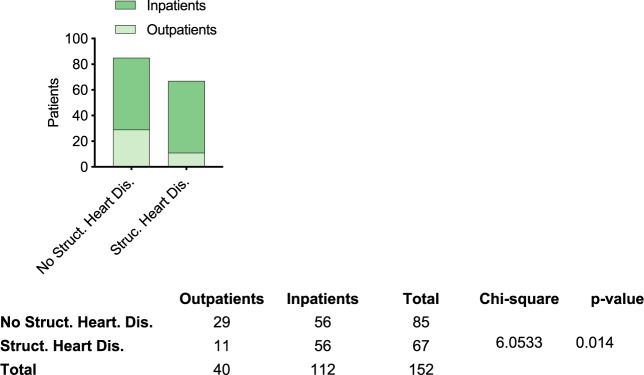
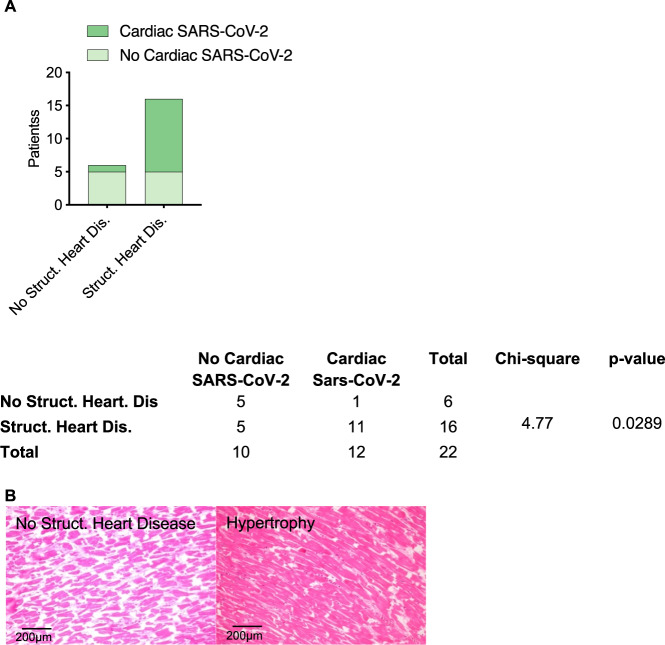
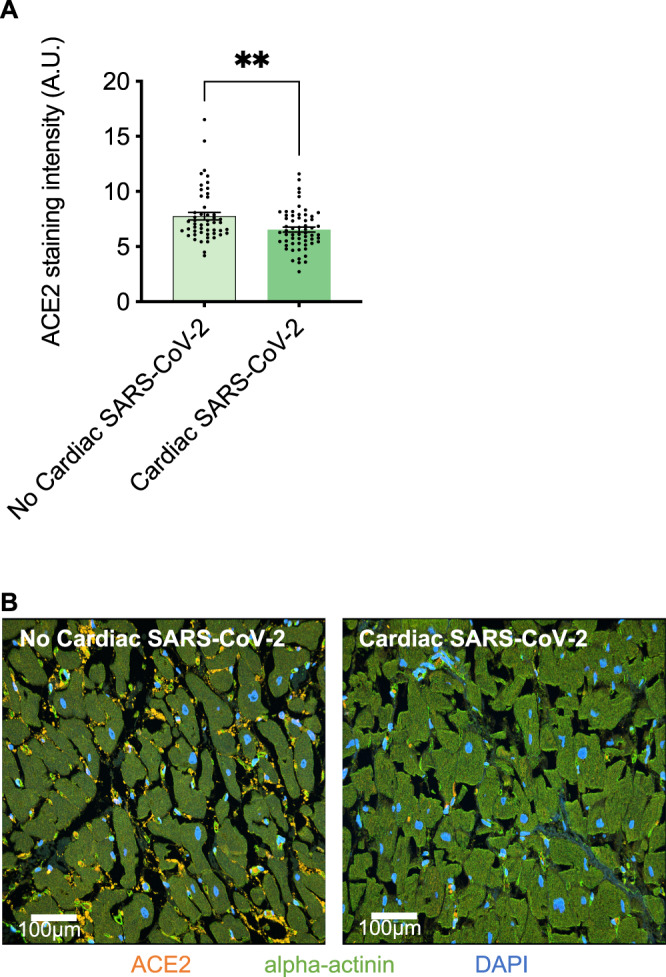
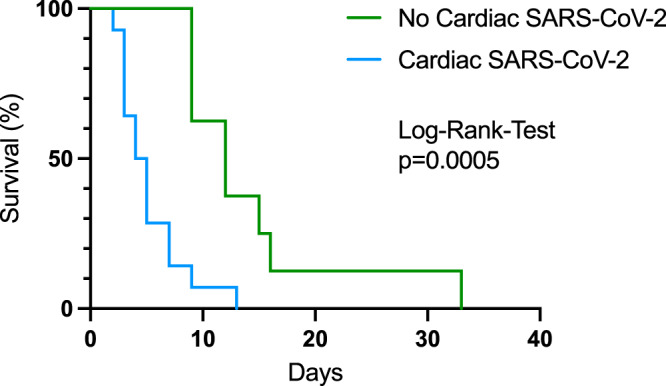
Results: Structural heart disease is found in 67 patients, of whom 56 (83.60%) are hospitalized. The myocardium is positive for SARS-CoV-2 in 15 patients (65%) in 23 autopsy cases of lethal COVID-19. Moreover, most hearts with evidence of myocardial SARS-CoV-2 have structural heart disease [11 (91,67%) vs. 1 (8,33%), p = 0.029]. Myocardial presence of SARS-CoV-2 is correlated with a significant downregulation of ACE2 compared to negative control hearts (6.545 ± 1.1818 A.U. vs. 7.764 ± 2.411 A.U., p = 0.003). The clinical course of patients with cardiac SARS-CoV-2 manifestation is unfavorable, resulting in impaired survival (median, 12 days and 4.5 days, respectively, HR 0.30, 95% CI, 0.13 to 0.73, p = 0.0005) CONCLUSIONS: We provide evidence for a correlation between SHD, altered ACE2 receptor expression, and cardiac SARS-CoV-2 manifestation. Consequently, structural heart disease may be considered a distinct risk factor for a severe clinical course after infection with SARS-CoV-2.
Registration number local irb: Ethics Committee of Northwestern and Central Switzerland ID 2020-00629; Ethics Committee of the Medical University Innsbruck EK Nr: 1103/2020.
Gov number: NCT04416100.
Plain language summary
SARS-CoV-2, the virus that causes COVID-19, binds to ACE2 receptors to gain entry into cells. The ACE2 receptor is a cell surface protein found in many tissues, including the heart. Studies suggest that people with heart disease are likely to have higher levels of ACE2 receptors, which may explain why they are more susceptible to severe illness from COVID-19. In this study, we identified heart disease as a risk factor for hospitalization in 152 patients who tested positive for SARS-CoV-2. The presence of SARS-CoV-2 in the heart was associated with altered levels of ACE2 receptors and with a shortened survival time in patients. These findings provide evidence for a potential link between heart disease, ACE2 receptor levels, and SARS-CoV-2 infection of the heart, and may help doctors to understand the clinical course of patients with heart disease who contract COVID-19.
© 2022. The Author(s).
Conflict of interest statement
The authors declare no competing interests.
Figures
References
Associated data
LinkOut - more resources
Full Text Sources
Medical
Research Materials
Miscellaneous