. 2022 Nov 11;6(1):84.
doi: 10.1038/s41698-022-00325-0.

Landscape of potentially targetable receptor tyrosine kinase fusions in diverse cancers by DNA-based profiling

Affiliations

Landscape of potentially targetable receptor tyrosine kinase fusions in diverse cancers by DNA-based profiling

Tiantian Wang et al. NPJ Precis Oncol. .

Abstract

Recurrent fusions of receptor tyrosine kinases (RTKs) are often driving events in tumorigenesis that carry important diagnostic value and are potentially targetable by the increasing number of tyrosine kinase inhibitors (TKIs). Here, we characterized the spectrum of 1324 RTK fusions with intact kinase domains in solid tumors by DNA-based high-throughput sequencing. Overall, the prevalence of RTK fusions were 4.7%, with variable frequencies and diverse genomic structures and fusion partners across cancer types. Cancer types, such as thyroid cancers, urological cancers and neuroendocrine tumors are selective in the RTK fusions they carry, while others exhibit highly complex spectra of fusion events. Notably, most RTKs were promiscuous in terms of the partner genes they recombine with. A large proportion of RTK fusions had one of the breakpoints localized to intergenic regions. Comprehensive genomic profiling revealed differences in co-mutational patterns pre- and post-TKI treatments across various RTK fusions. At baseline, multiple cases were detected with co-occurring RTK fusions or concomitant oncogenic mutations in driver genes, such as KRAS and EGFR. Following TKI resistance, we observed differences in potential on- and off-target resistance mutations among fusion variants. For example, the EML4-ALK v3 variant displayed more complex on-target resistance mechanisms, which might explain the reduced survival outcome compared with the v1 variant. Finally, we identified two lung cancer patients with MET+ and NTRK1+ tumors, respectively, who responded well to crizotinib treatment. Taken together, our findings demonstrate the diagnostic and prognostic values of screening for RTK fusions using DNA-based sequencing in solid tumors.


Conflict of interest statement

Jiani C. Yin, Sha Wang, and Yang Shao are employees of Nanjing Geneseeq Technology Inc. All remaining authors have declared no conflict of interests.

Figures
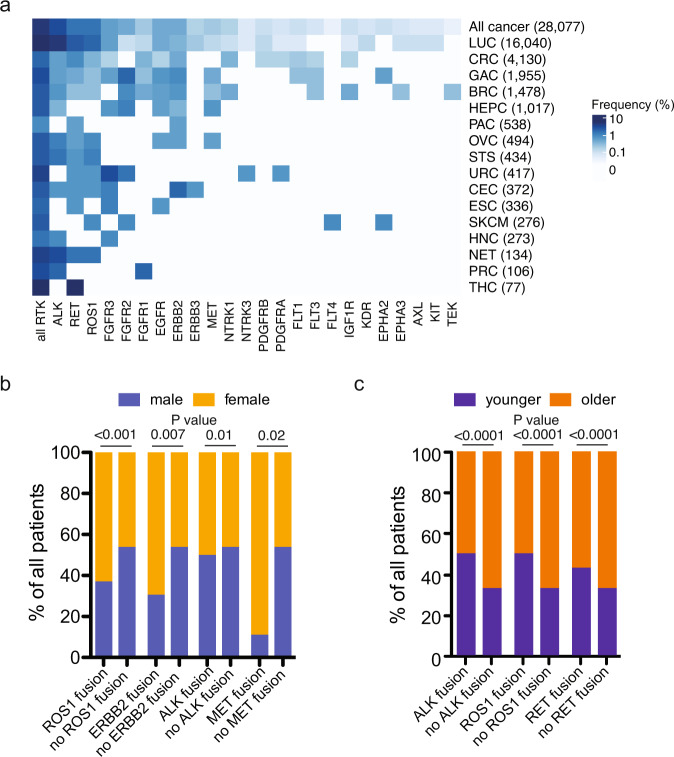
Fig. 1
Fig. 1. Landscape of RTK fusions across diverse cancers.
a Heatmap showing the prevalence of rearrangements of specific RTKs in different cancers, LUC lung cancer, CRC colorectal cancer, GAC gastric cancer, BRC breast cancer, HEPC hepatobiliary cancer, PAC pancreatic cancer, OVC ovarian cancer, STS soft tissue sarcoma, CEC cervical cancer, ESC esophageal cancer, URC urinary cancer, HNC head and neck cancer, SKCM skin cutaneous melanoma, NET neuroendocrine tumor, PRC prostate cancer, THC thyroid cancer. b ROS1, ERBB2, ALK, and MET fusions showed increased associations with the female sex. c ALK, ROS1, and RET fusions showed increased associations with younger age.
Fig. 2
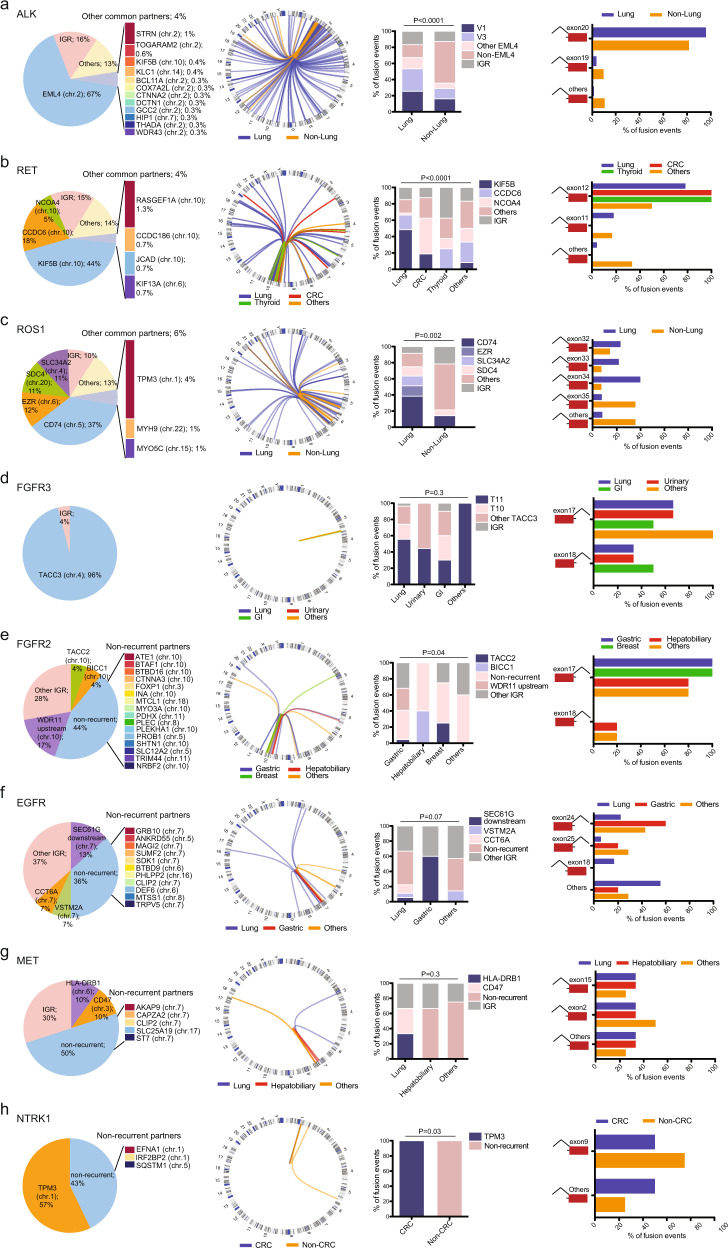
Fig. 2. Genomic structures of the common RTK fusion genes.
ah From left to right: Distributions of common fusion partners; Circos plot showing the genomic rearrangement events in different cancer types; Comparisons of fusion partner frequencies in different cancer types, P values using chi-square tests are as indicated; Comparisons of RTK breakpoints in different cancer types in a ALK, b RET, c ROS1, d FGFR3, e FGFR2, f EGFR, g MET, and h NTRK1 positive samples. IGR intergenic regions.
Fig. 3
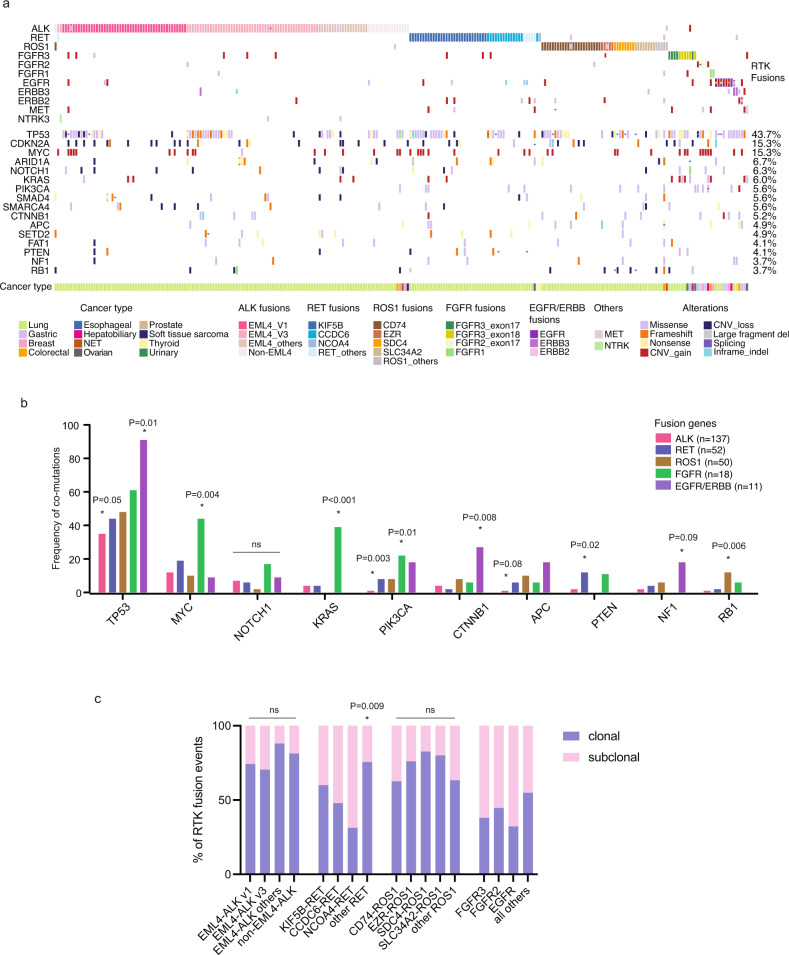
Fig. 3. Mutational landscape of concomitant mutations prior to TKI treatment.
a Oncoplot showing the most frequently co-mutated genes across different RTK fusion-positive samples. b Different RTK fusions are associated with varying spectra of concomitant mutations, P values using Bonferroni’s post-test are as indicated. c Estimated clonality comparing different fusion genes or fusion variants.
Fig. 4
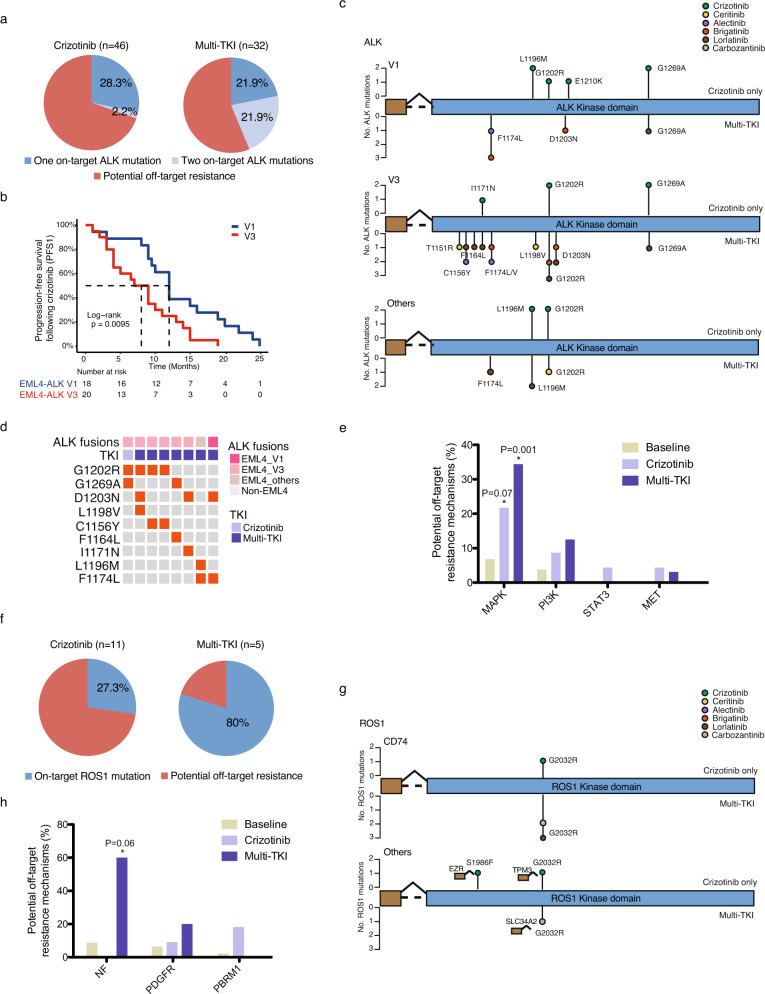
Fig. 4. Potential resistance mechanisms in ALK and ROS1 patients following TKI treatment.
a Proportions of patients carrying on-target ALK resistance mutations following ALK TKI treatment. b Kaplan–Meier estimates of PFS comparing patients with the two major EML4-ALK variants following first-line crizotinib. c Lollipop plots mapping the on-target resistance mutations in different ALK fusion variants following crizotinib or multi-TKI treatments. d Resistance mutations in patients who acquired multiple on-target ALK mutations following TKI treatment. e Potential off-target resistance mechanisms of ALK fusions (MAPK pathway included EGFR, NF1/2, BRAF, RAF1, KRAS, and NRAS mutations; PI3K pathway included PIK3CA, PTEN, AKT2, and RICTOR mutations). f Proportions of patients carrying on-target ROS1 resistance mutations following TKI treatment. g Lollipop plots mapping the on-target resistance mutations in different ROS1 fusion variants following crizotinib or multi-TKI treatments. h Potential off-target resistance mechanisms of ROS1 fusions.

References

    1. Mitelman F, Johansson B, Mertens F. The impact of translocations and gene fusions on cancer causation. Nat. Rev. Cancer. 2007;7:233–245. doi: 10.1038/nrc2091. - DOI - PubMed
    1. Lee M, et al. ChimerDB 3.0: an enhanced database for fusion genes from cancer transcriptome and literature data mining. Nucleic Acids Res. 2017;45:D784–D789. - PMC - PubMed
    1. Giacomini CP, et al. Breakpoint analysis of transcriptional and genomic profiles uncovers novel gene fusions spanning multiple human cancer types. PLoS Genet. 2013;9:e1003464. doi: 10.1371/journal.pgen.1003464. - DOI - PMC - PubMed
    1. Hu X, et al. TumorFusions: an integrative resource for cancer-associated transcript fusions. Nucleic Acids Res. 2018;46:D1144–D1149. doi: 10.1093/nar/gkx1018. - DOI - PMC - PubMed
    1. Stransky N, Cerami E, Schalm S, Kim JL, Lengauer C. The landscape of kinase fusions in cancer. Nat. Commun. 2014;5:4846. doi: 10.1038/ncomms5846. - DOI - PMC - PubMed