


Drivers of fish choice: an exploratory analysis in Mediterranean countries
- PMID: 36373082
- PMCID: PMC9638419
- DOI: 10.1186/s40100-022-00237-4
Drivers of fish choice: an exploratory analysis in Mediterranean countries
Abstract
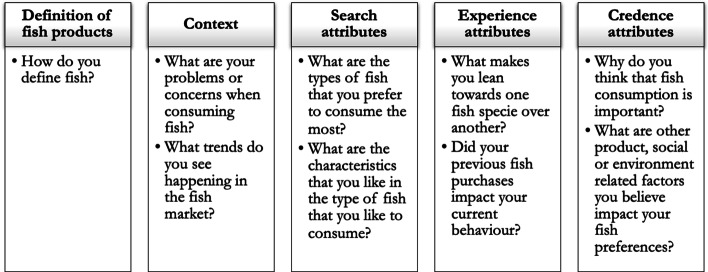
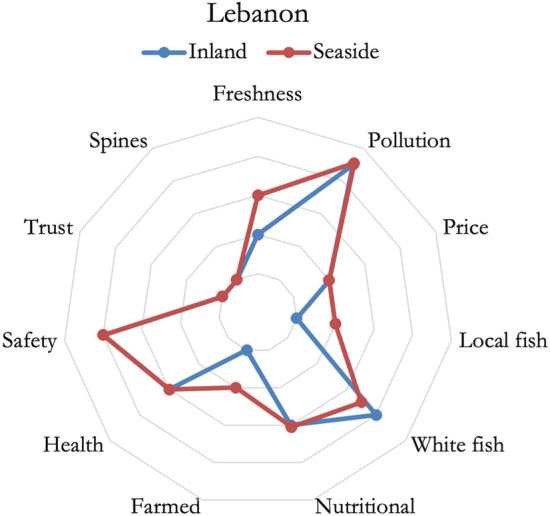
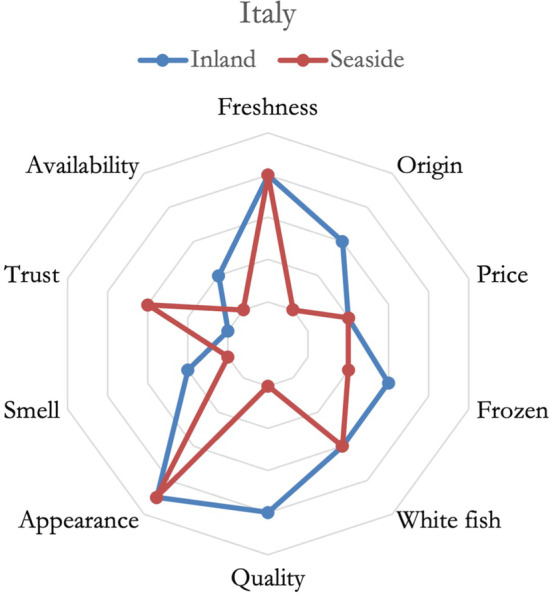
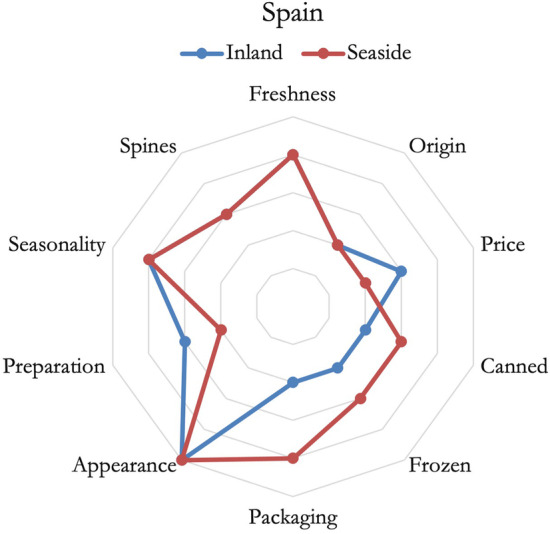
Fish is an important source of healthy proteins and an important economic sector in Mediterranean countries. Despite the wealth of knowledge acquired in Western countries, a gap has been found in studies in developing countries, as in the Mediterranean southern shore. Therefore, we aimed to investigate consumers' perceptions of finfish attributes, with qualitative tools as focus groups, given the exploratory nature of the research. The focus groups have been held in Italy, Lebanon, Spain, and Tunisia; in each country, one was held in seaside areas and one in inland areas, in order to control for the availability of fish that shapes consumers' evaluations and expectations. The focus groups have been analysed through content and semantic analyses. Results of the study yielded main themes recurring in the discussions that have been categorized along such dimensions: (1) definition of fish products; (2) context; (3) search attributes; (4) experience attributes; and (5) credence attributes. Among attributes, the ones mostly guiding consumers' choices seem to be freshness and fish species, which are used as proxies for quality and sensory attributes. Most of the respondents preferred delicate white fish, while some exceptions were found in Tunisian respondents preferring blue fish and they also were the only ones who were not looking for convenient and already cleaned products. Trust also represented a critical element in guiding the decisions of consumers: with a lack of trust, consumers deviate from preferring local products, as noticeable especially in Lebanese respondents' opinions. Credence attributes such as animal welfare and sustainability received a minor attention from all the respondents.
Keywords: Developing countries; Fish consumer behaviour; Focus groups; Mediterranean area.
© The Author(s) 2022.
Conflict of interest statement
Competing interestsThe authors declare no competing interests.
Figures


References
-
- Agyekum CK, Haifeng H, Agyeiwaa A, Agyekum CK, Haifeng H, Agyeiwaa A. Consumer perception of product quality. Microecon Macroecon. 2015;3(2):25–29. doi: 10.5923/j.m2economics.20150302.01. - DOI
-
- Altiok S, Murthy A, Iha K, Galli A. Reducing Mediterranean Seafood Footprints: The role of consumer attitudes. Ocean Coast Manag. 2021;214(November):105915. doi: 10.1016/j.ocecoaman.2021.105915. - DOI
-
- Ankamah-Yeboah I, Jacobsen JB, Olsen SB, Nielsen M, Nielsen R. The impact of animal welfare and environmental information on the choice of organic fish: an empirical investigation of German trout consumers. Mar Resour Econ. 2019;34(3):248–266. doi: 10.1086/705235. - DOI
-
- Billups FD. Conducting focus groups with college students: strategies to ensure success. Management. 2003;127:2–3.
-
- Bose S, Brown N. A preliminary investigation of factors affecting seafood consumption behaviour in the inland and coastal regions of Victoria, Australia. J Consum Stud Home Econ. 2008;24(4):257–262. doi: 10.1111/j.1470-6431.2000.00157.x. - DOI
LinkOut - more resources
Full Text Sources
Miscellaneous