


Expanding access to COVID-19 testing, vaccination and treatment at a free clinic for uninsured Spanish-speaking adults in Providence, RI
- PMID: 36373716
- PMCID: PMC9746502
- DOI: 10.1080/21645515.2022.2144604
Expanding access to COVID-19 testing, vaccination and treatment at a free clinic for uninsured Spanish-speaking adults in Providence, RI
Abstract
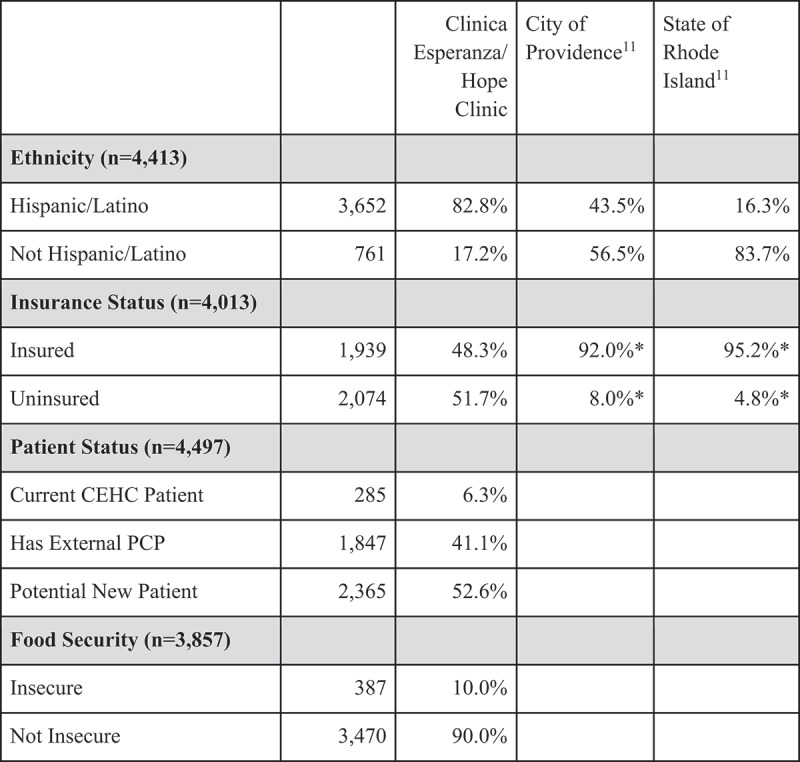
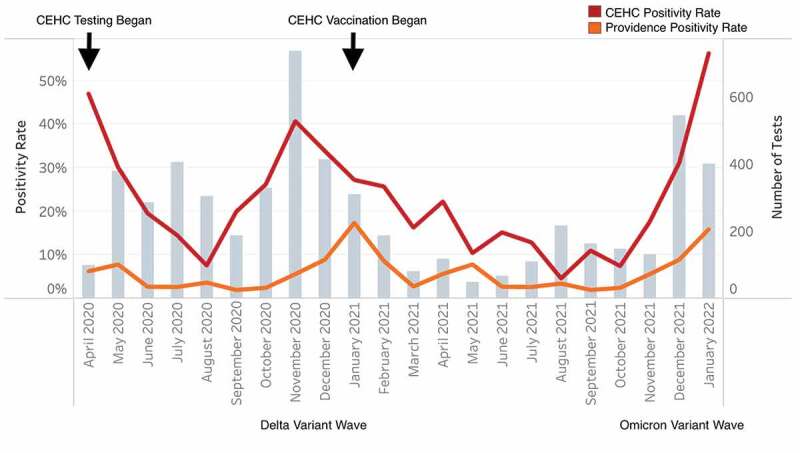
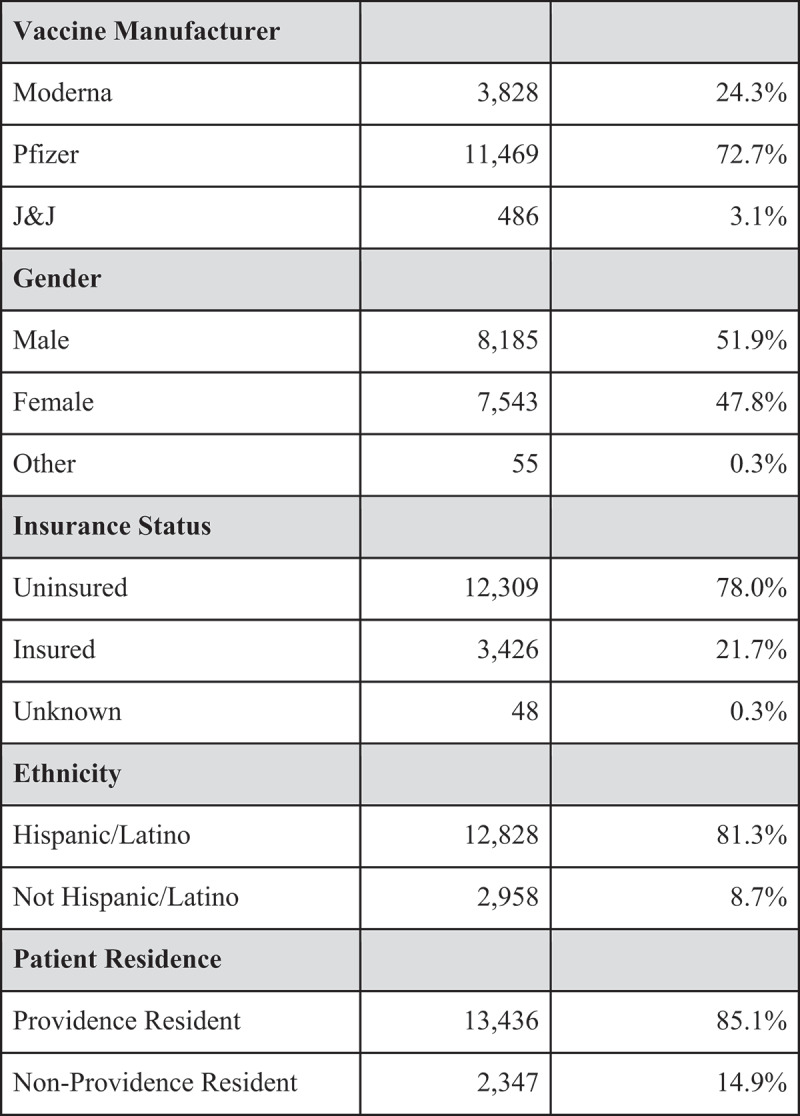
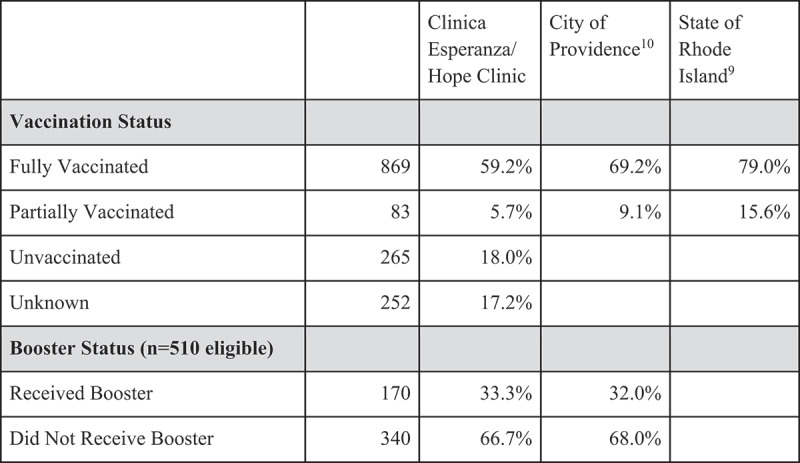
The COVID-19 pandemic disproportionately impacted uninsured and minority populations, contributing to and reinforcing long-lasting health inequities. Clínica Esperanza/Hope Clinic (CEHC), a free clinic serving uninsured individuals, is one 'safety-net' clinic that improved access to COVID-19 testing and vaccinations for an at-risk population during the pandemic. A retrospective review was performed to quantify COVID-19 testing and vaccination rates for clinic participants, which were compared to rates in the general population. 51.7% of patients seeking COVID-related care at CEHC were uninsured, compared to 8% in Providence and 4.8% in Rhode Island. CEHC performed 5,623 COVID-19 tests for 4,498 unique individuals, a total of 15,783 vaccines were administered, and 10 to 20% of COVID-care participants reported food insecurity during the study period. The prevalence of COVID-19 in the uninsured population and the high demand for vaccines highlight the important role that free clinics can play in the pandemic setting.
Keywords: COVID-19; disparities; free clinic; uninsured; vaccination.
Conflict of interest statement
No potential conflict of interest was reported by the author(s).
Figures
References
-
- Miller S, Wherry LR, Mazumder B. Estimated mortality increases during the covid-19 pandemic by socioeconomic status, race, and ethnicity: study examines COVID-19 mortality by socioeconomic status, race, and ethnicity. Health Aff (Millwood). 2021;40(8):1252–6. doi: 10.1377/hlthaff.2021.00414. - DOI - PubMed
-
- Barry K, McCarthy M, Buckley J, Jacques S, Johnson H, Almeida-Monroe V, De Groot AS. Four years of CHEER: cost and QALY savings of a free nurse-run walk-in clinic serving an uninsured, predominantly Spanish-speaking immigrant population in providence. J Health Care Poor Underserved. 2019;30(2):806–19. doi: 10.1353/hpu.2019.0057. - DOI - PubMed
-
- Barry K, McCarthy M, Melikian G, Almeida-Monroe V, Leonard M, De Groot AS. Responding to COVID-19 in an uninsured Hispanic/Latino community: testing, education and telehealth at a free clinic in Providence. R I Med J (2013). 2020. Nov 2;103(9):41–46. - PubMed
-
- Hindocha P, Nair NJ, Pigoga JL, Barry K, McCarthy M, Almeida-Monroe V, De Groot AS. Bridging the [health equity] gap at a free clinic for uninsured residents of Rhode Island. R I Med J (2013). 2018. Nov 1;101(9):27–31. - PubMed
MeSH terms
LinkOut - more resources
Full Text Sources
Medical
