. 2022 Nov 14;18(11):e1010495.
doi: 10.1371/journal.pgen.1010495. eCollection 2022 Nov.

Systematic proximal mapping of the classical RAD51 paralogs unravel functionally and clinically relevant interactors for genome stability

Affiliations

Systematic proximal mapping of the classical RAD51 paralogs unravel functionally and clinically relevant interactors for genome stability

Estelle Simo Cheyou et al. PLoS Genet. .

Abstract

Homologous recombination (HR) plays an essential role in the maintenance of genome stability by promoting the repair of cytotoxic DNA double strand breaks (DSBs). More recently, the HR pathway has emerged as a core component of the response to replication stress, in part by protecting stalled replication forks from nucleolytic degradation. In that regard, the mammalian RAD51 paralogs (RAD51B, RAD51C, RAD51D, XRCC2, and XRCC3) have been involved in both HR-mediated DNA repair and collapsed replication fork resolution. Still, it remains largely obscure how they participate in both processes, thereby maintaining genome stability and preventing cancer development. To gain better insight into their contribution in cellulo, we mapped the proximal interactome of the classical RAD51 paralogs using the BioID approach. Aside from identifying the well-established BCDX2 and CX3 sub-complexes, the spliceosome machinery emerged as an integral component of our proximal mapping, suggesting a crosstalk between this pathway and the RAD51 paralogs. Furthermore, we noticed that factors involved RNA metabolic pathways are significantly modulated within the BioID of the classical RAD51 paralogs upon exposure to hydroxyurea (HU), pointing towards a direct contribution of RNA processing during replication stress. Importantly, several members of these pathways have prognostic potential in breast cancer (BC), where their RNA expression correlates with poorer patient outcome. Collectively, this study uncovers novel functionally relevant partners of the different RAD51 paralogs in the maintenance of genome stability that could be used as biomarkers for the prognosis of BC.


Conflict of interest statement

The authors have declared that no competing interests exist.

Figures
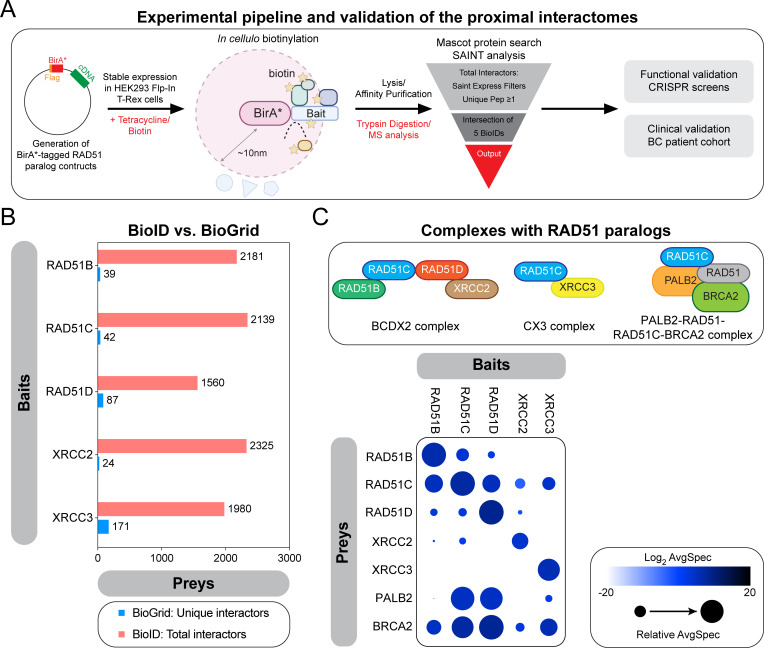
Fig 1
Fig 1. Proximal mapping of the RAD51 paralogs identifies known sub-complexes.
(A) Schematic representing the experimental pipeline developed to map the proximal interactomes of the classical RAD51 paralogs and their subsequent functional and clinical validations. (B) Representation of the number of preys identified in each BioID in comparison to curated unique interactors annotated in the BioGRID database. (C) Top: schematic representing the well-established sub-complexes formed by the classical RAD51 paralogs. Bottom: selected BioID results, shown as dot plots. The spectral counts for each indicated prey protein are shown as AvgSpec. The circle size represents the relative abundance of preys over baits.
Fig 2
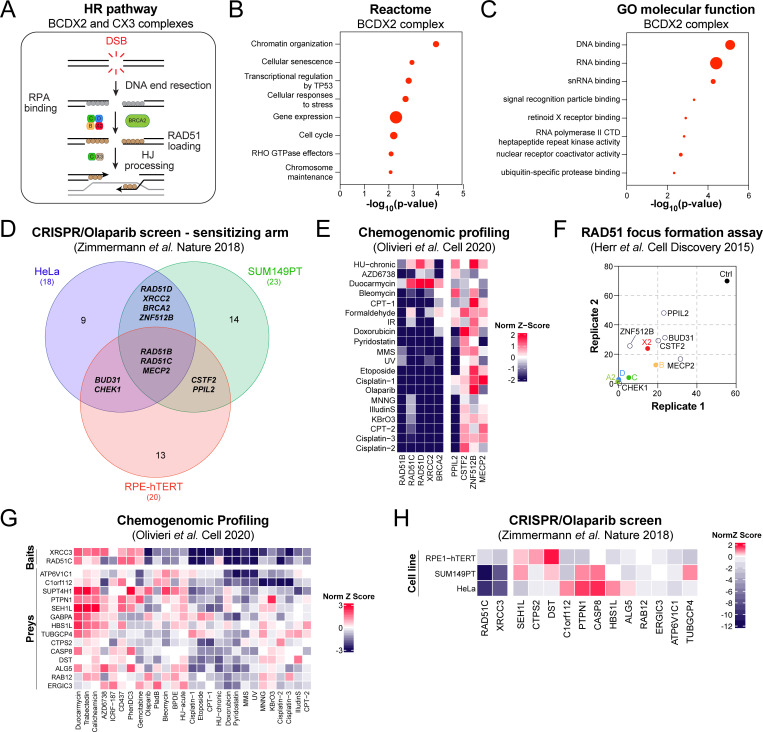
Fig 2. Proximal mapping of the BCDX2 and CX3 complexes.
(A) Schematic representing the different steps of the HR pathway and the sequential involvement of the BCDX2 and CX3 complexes during this process. (B) Pathway enrichment analysis of the preys that are exclusive to the BCDX2 complex using the Reactome database. Data are represented as the -log10 of the p-value (log10(p-value)) calculated for each indicated pathway by Reactome. Each dot is proportional to the number of preys that belong to the indicated pathway. (C) GO molecular function analysis of the preys that are exclusive to the BCDX2 complex. Data are represented as the -log10 of the p-value (log10(p-value)) calculated for each indicated pathway by GO algorithm. Each dot is proportional to the number of preys that belong to the indicated pathway. (D) Venn diagram representing the overlap of the CRISPR screens published by [24] where sensitivity to the PARPi olaparib was tested in three different cell lines. Only the genes whose inactivation by CRISPR provided a significant sensitization to olaparib (NormZ-score<1) are plotted. (E) Heatmap clustering representing the NormZ-scores of our selected preys alongside the classical RAD51 paralogs in a series of CRISPR screens published by [23]. (F) Representation of the percentage of S/G2 U2OS cells transfected with the indicated siRNA and displaying more than 9 IR-induced RAD51 foci as published in [44]. Each replicate is plotted on the x- and y-axis. (G) Heatmap clustering representing the NormZ-scores of our selected preys alongside RAD51C and XRCC3 in a series of CRISPR screens published by [23]. (H) Heatmap clustering representing the NormZ-scores of our selected preys alongside RAD51C and XRCC3 in a series of CRISPR screens published by [24] where sensitivity to the PARPi olaparib was tested in three different cell lines.
Fig 3
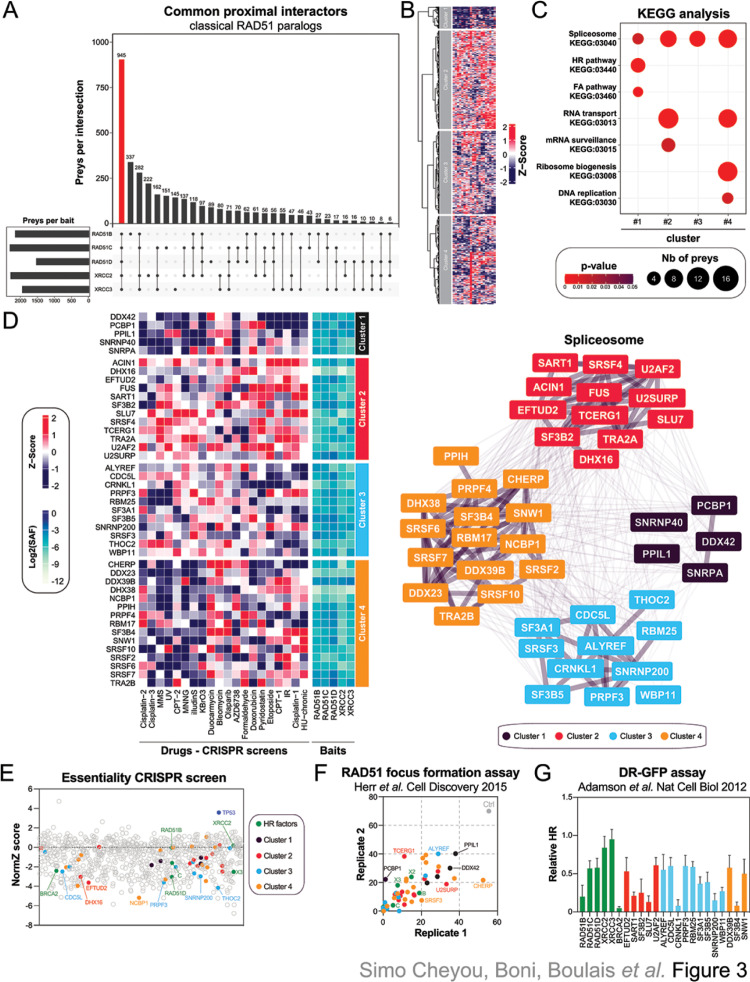
Fig 3. Identification of the spliceosome as a regulator of the classical RAD51 paralogs.
(A) Representation of the overlap between the BioID of the different RAD51 paralogs. (B) Heatmap clustering representing the NormZ-scores of the common preys of the RAD51 paralogs in a series of CRISPR screens published by [23] where different genotoxic drugs were tested in RPE1-hTERT cells. (C) Pathway enrichment analysis of the preys that are common to all classical RAD51 paralogs using the KEGG database. Pathways are represented based on their p-value calculated by KEGG algorithm for the 4 different clusters. Each dot is proportional to the number of preys that belong to the indicated pathway. (D) Representation of the different spliceosome factors identified in each cluster. (E) Representation of the CRISPR-based essential screen performed in RPE1-hTERT cells. Each common prey of the classical RAD51 paralogs is represented by its respective NormZ-score. (F) Representation of the percentage of S/G2 U2OS cells transfected with the indicated siRNA and displaying more than 9 IR-induced RAD51 foci as published in [44]. Each replicate is plotted on the x- and y-axis. (G) Representation of the relative HR monitored in U2OS DR-GFP cells transfected with the indicated siRNA as published in [38].
Fig 4
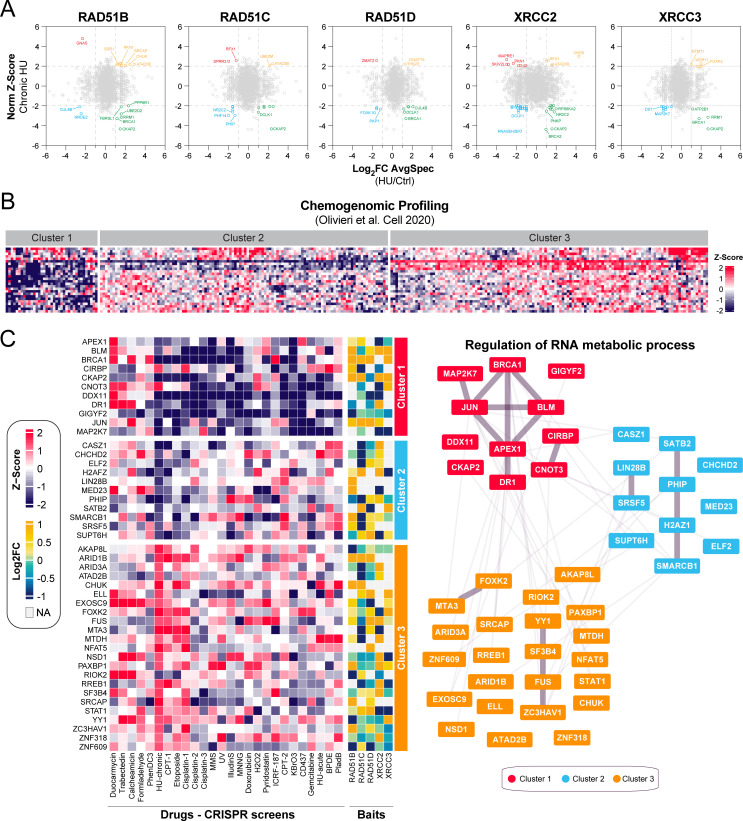
Fig 4. RNA metabolic process collaborates with the RAD51 paralogs upon replication stress.
(A) Differential BioID analysis of the classical RAD51 paralogs upon HU exposure intersected with a CRISPR-based genome screen where sensitivity to a chronic HU treatment was tested [23]. Data are represented as the log2FoldChange (log2FC) of the average peptide count for a given prey between HU and untreated conditions on the x-axis and the NormZ-score for the HU-chronic CRISPR screen published in [23]. Significant differentially modulated proximal interactors are considered for those with log2FC<1 or >1 and NormZ-score<-2 or >2. (B) Heatmap clustering representing the NormZ-scores of the preys significantly modulated identified in (A) and monitored in a series of CRISPR screens published by [23] where drugs inducing replication stress were tested in RPE1-hTERT cells. (C) Representation of the different factors involved in RNA metabolic process and identified in each cluster.
Fig 5
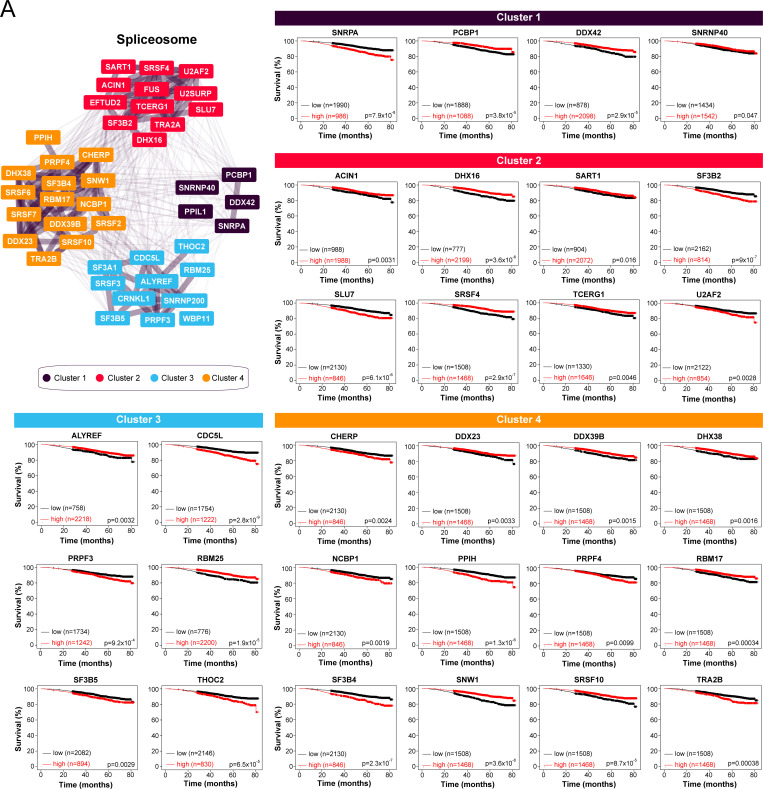
Fig 5. Several splicing factors that are proximal to the RAD51 paralogs have prognostic potential in BC.
(A) Overall survival analysis based on the RNA levels of the indicated splicing factors in a cohort of BC patients using KMplot (n = 2976 patients). Only the preys linked to the spliceosome that have a significant impact on BC overall survival (p<0.05) are indicated.

References

    1. Tubbs A, Nussenzweig A. Endogenous DNA Damage as a Source of Genomic Instability in Cancer. Cell. 2017;168(4):644–56. doi: 10.1016/j.cell.2017.01.002 ; PubMed Central PMCID: PMC6591730. - DOI - PMC - PubMed
    1. Boni J, Idani A, Roca C, Feliubadalo L, Tomiak E, Weber E, et al. A decade of RAD51C and RAD51D germline variants in cancer. Hum Mutat. 2022;43(3):285–98. Epub 20211230. doi: 10.1002/humu.24319 . - DOI - PubMed
    1. Schlacher K, Christ N, Siaud N, Egashira A, Wu H, Jasin M. Double-strand break repair-independent role for BRCA2 in blocking stalled replication fork degradation by MRE11. Cell. 2011;145(4):529–42. doi: 10.1016/j.cell.2011.03.041 ; PubMed Central PMCID: PMC3261725. - DOI - PMC - PubMed
    1. Schlacher K, Wu H, Jasin M. A distinct replication fork protection pathway connects Fanconi anemia tumor suppressors to RAD51-BRCA1/2. Cancer Cell. 2012;22(1):106–16. doi: 10.1016/j.ccr.2012.05.015 ; PubMed Central PMCID: PMC3954744. - DOI - PMC - PubMed
    1. Jasin M, Rothstein R. Repair of strand breaks by homologous recombination. Cold Spring Harb Perspect Biol. 2013;5(11):a012740. Epub 20131101. doi: 10.1101/cshperspect.a012740 ; PubMed Central PMCID: PMC3809576. - DOI - PMC - PubMed

Publication types